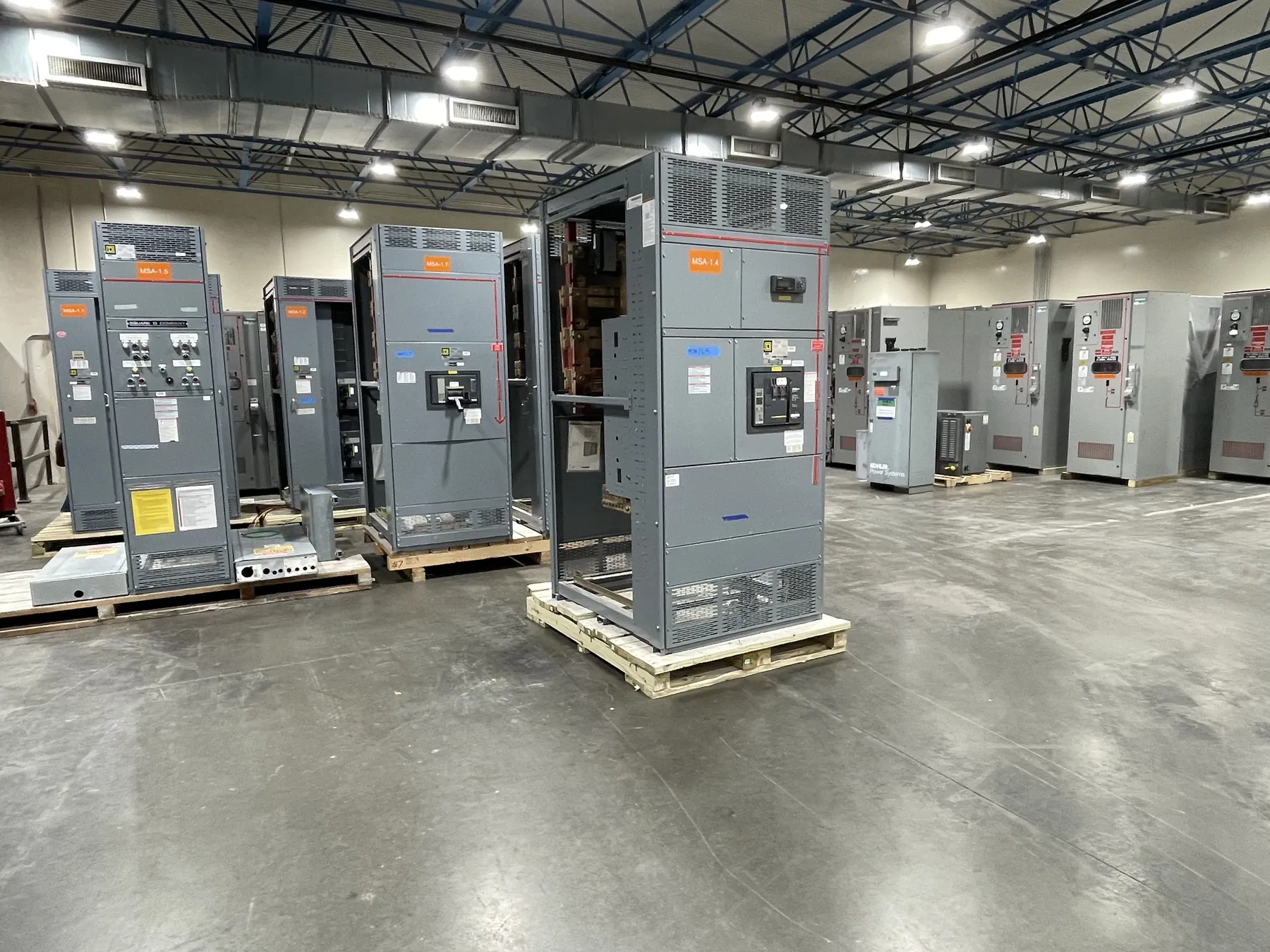
Low-Voltage Switchboards for Henderson, NV Projects
Henderson facilities may need a switchboard to distribute power from a service entrance, transformer, generator, or other source to downstream panels and major loads. The right arrangement depends on the project’s electrical design, utility and source interfaces, load profile, and available space—not simply the building’s location. We manufacture new custom low-voltage switchboards in the USA using all-American components and ship nationwide, including to Nevada. Project requirements, equipment ratings, applicable listings, and delivery details must be confirmed for each order.
Early planning helps align the switchboard with the one-line diagram and the intended installation. Share the connected loads, demand assumptions, anticipated operating conditions, and planned expansion before selecting bus and feeder capacity. These inputs help engineers assess how the equipment should be configured; they do not replace a project-specific engineering review.
Define Service, Source, and Feeder Arrangements
A switchboard’s service section and feeder sections must suit the sources and loads shown in the project documents. A design may need to accommodate a single service source, multiple sources, generator connections, or ties to other distribution equipment. Each interface affects the arrangement, conductor landing space, protective-device selection, and coordination with upstream and downstream equipment. Source-transfer functions or ties should be addressed in the project design rather than assumed from a general equipment description.
Feeder quantity and purpose matter as much as total load. Identify the downstream panels, large equipment, spare feeders, and any loads with distinct operating schedules. Confirm which devices are supplied with the switchboard and which are part of the broader electrical system. Clear demarcation reduces ambiguity in the quotation and helps the project team check that the proposed equipment matches the intended drawings.
Size Bus and Feeders from Documented Load Assumptions
Bus capacity should reflect the electrical design’s calculated demand, the intended source and service arrangement, and the project’s growth plans. Connected load alone does not establish operating demand; the assumptions used to calculate demand should be documented and reviewed by the project’s qualified electrical professionals. Planned expansion is also important: adding capacity now may affect the bus, section layout, feeder provisions, and available physical space.
Feeder conductors and overcurrent devices require coordinated selection. Their ratings and arrangement depend on the load characteristics, conductor installation, applicable codes, protective-device coordination, and the equipment’s documented ratings. A request for spare capacity should say whether it means an unused device space, an installed spare feeder, or a design allowance for future loads. Those choices are not interchangeable and may affect the equipment configuration.
Confirm Available Fault Current and Equipment Ratings — Low-Voltage Switchboards in Henderson, NV
Available fault current at the switchboard’s point of installation is a key design input. Obtain the value and supporting source information from the responsible engineer or other qualified project professional, and confirm it for the actual system configuration. Protective-device interrupting ratings and the switchboard’s applicable short-circuit ratings must be evaluated against the documented conditions. A nominal system voltage or a bus rating does not, by itself, establish that the equipment is suitable for the available fault current.
Ratings describe particular equipment characteristics; they should not be treated as a substitute for confirming the system voltage, source conditions, protective devices, and project requirements. Changes to a transformer, utility source, generator, or distribution arrangement can affect fault-current assumptions and coordination. The design team should review those interfaces before equipment details are finalized.
Establish When UL 891 Applies
UL 891 applies to certain low-voltage switchboards, but it should not be read as a blanket listing claim for every switchboard configuration or all types of switchgear. Applicability depends on the product and its intended use. Project teams should identify any required listing and provide the specification language needed to evaluate the requested assembly. Product-specific listing documentation must be confirmed for the quoted configuration; do not infer a listing from a general product description or from a rating alone.
Also verify that the requested equipment scope matches the project’s terminology and voltage class. Switchboards, switchgear, and other distribution assemblies are not interchangeable labels for determining construction or listing requirements. Qualified engineering review and the project’s applicable codes, specifications, and authority requirements govern the final selection.
Prepare a Henderson Project Quotation Package
For a useful quotation, provide the current one-line diagram, equipment specifications, system voltage, source details, service and feeder schedule, connected-load information, demand assumptions, planned expansion, and available fault-current documentation. Include room and installation constraints, conductor-entry preferences, environmental conditions, and required project submittals where known. These details help identify questions about clearances, access, routing, interfaces, and configuration before the order is finalized.
Henderson site access, receiving arrangements, unloading provisions, and installation sequencing should be coordinated by the project team with the selected equipment dimensions and shipping plan. We can discuss manufacturing and nationwide shipment requirements, but a site review is needed to confirm field conditions and installation fit. Final ratings, listing documentation, lead time, and delivery arrangements require project-specific confirmation.