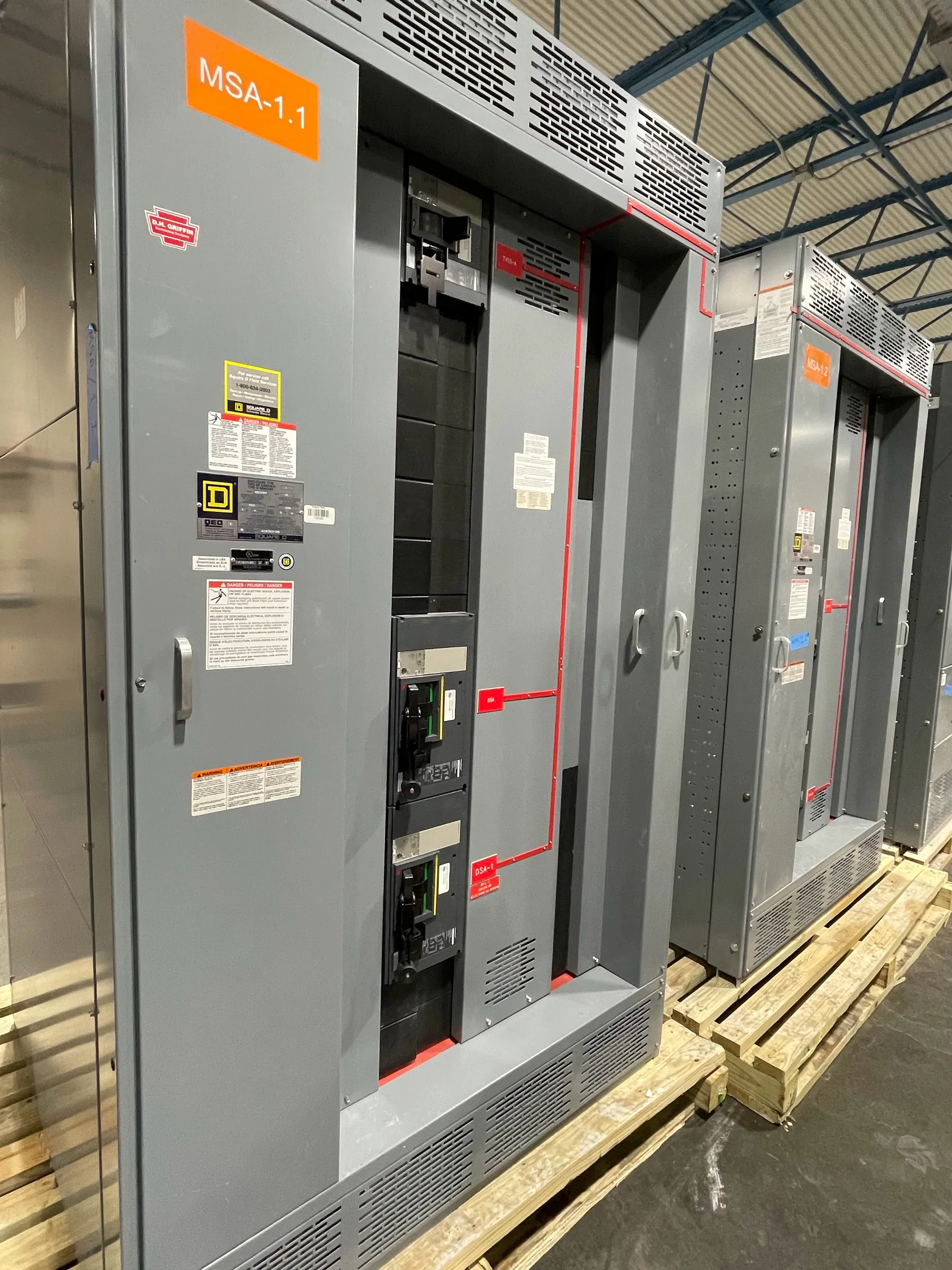
Low-Voltage Switchgear for Henderson Projects
Low-voltage switchgear is a coordinated assembly for controlling, protecting and isolating power circuits. For a Henderson facility, choosing an arrangement starts with the electrical system and the loads it must serve—not with a single headline rating. Document connected load, demand assumptions and planned expansion before selecting bus and feeder capacity. These inputs help the design team compare configurations and identify where future loads may require additional space, feeders or bus capacity.
Project conditions can differ between a new building, an addition and a replacement in an existing electrical room. Room dimensions, access routes, equipment location, incoming service arrangement and connections to downstream distribution all affect what can be specified and installed. Nevada projects may also have schedule and shipping considerations; equipment is manufactured in the United States and can ship nationwide, but shipment timing and site readiness must be confirmed for the particular order.
Choose a Power Circuit Breaker Arrangement Around the Loads
Low-voltage power circuit breaker switchgear can be arranged with different numbers and types of incoming, tie and feeder breakers. The right configuration depends on the one-line diagram, the operating role of each source, the loads served by each section and the desired response to an outage. A single-ended arrangement may suit a system with one source, while systems with multiple sources or a bus tie require careful definition of normal and alternate operating states.
For each breaker, specify its function, frame and trip requirements, control and accessory needs, and the circuit it protects. Those details cannot be selected reliably from load totals alone. Fault-current information, conductor and transformer data, protective-device coordination objectives, and the project’s applicable electrical design requirements must also be reviewed by qualified professionals. A tie breaker is not simply an extra component: its control logic and permitted operating states affect how sources and loads interact.
Compare Maintainability, Access and Future Work
Maintainability involves more than whether a breaker can be withdrawn. Consider how the assembly is divided into sections, how circuit identities are documented, what access is available at the equipment front and rear, and whether breakers or compartments can be serviced without creating unacceptable effects on other loads. The project team should account for required working space and the facility’s operational constraints in the electrical-room layout.
Breaker interchangeability, spare devices, control wiring and compartment provisions are design choices to settle before release. A plan for future feeder additions may call for designated space or a section arrangement that accommodates expansion, but reserved space alone does not establish that future bus or interrupting capacity will be adequate. Recheck the complete design when loads, sources or operating plans change. The manufacturer can build to approved project documents; equipment selection and field work require review by qualified electrical engineers and site personnel.
Set Bus and Feeder Ratings From Documented Demand
Bus ratings describe the assembly’s current-carrying capability under specified conditions; they are not the same as system voltage. The specified voltage must match the project system, while bus and feeder ratings must be evaluated against load, demand assumptions, ambient and installation conditions, and the design basis. Do not size from a broad building label or a projected peak without documenting how that demand was established.
Prepare a load schedule that distinguishes present connected loads from expected demand and identifies planned additions. Include the incoming source, transformer information where applicable, feeder destinations, conductor data and any known operating modes that may change loading. These inputs let the design team assess main and feeder requirements together. A larger bus rating may provide room for growth, but it does not by itself resolve breaker coordination, available fault current, heat considerations or the adequacy of downstream equipment.
Address Coordination and the UL 1558 Scope
Protective-device coordination is a project-specific engineering task. It requires the relevant fault-current data, device characteristics and system configuration, including source and tie arrangements where present. Coordination objectives should be stated clearly and checked against the consequences of faults and outages for the facility. No generic switchgear selection can establish a coordination result without the system study and review.
UL 1558 may be relevant to low-voltage metal-enclosed power circuit breaker switchgear, depending on the product and project requirements. Mentioning the standard does not establish that a particular assembly is listed or that every configuration falls within its scope. Confirm applicable standards, listing status, ratings and construction details for the specific equipment in the quotation and approved submittals. Do not treat UL 1558 as a standard covering medium- or high-voltage equipment or unrelated distribution products.
Prepare Henderson Project Information for a Quotation
A useful quotation package includes the one-line diagram, system voltage, source and transformer details, available fault-current information, connected-load schedule, demand assumptions, planned expansion and desired main, tie and feeder functions. Add the intended bus and breaker ratings if established by the project engineer, along with enclosure and room constraints, access requirements, control and metering needs, and applicable specification language. Mark unresolved items rather than guessing at them.
The equipment manufacturer can use these documents to clarify the proposed assembly, identify open technical questions and develop a scope for review. Ratings, listings, coordination requirements and project details need confirmation against the final design and site conditions. Assemblies use all-American components, are built in the USA and support short lead times; the applicable schedule depends on the approved configuration and order requirements. Shipping to Henderson is available nationwide, with logistics and site receiving arrangements confirmed for the project.