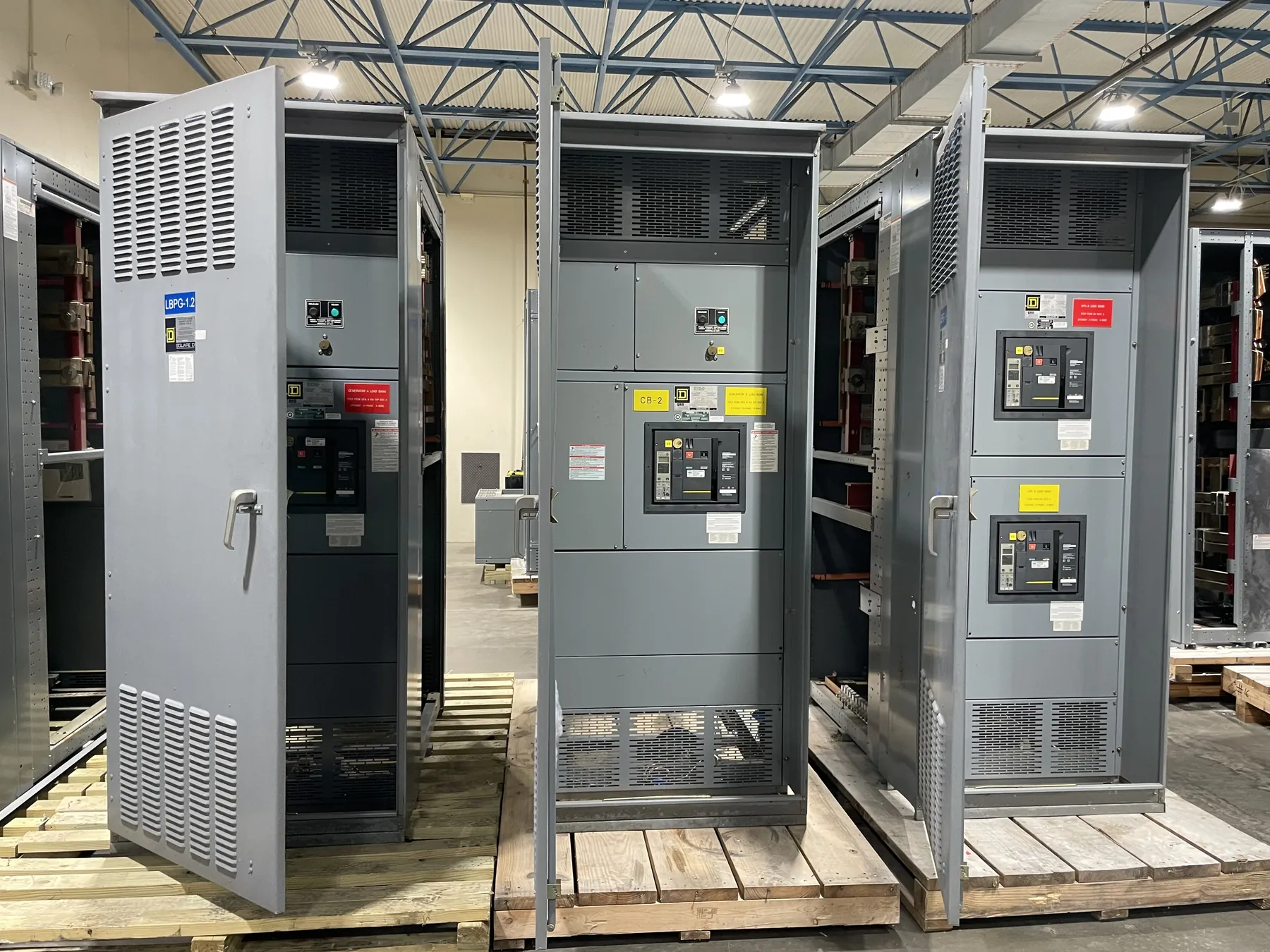
Metal-Clad Switchgear for Henderson, NV Projects
Henderson facilities considering metal-clad switchgear need a design tied to the electrical system, operating requirements and site conditions—not simply a voltage label or a standard lineup description. This equipment is commonly selected for medium-voltage distribution, where breakers, buses and associated components are arranged in separate grounded compartments. The project team should define the required system voltage, continuous current, interrupting capability and other ratings from the actual system study and equipment application. A rating is not the same thing as system voltage, and suitability cannot be established from location alone.
For Henderson projects, early planning should also account for how the lineup will reach its installed position and connect to the facility. Room dimensions, access routes, floor and anchoring requirements, cable entry, conduit locations, ventilation and clearances can affect section arrangement and installation planning. These details should be verified by the project’s qualified electrical and construction professionals rather than assumed during equipment selection.
Compartmentalization and Withdrawable Breaker Choices — Metal-Clad Switchgear in Henderson, NV
Metal-clad construction separates major elements into grounded compartments, typically including the main bus, breaker and cable areas. Compartmentalization can limit exposure between sections of the assembly and supports a defined equipment arrangement, but it does not eliminate electrical hazards or replace a site-specific safety program. The project specification should state which components and connections require separate compartments, how cable terminations are arranged, and whether provisions for future extensions are needed.
Withdrawable breakers can be moved among defined connected, test or disconnected positions, depending on the equipment design. This arrangement may support maintenance planning and functional checks without treating the breaker as permanently fixed in the lineup. Buyers should confirm breaker type, control power, auxiliary contacts, interlocks, shutters and interface details with the manufacturer and engineer. These features must align with the protection and control scheme; they should not be inferred from the phrase “metal-clad.”
Grounding, Protection Relays and Coordination
Grounding requirements depend on the system configuration, grounding method and connected equipment. The design team should identify the source grounding arrangement, ground-fault detection approach, equipment grounding connections and any neutral or grounding-transformer interfaces. Those decisions affect protection settings and how faults are detected and cleared. A grounding description on its own is not enough to establish that the complete system will perform as intended.
Relay coordination should be based on a qualified engineering study using available source information, transformer data, conductor characteristics, protective-device details and the facility’s operating priorities. The study should consider coordination with upstream utility or owner equipment where applicable, as well as downstream feeders and connected loads. Relay functions, instrument-transformer ratios, trip circuits, communications and control power should be specified as a coordinated package. Settings and final scheme details require engineering review; they cannot be selected reliably from a general product description.
IEEE C37.20.2 and Project-Specific Requirements — Metal-Clad Switchgear in Henderson, NV
IEEE C37.20.2 is the relevant standard to identify when specifying applicable metal-clad switchgear. The project documents should state the required edition and clarify the equipment scope, ratings, construction details and exceptions that apply. The standard should not be treated as a blanket statement that every lineup, accessory or installation condition meets every project requirement. Applicable compliance, testing and documentation must be confirmed for the proposed equipment and the specific procurement specification.
Keep the standard distinct from other product categories and ratings. UL 891 applies to applicable low-voltage switchboards; it should not be represented as a general standard for metal-clad medium-voltage switchgear. Listing status, standards compliance, system voltage and equipment ratings are separate matters that require confirmation for the exact configuration. The engineer of record should resolve conflicts among drawings, specifications, utility requirements and applicable codes before release for manufacture.
Documenting Henderson Load and Future Capacity
Before choosing bus and feeder capacity, document connected load, demand assumptions and planned expansion. Connected load describes the equipment expected to be served; demand assumptions explain how much of that load is expected to operate together under the design conditions. Provide load schedules, motor and transformer data, major operating modes, known load additions and any redundancy expectations. Distinguish confirmed loads from allowances for future growth so the design team can evaluate their effect without oversizing by guesswork.
Bus and feeder decisions should also reflect source conditions, fault-current information, feeder lengths and types, load characteristics and the intended operating arrangement. Confirm spare feeder positions and future extension needs early: a physically available space is not necessarily a fully equipped or electrically adequate future feeder. Changes to load, source configuration or protection can affect the lineup and the coordination study, so assumptions should be documented and revisited when project information changes.
Information for a Henderson Switchgear Quotation
A useful quotation package includes the one-line diagram, project specification, system voltage, required equipment ratings, source and transformer data, feeder schedule, control and relay requirements, grounding information, cable-entry preferences and site interface drawings. Include the required edition of IEEE C37.20.2, requested documentation, delivery destination and any known access or receiving constraints. Confirm ratings, listings, construction details and project requirements with the manufacturer and qualified project engineers before approval.
The manufacturer builds new custom power-distribution equipment using all-American components, with assemblies built in the USA and shipping available nationwide, including to Henderson. Lead time depends on the final scope, design coordination and current production planning; timing should be confirmed against the project schedule rather than assumed. Clear, complete engineering inputs help the team assess configuration and interfaces before the equipment is released for manufacture.