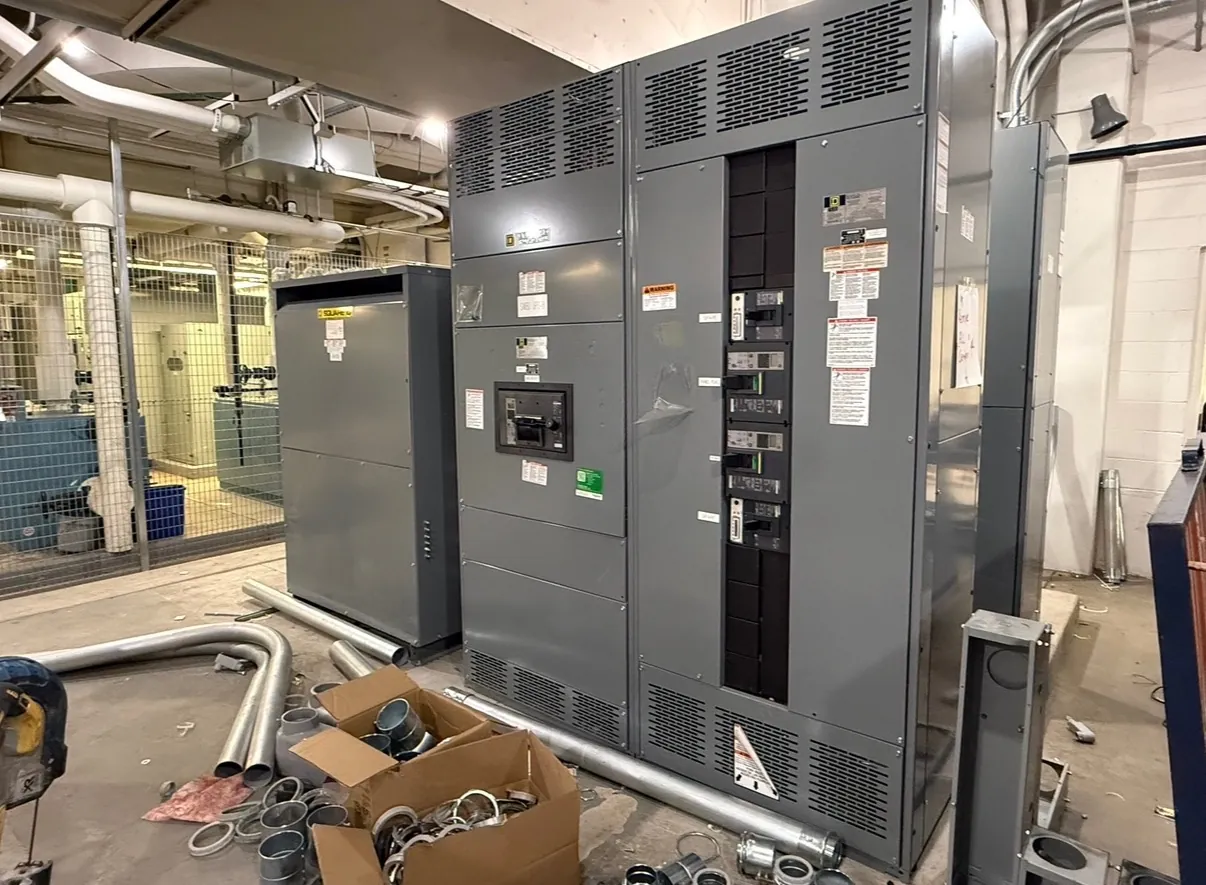
Motor Control Centers for Henderson, NV Facilities
A motor control center (MCC) brings motor starters, feeder devices and related controls together in a coordinated assembly. For a Henderson project, the right arrangement depends on the equipment being served, the facility’s electrical system and how operators need to access and maintain each section. Custom-manufactured MCCs can be configured around documented loads and interfaces rather than selected by enclosure dimensions alone.
Start with the motor and process schedule: identify each motor’s nameplate information, operating duty, starting method and control requirements. Note which loads run together, which are intermittent, and whether any equipment may be added later. Those details affect starter selection, feeder arrangement and the space and bus capacity reserved for expansion. Final choices require review by qualified electrical professionals familiar with the project and site conditions.
Starter and VFD Choices for Motor Loads
Across-the-line starters may suit some motors, while other applications call for reduced-voltage starting or a variable-frequency drive (VFD). A VFD can support adjustable speed and process control, but it also introduces coordination questions involving drive input protection, bypass needs, control signals, heat dissipation and the motor cable installation. The application, not a generic preference, should determine whether a drive belongs in the MCC or elsewhere.
For each VFD, provide the motor data, expected speed range, load characteristics and control interface. Identify whether the project requires local controls, remote commands, status points or communication with a plant control system. Confirm drive and starter compartment dimensions, ventilation provisions and any manufacturer-specific requirements before the lineup is finalized. Where harmonic effects or long motor leads may be relevant, have the design team assess them for the actual system.
Short-Circuit Ratings and Feeder Protection — Motor Control Centers in Henderson, NV
An MCC’s short-circuit current rating must be suitable for the available fault current at its installation point and for the protective devices and configuration used in the assembly. Do not treat a breaker’s interrupting rating, an individual component rating and the MCC assembly rating as interchangeable. The project engineer should establish the available fault current and verify that the selected equipment and upstream protection are appropriate for the system.
Feeder protection also has to match the connected loads and applicable design requirements. Review motor branch-circuit protection, feeder devices, coordination objectives and any required selective operation as a system. The resulting device types and settings are project-specific; they cannot be determined from a city name or a general product description. Provide the one-line diagram and the latest available fault-current and protection information for engineering review.
Document Henderson Loads, Demand and Expansion
Before selecting bus and feeder capacity, document connected load, demand assumptions and planned expansion. A connected-load total alone does not explain which motors operate simultaneously or how the facility expects to grow. Include spare starters or sections only where there is a defined use, and describe future loads sufficiently to evaluate their likely electrical and physical impact. This helps avoid both an undersized lineup and capacity that is not supported by project needs.
Henderson sites can differ in available electrical-room space, access routes, ambient conditions and the surrounding process environment. Share room dimensions, door and handling constraints, cable-entry preferences, environmental exposure and required working clearances with the project team. These conditions can influence lineup orientation, enclosure selection and connection planning. Shipping to Nevada is available from a U.S. manufacturer, but the site team should confirm receiving access, unloading arrangements and the route to the final installation location.
UL 845, Interfaces and Maintenance Access
Ask whether UL 845 is required for the project’s motor control center and confirm the applicable scope and requested listing with the design team. Do not assume that a standard or listing applies automatically to every configuration or to associated equipment outside its scope. The specification should identify required construction, ratings and documentation, and the manufacturer should confirm what can be furnished for the proposed assembly before an order is finalized.
Maintenance access should be considered during layout, not after the lineup is placed. Identify the required working space, door swing, removal path for components and access to cable compartments, while keeping installation and operating decisions under qualified site personnel. Also define control wiring boundaries, terminal responsibilities and any interface to external drives, sensors or automation systems. Clear interface documentation reduces ambiguity between the MCC manufacturer, electrical contractor and controls integrator.
Information for a Project-Specific MCC Quotation
A useful quotation package includes the one-line diagram, motor schedule, load and demand basis, available fault-current information, protection requirements, control narratives, preferred lineup arrangement and site constraints. State the requested bus and feeder capacities, future provisions, enclosure conditions, metering or communications needs, and whether UL 845 is specified. Ratings, listings and project details require confirmation during engineering review; system voltage and equipment ratings are related but are not the same thing.
Custom MCC assemblies are manufactured in the United States using all-American components, with short lead times supported and nationwide shipping. The actual schedule depends on the finalized design, component selection and project requirements, so it should be confirmed for the specific order. Providing complete, coordinated information early gives the engineering and manufacturing teams a sound basis for evaluating the proposed Henderson installation.