Automatic Transfer Switches for Henderson, NV Projects
An automatic transfer switch (ATS) moves designated electrical loads between normal and alternate sources when its controls detect a change in source condition. For a Henderson facility, selecting an ATS begins with the intended backup arrangement: identify the normal source, alternate source, loads to be transferred and operating priorities. A generator-backed system, for example, has different control and timing interfaces from a system using two utility sources. The switch, controls and installation must be evaluated as part of the complete distribution design, not as an isolated catalog item.
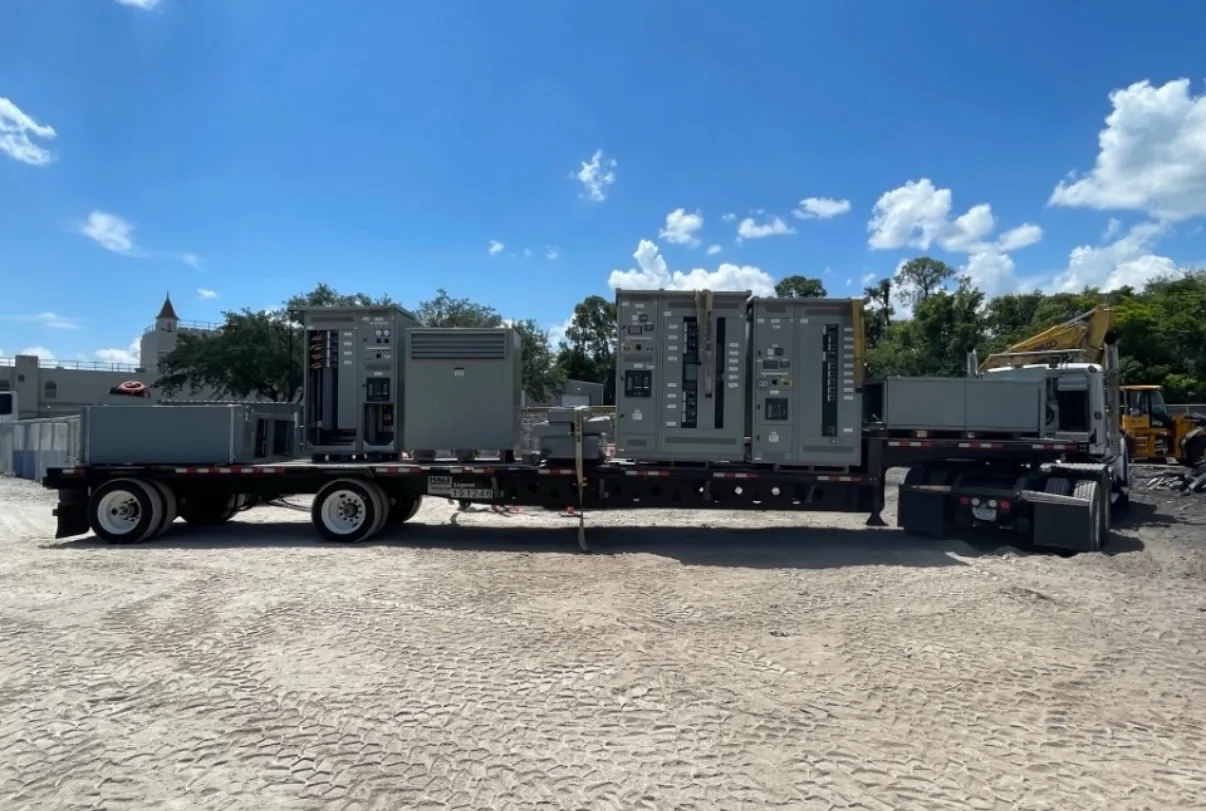
Our U.S. manufacturing operation builds new custom power-distribution equipment using all-American components and ships nationwide, including to Nevada. Project drawings and application details allow the equipment configuration to be reviewed against the facility’s requirements. Site-specific conditions, electrical design, code requirements and equipment ratings should be confirmed by qualified engineers and the project team before a final selection is made.
Choose the Transfer Transition and Control Sequence
Transfer behavior affects both connected loads and the equipment supplying them. With an open-transition arrangement, the ATS disconnects one source before connecting the other. A closed-transition arrangement briefly overlaps sources under specific control conditions and is not suitable for every system or utility arrangement. Delayed-transition options can provide an intentional interval between source disconnection and reconnection, where the application calls for it. These are distinct design choices, not interchangeable names for the same operating sequence.
Source-sensing settings and transfer logic also matter. The design team should define what voltage or frequency conditions constitute an unacceptable source, how long a condition must persist before action, and how the switch should respond when the preferred source returns. For generator applications, coordinate the ATS start signal, generator readiness, transfer timing and retransfer sequence with the generator controls. Confirm any required bypass-isolation or manual-transfer functions separately; they change the equipment arrangement and operating interfaces.
Document Load, Demand and Future Capacity
Before choosing bus and feeder capacity, document the connected load served by the ATS, demand assumptions and planned expansion. A connected-load schedule alone may not represent the expected operating demand. Identify loads that start together, motor or other inrush characteristics, load sequencing, and any equipment that should be shed or restored in stages. These details help engineers assess the switch’s load rating and the distribution path supplying the transferred loads.
Include the upstream source information and downstream feeder requirements with the load data. The ATS rating must be evaluated for the application and available fault current, not inferred from a system-voltage description or from a neighboring piece of equipment. Bus and feeder sizing, protective-device coordination and the generator’s capabilities must align with the design basis. If expansion is anticipated, state its nature and timing as planning assumptions rather than treating unconfirmed future loads as settled requirements.
Review Load Ratings, Withstand and Protection Coordination
Transfer equipment has ratings that describe its capabilities under defined conditions. The load-current rating, system voltage, short-circuit withstand or closing performance, and any specified protective-device combination are separate considerations. A voltage value is not itself a current or withstand rating. The engineer should confirm that the proposed ATS and associated overcurrent protection are appropriate for the available fault current and the installation’s electrical characteristics.
Coordination review should include upstream protective devices, downstream feeders and the alternate-source equipment. Protective-device settings or combinations cannot be selected responsibly from an ATS description alone. Provide available fault-current information, one-line diagrams and relevant device data for engineering review. Ratings and any required listing or tested combination must be verified for the actual proposed configuration and project conditions.
Determine Whether the Neutral Must Be Switched
Neutral arrangement is an application decision, not a default detail. A switched-neutral ATS may be appropriate in some separately derived source configurations; other systems may use a solid neutral. The generator grounding and bonding arrangement, system grounding method, protection scheme and applicable code requirements all affect the decision. Incorrect assumptions can create unwanted neutral-current paths or interfere with intended protection behavior.
For quotation and design review, provide the source and generator grounding details, the one-line diagram, and the project engineer’s stated neutral requirements. The ATS neutral configuration must be coordinated with the generator, service equipment and downstream distribution. Have qualified electrical professionals confirm the design against the actual site and governing requirements.
Confirm UL 1008, Interfaces and Henderson Project Inputs
UL 1008 applies to transfer-switch equipment where required; it should not be taken as a blanket certification for every assembly or for unrelated distribution equipment. Confirm the applicable product standard, listing needs and exact proposed configuration for the project. Do not assume that a particular ATS, enclosure, control package or complete system carries a specific listing without verification.
For a useful quotation review, submit the one-line diagram, source and alternate-source details, connected-load schedule, demand assumptions, planned expansion, fault-current data, transfer sequence, neutral requirements and preferred control interfaces. Identify any generator-start contacts, remote indication, communications or integration requirements. Henderson site access, equipment-room dimensions, environmental conditions, routing and delivery coordination can affect enclosure and installation planning; confirm these conditions with the project team rather than relying on a generic location assumption. The final selection depends on engineering review of the equipment and site.