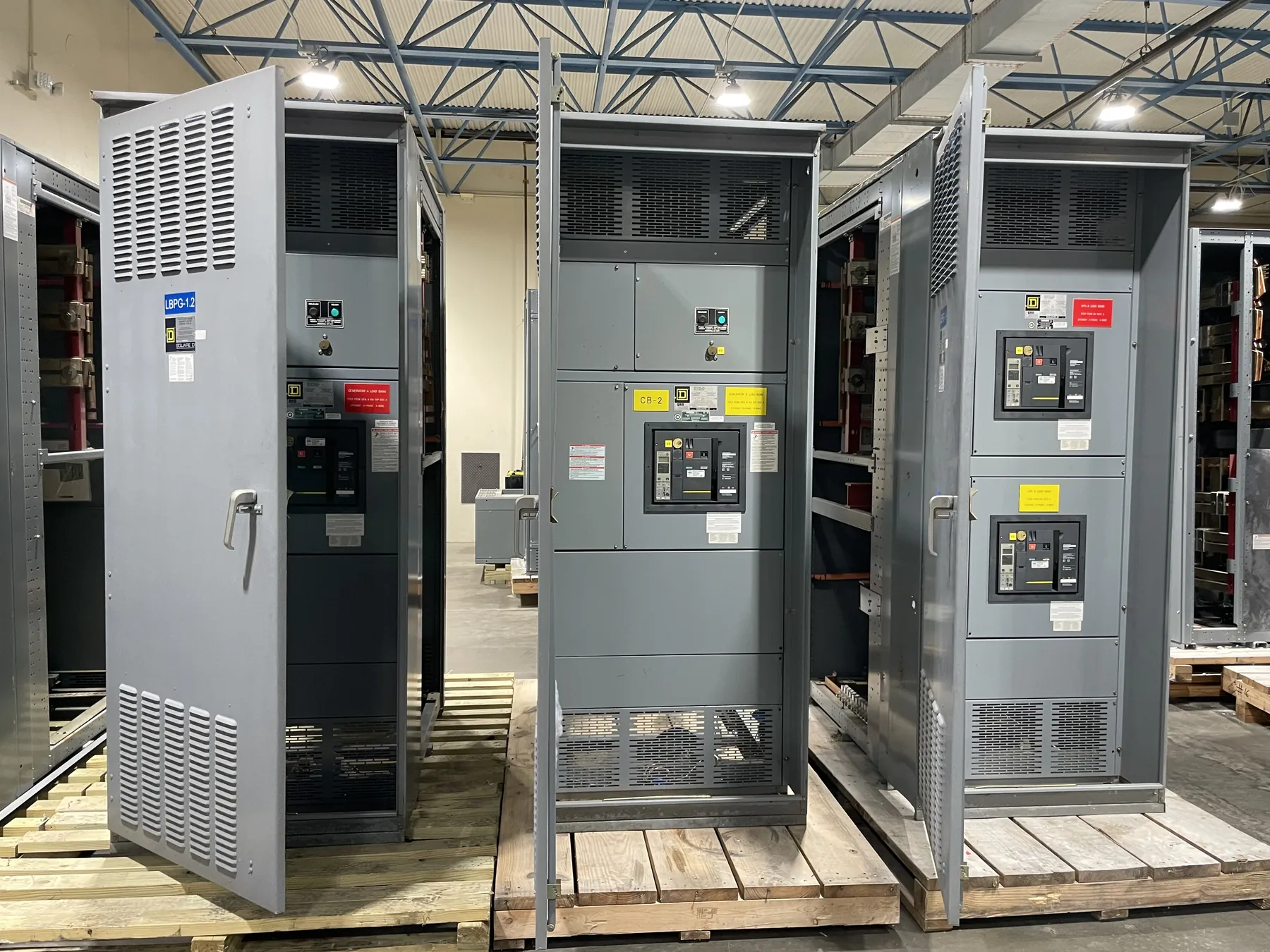
Airport Switchgear Planning for Henderson Facilities
Airport electrical distribution has to serve more than one type of load. Terminal areas, airfield support systems, baggage handling, security, communications, maintenance spaces and tenant facilities may have different operating schedules and different consequences when power is interrupted. For a Henderson airport project, start with the facility’s actual one-line diagram and load information rather than choosing a switchboard by building size or a single nameplate total. The equipment we manufacture is new, custom-built power-distribution equipment; its configuration should follow the project’s documented electrical requirements.
Before selecting bus and feeder capacity, record connected loads, demand assumptions, major motor loads, operating diversity and planned expansion. Separate existing loads from proposed additions, and identify which loads may operate together during peak conditions. These inputs help the project engineer assess feeder quantities, bus arrangement, protective-device requirements and available space for future circuits. Any capacity allowance should be deliberate: excessive oversizing can affect cost and physical fit, while insufficient allowance may constrain later airport changes.
Separate Critical Loads and Distribution Paths
Build a load schedule that distinguishes operationally critical systems from loads that can tolerate interruption or be restored in stages. Depending on the facility design, that review may include life-safety systems, security and access controls, communications, airfield-related support, baggage equipment, cooling, elevators and general receptacle loads. The airport’s electrical and operations teams must determine the required continuity for each function; a product selection alone cannot establish which loads are critical.
Once priorities are documented, the design team can consider whether separate sections, feeder groups or other distribution arrangements are appropriate. Physical separation may help organize distinct systems, but it does not by itself guarantee continuity or establish code compliance. Confirm the intended source, transfer method, protective coordination and downstream distribution for each critical load with qualified electrical professionals.
Coordinate Emergency and Alternate Sources
Emergency generators, alternate utility sources, transfer equipment and energy-storage systems can affect switchgear interfaces, but their arrangement depends on the project design. Define which equipment supplies each distribution section, where transfer functions occur, and which party furnishes the transfer equipment. Clarify whether the switchgear manufacturer’s scope includes source connection provisions, incoming devices, metering, controls or only designated distribution sections.
Provide source characteristics and operating assumptions for engineering review, including the project’s documented voltage, available fault-current information, grounding approach and transfer sequence. Ratings are not interchangeable with system voltage, and a device or assembly rating must be checked against the actual application. Protection and coordination decisions require review of the complete electrical system, not just the switchgear lineup.
Plan Phased Outages and Future Changes
Airport work often has to fit around active operations, tenant schedules and restricted work windows. For phased construction, identify which existing sections remain in service, which feeders are being added or relocated, and what temporary arrangements the project engineer has approved. A proposed lineup may need defined section boundaries, spare provisions or connection points that support the planned sequence, but these choices must reflect the drawings and site constraints.
Outage duration and sequence cannot be promised from equipment information alone. They depend on existing conditions, utility coordination, contractor methods, approvals and the facility’s operating plan. Share the phasing narrative and relevant drawings early so the equipment scope can be reviewed for interface points and space requirements. Henderson delivery planning should also account for receiving access, unloading arrangements, route limitations and the building’s equipment-room dimensions without assuming a particular site condition.
Confirm Ratings, Enclosure and Documentation
For a quotation, provide the latest one-line diagram, load schedule, equipment schedule, required system voltage, bus and feeder information, available fault-current data, protective-device requirements and any specified metering or control functions. Include drawings or measurements for the equipment room, cable entry, access path and installation orientation. Project specifications should identify applicable environmental conditions and enclosure requirements; the proper selection depends on the actual location and installation.
UL 891 applies to applicable low-voltage switchboards, not to every type of switchgear or every product configuration. Any requested listing, standard, rating or project-specific requirement must be confirmed for the exact assembly and application. Final equipment selection, code interpretation, protection settings and system compatibility require qualified engineering review and site-specific information.
Custom Manufacturing for Nevada Airport Projects
We manufacture new custom switchgear and power-distribution equipment in the United States using all-American components, with nationwide shipping that can serve Henderson projects. Short lead times are supported, but a schedule depends on the finalized scope, engineering review and project requirements; confirm timing for the particular quotation rather than relying on a general estimate. Complete load, interface and phasing information helps establish a practical equipment scope and reduces avoidable uncertainty during review.