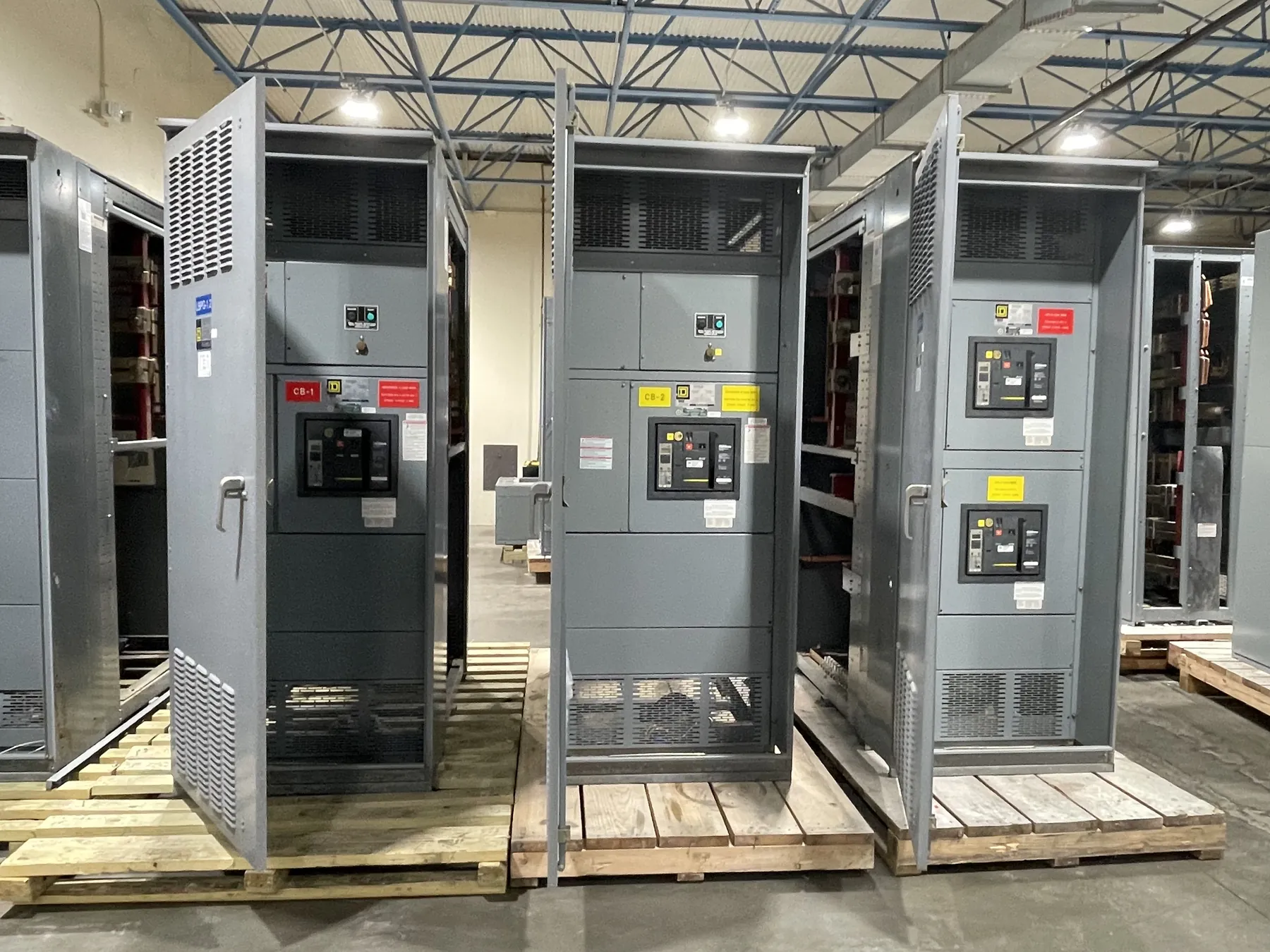
Pad-Mounted Switchgear for Henderson Projects
Pad-mounted switchgear brings switching and distribution equipment into a grounded outdoor enclosure, where its layout must work with the site’s electrical design as well as its physical surroundings. In Henderson, a project may have to account for paved service areas, landscaping, vehicle access, desert dust, intense sun, and limited room around a building or utility service point. Those conditions influence enclosure placement, access clearances, cable routing, and environmental protection. They should be reviewed before the equipment configuration is selected, not treated as details to resolve after the pad and conduits are in place.
We manufacture new custom power-distribution equipment in the United States using all-American components and ship nationwide, including to Nevada. The appropriate assembly depends on the project’s electrical requirements and site conditions. A qualified electrical engineer and the relevant utility or service provider should confirm the design, interfaces, and applicable requirements for the installation.
Enclosure Placement, Foundation, and Site Access
The foundation needs to suit the equipment dimensions, weight, anchorage requirements, and cable-entry arrangement specified for the selected configuration. Its elevation and finished surface should be coordinated with drainage, conduit stubs, adjacent paving, and any required working space. A foundation that is set before enclosure and entry details are confirmed can leave conduits misaligned or restrict access to compartments.
Henderson sites can vary from open parcels to dense commercial or industrial settings. Review the proposed location for vehicle exposure, nearby walls or fences, landscaping growth, pedestrian routes, and the space needed for installation and future service access. Sun exposure and airborne dust are relevant environmental factors, but enclosure construction and any environmental rating must be chosen and documented for the actual conditions. Do not assume that an outdoor enclosure is suitable for every exposure simply because it is installed outside.
Cable Entry and Utility Interfaces — Pad-Mounted Switchgear in Henderson, NV
Incoming and outgoing cable arrangements shape the enclosure layout, foundation details, and internal compartment configuration. The design team should establish whether conductors enter from below or another permitted direction, where conduits terminate, how cable bending space will be preserved, and how the equipment connects to the upstream source and downstream distribution. Conduit size, quantity, routing, conductor type, and termination requirements must come from the engineered project design rather than an assumed standard layout.
Utility interfaces require particular care. The serving utility or other source provider may have requirements for switching, metering, fault protection, access, or connection details. Those requirements vary by service and should be confirmed directly for the project. A proposed arrangement should identify the boundary between utility-owned and customer-owned equipment where applicable, without assuming that a particular switchgear configuration will receive approval.
Ratings, Bus Capacity, and Planned Expansion
Before choosing bus and feeder capacity, document the connected load, demand assumptions, load types, and expected operating patterns. Include planned expansion with enough detail to distinguish likely near-term additions from speculative future loads. This information helps the engineer evaluate present requirements and the consequences of selecting a different capacity or feeder arrangement. A larger future allowance can affect equipment configuration, enclosure size, cable terminations, and cost; an undersized arrangement may constrain later changes.
Equipment ratings are not the same thing as system voltage. Voltage, continuous current, short-circuit withstand or interrupting requirements, switching functions, and protective-device coordination all need project-specific confirmation. Ratings must be compatible with the source characteristics and the connected distribution system. The equipment manufacturer can work from the engineer’s specified requirements, but cannot determine a complete electrical design or select ratings without the relevant system information and qualified review.
Protection, Coordination, and Environmental Details
Protection should be considered across the source, pad-mounted assembly, and downstream feeders. Device types and settings affect coordination and must be evaluated against available system data, load characteristics, and the project’s protection study or engineering criteria. The physical separation of compartments, cable terminations, and operating interfaces also depends on the selected design. Any required listing or certification must be verified for the specific equipment and scope; UL 891 applies to applicable low-voltage switchboards and should not be treated as a blanket standard for all pad-mounted switchgear.
For outdoor service, define the environmental exposure and required enclosure features in the project specification. Consider solar exposure, dust, precipitation, drainage, corrosion exposure where relevant, and the surroundings that could obstruct access or ventilation. The design team should reconcile these conditions with the equipment manufacturer’s documented construction and limitations instead of relying on a general label such as “weatherproof.”
Information for a Henderson Equipment Quote
A useful quotation package identifies the project location and installation context, source and system information, engineer-confirmed ratings, feeder count and destinations, cable-entry direction, utility interface requirements, foundation constraints, environmental conditions, and expected expansion. Include drawings or a one-line diagram when available, along with applicable specifications and required submittals. Henderson delivery planning should also account for site access, unloading arrangements, construction sequencing, and whether the receiving area will be ready for the equipment; logistics and schedule depend on the project details and must be confirmed during planning.
With those inputs, a custom manufacturer can develop a configuration for engineering review rather than relying on a generic enclosure assumption. Final ratings, interfaces, listing applicability, and installation requirements remain subject to qualified engineering review and confirmation by the relevant project parties.