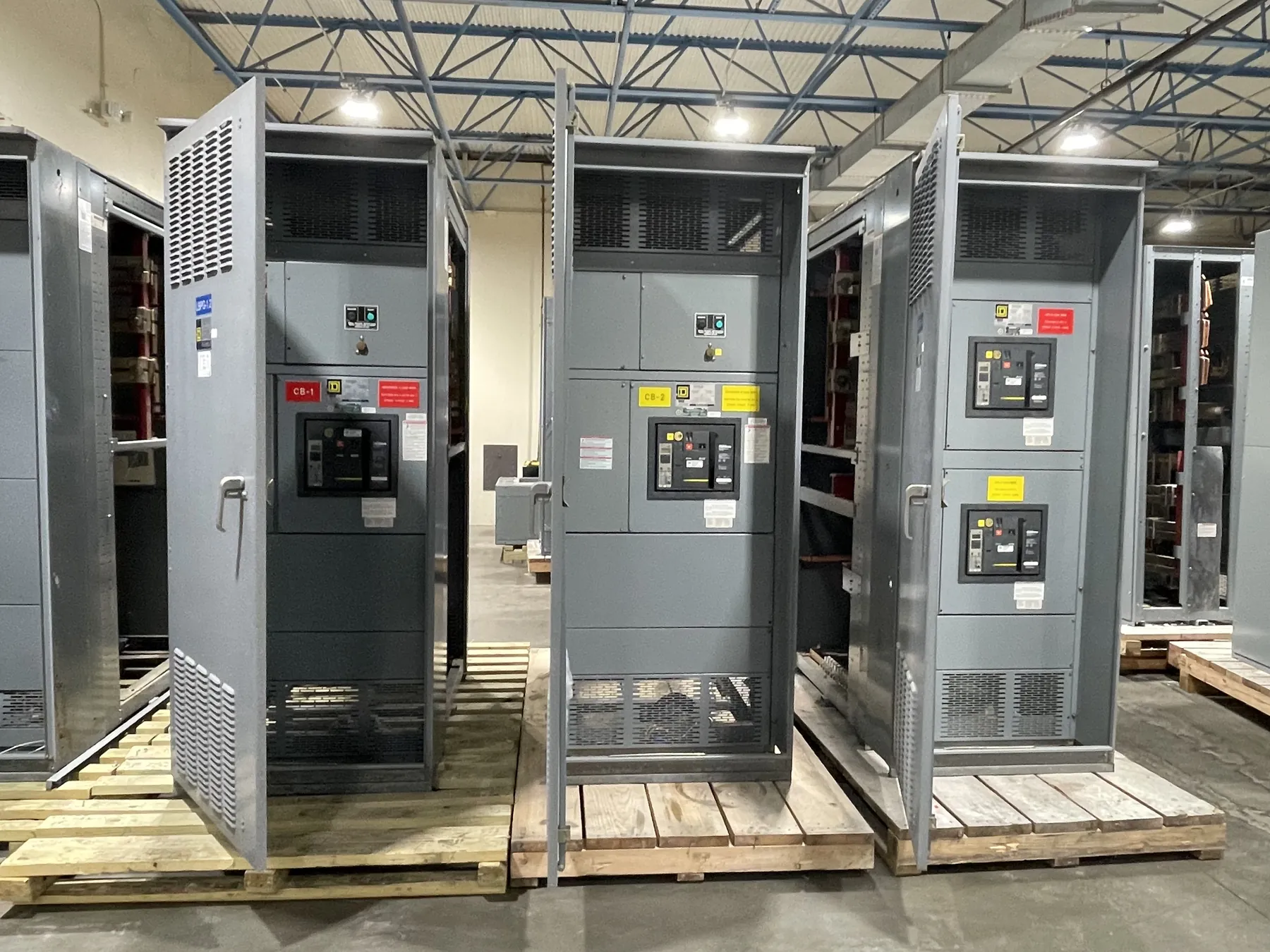
Utility Distribution Planning for Henderson Projects
Utility-related electrical work in Henderson begins with the requirements of the serving utility and the needs of the facility or development. A switchboard or other distribution assembly must fit the approved service arrangement, not simply a preliminary one-line diagram. Before selecting equipment, identify the point of connection, service characteristics, utility responsibilities, and the party responsible for metering and protection. Requirements can differ by project and must be confirmed with the utility and the project’s qualified electrical professionals.
For a new installation, expansion, or service modification, establish the connected load and document how demand was estimated. Include major loads, expected operating patterns, and planned additions. These assumptions inform bus and feeder capacity, enclosure configuration, and available spaces. Oversizing without a reason can affect footprint and cost; choosing too little capacity can constrain future work. The appropriate balance depends on engineering analysis, project plans, and applicable utility requirements.
Confirm Interconnection, Metering, and Protection Interfaces — Utility Switchgear in Henderson, NV
Interconnection details determine how the utility service connects to the customer’s equipment. Confirm service voltage and configuration, available fault-current information, ownership boundaries, and any required service entrance or utility-access provisions. Do not infer these details from a nominal system voltage or from a rating printed on equipment: a component’s voltage and current ratings describe equipment limits, while the service arrangement is a separate project condition.
Metering can affect the lineup layout and the location of compartments, barriers, instrument provisions, and access space. The utility may specify meter type, placement, wiring interface, or other acceptance criteria. Protection requirements also need early coordination. Protective devices and settings must be evaluated against the utility’s criteria, system study results, downstream equipment, and the characteristics of the installation. The manufacturer can build to confirmed project documentation, but device selection and protection settings require qualified engineering review.
Grounding, Fault Duty, and Equipment Ratings
Grounding provisions should follow the project’s service configuration, grounding design, and utility requirements. Confirm how grounding and bonding interfaces are to be arranged, including any specified connection points or conductors. These are not interchangeable details: the design must account for the actual system and installation rather than rely on a generic equipment description.
Equipment ratings need review against the documented system conditions, including applicable voltage, continuous load, and fault-current requirements. Bus and feeder capacity should reflect the load and demand assumptions, while protective-device and assembly ratings must be suitable for the conditions established by the engineering team. Ratings, listings, and construction details are product-specific and require confirmation for the proposed assembly. UL 891 applies to applicable low-voltage switchboards; it should not be treated as a blanket standard for every switchgear product or voltage class.
Acceptance Criteria and Coordination Before Release
Utility acceptance is not established by a product label alone. The project team should identify required drawings, submittals, metering arrangements, equipment construction details, and any utility review or inspection steps before equipment is released for manufacture. Confirm the current utility documents rather than relying on assumptions from another site or an earlier project. The utility’s acceptance process and the authority having jurisdiction may involve distinct requirements.
Coordinate the equipment with the electrical one-line, site layout, conduit entry plan, conductor routing, available room, and maintenance clearances. Henderson site conditions vary, so verify the actual delivery route, installation access, indoor or outdoor exposure, and space constraints with the project team. Where construction sequencing or service continuity affects the work, document the planned interfaces and responsibilities; avoid treating an equipment quotation as a substitute for a complete installation or outage plan.
Information That Supports a Useful Quotation — Utility Switchgear in Henderson, NV
A complete quotation request helps match the assembly to the project rather than to an assumed standard configuration. Provide the latest one-line diagram, load schedule, utility service requirements, fault-current data when available, metering and protection criteria, and grounding design information. Include the specified ratings and any applicable listing requirements, along with enclosure environment, dimensions, cable-entry preferences, and requested submittal details. Note planned expansion so that spare provisions can be evaluated deliberately.
Identify open items clearly, such as pending utility data or an unapproved service configuration. Those items can affect design, ratings, and schedule, so they should be resolved before final equipment approval. A U.S. manufacturer of new custom power-distribution equipment can review the documented scope and identify information needed to proceed; the final design remains subject to qualified engineering and project review.
Manufacturing and Delivery for Henderson Work
Custom equipment is manufactured from confirmed project requirements, with configuration and interfaces coordinated through the approved documentation. The manufacturer described here uses all-American components, builds in the United States, supports short lead times, and ships nationwide, including to Henderson. Actual timing depends on the finalized scope, component and design requirements, and project approvals; no delivery date should be assumed until confirmed for the order.
For Henderson projects, align shipment planning with site readiness, receiving access, storage conditions, and the installation sequence. Confirm who will receive and inspect the assembly and how it will be moved to its final location. These practical details, together with utility acceptance and engineering coordination, help keep a custom distribution package aligned with the project from specification through delivery.