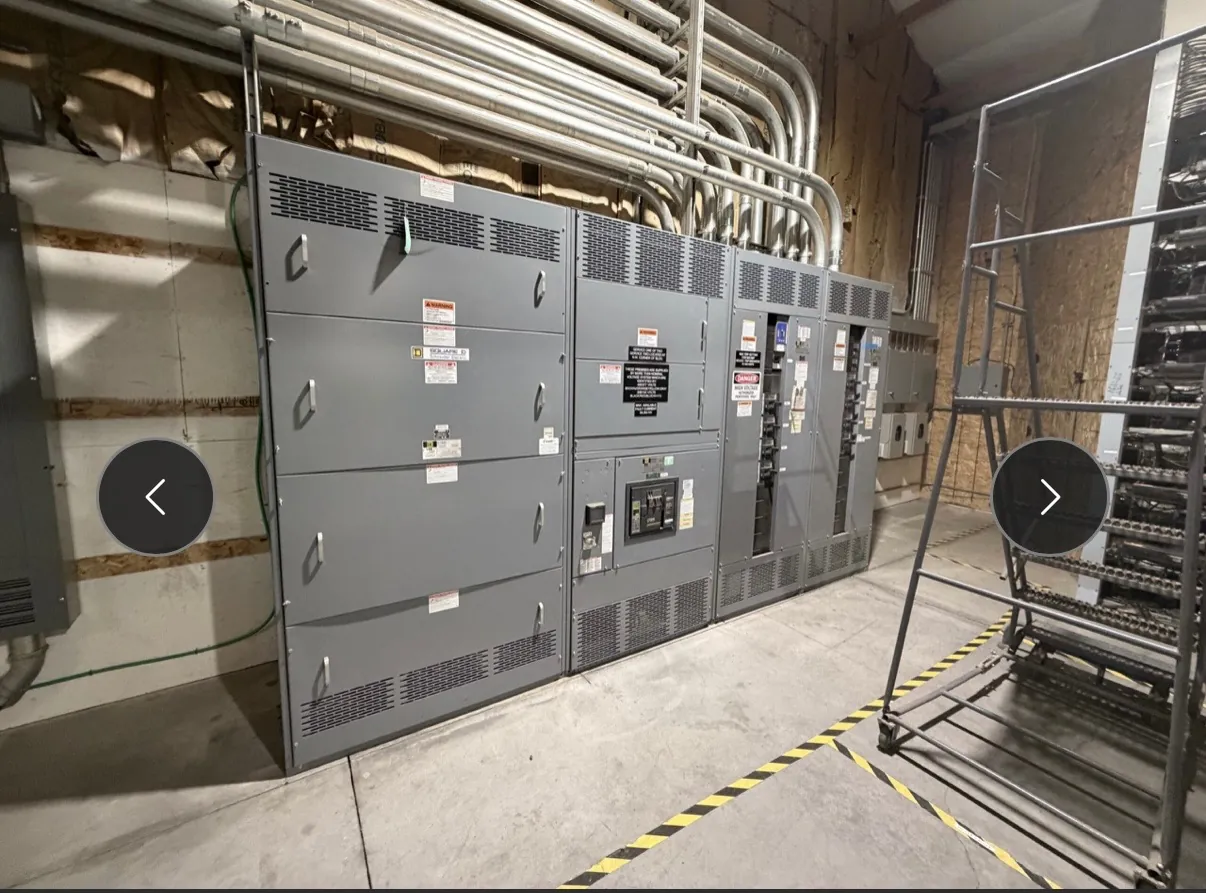
Low-Voltage Switchboards for Hawthorne, Nevada Projects
A low-voltage switchboard organizes incoming power and distributes it to feeders serving a facility’s panels, equipment, or other loads. For a Hawthorne project, the right configuration depends on more than the switchboard’s nominal voltage: engineers need to understand the source, the loads, available fault current, protective devices, and the conditions at the installation site. These details shape the equipment’s arrangement and ratings and must be confirmed before a design is finalized or quoted.
Custom switchboards are manufactured new in the United States using all-American components. Equipment can ship to Hawthorne and other locations nationwide. A project’s actual production and shipping schedule depends on its scope, approved design information, and component requirements; timing should be confirmed with the manufacturer during quotation.
Source and Feeder Arrangements
The incoming source determines how the switchboard interfaces with the rest of the electrical system. Project documents should identify whether the board serves a single source or requires a more involved arrangement, such as alternate sources or a transfer interface. Where sources can be connected or selected, the sequence of operation and the equipment boundaries must be established by the project’s electrical design team. The switchboard configuration should not be assumed from a building name or a general description of the service.
Feeder quantity, destinations, and protective-device requirements also influence the layout. A schedule showing each outgoing feeder, its connected equipment, and relevant design requirements helps clarify the number and type of devices and the physical space needed. Engineers should account for future circuits only when they are part of the defined project scope, rather than relying on a generic allowance.
Bus Sizing, Ratings, and Available Fault Current — Low-Voltage Switchboards in Hawthorne, NV
Bus sizing is an engineering decision tied to the intended load, design conditions, and equipment configuration. The applicable current rating must be selected for the project, not inferred from system voltage or from the appearance of a bus. System voltage and equipment ratings are related but distinct: a stated voltage does not by itself establish the required current rating, interrupting capability, or other design limits.
Available fault current at the switchboard is a key input to selecting compatible equipment and protective devices. The value depends on the source and the electrical path to the installation point; it should come from a qualified engineer’s study or other project-appropriate documentation. Changes to a transformer, source arrangement, or upstream equipment can affect fault duty, so assumptions need review against the current project information. The manufacturer should receive the applicable fault-current data and any required device coordination criteria for evaluation during design.
When UL 891 May Apply — Low-Voltage Switchboards in Hawthorne, NV
UL 891 applies to certain low-voltage switchboards. It should not be treated as a blanket standard for every product or as a description of medium-voltage equipment, high-voltage equipment, or busway. Whether it applies to a particular Hawthorne switchboard depends on the product design and project requirements. Do not assume a specific assembly is UL Listed without documentation establishing the listing for that equipment.
Before release, request project-specific listing and rating documentation for the proposed configuration. Confirm that the documents correspond to the supplied assembly, its intended application, and the required ratings. If the specification calls for a particular listing, marking, or documentation package, identify that requirement at quotation so it can be reviewed alongside the design. Final suitability and code compliance require qualified engineering review and confirmation under the requirements governing the actual installation.
Hawthorne Site Conditions and Installation Interfaces
Hawthorne delivery planning should account for the receiving location and the route from the delivery point to the equipment room. The project team should communicate access constraints that could affect handling, placement, or the dimensions and arrangement requested for the assembly. These may include restricted entrances, limited staging space, or other site-specific conditions; none should be presumed without information from the facility team.
The equipment’s interface with the building matters as much as delivery access. Confirm the intended cable entry and exit paths, conduit locations, room clearances, and connections to upstream and downstream equipment with the project designers. Site review may be necessary where drawings do not resolve access, fit, or connection questions. Such review does not replace the engineer’s responsibility for system design and installation requirements.
Information for a Useful Switchboard Quotation
A clear quotation request helps align the proposed switchboard with the design basis. Provide the one-line diagram and feeder schedule, source arrangement, system voltage, requested equipment ratings, available fault-current information, and any specified protective-device or coordination criteria. Include enclosure and connection requirements, applicable project specifications, and any requested UL 891 listing documentation. Drawings or notes describing Hawthorne site access and installation interfaces can help identify questions early.
When information is incomplete, the open items should be recorded as assumptions or questions for the project team—not silently converted into final ratings. Qualified engineers must resolve electrical design decisions, and the equipment manufacturer must confirm the proposed assembly details and documentation for the order. This review supports a switchboard arrangement suited to the defined project rather than a generic configuration.