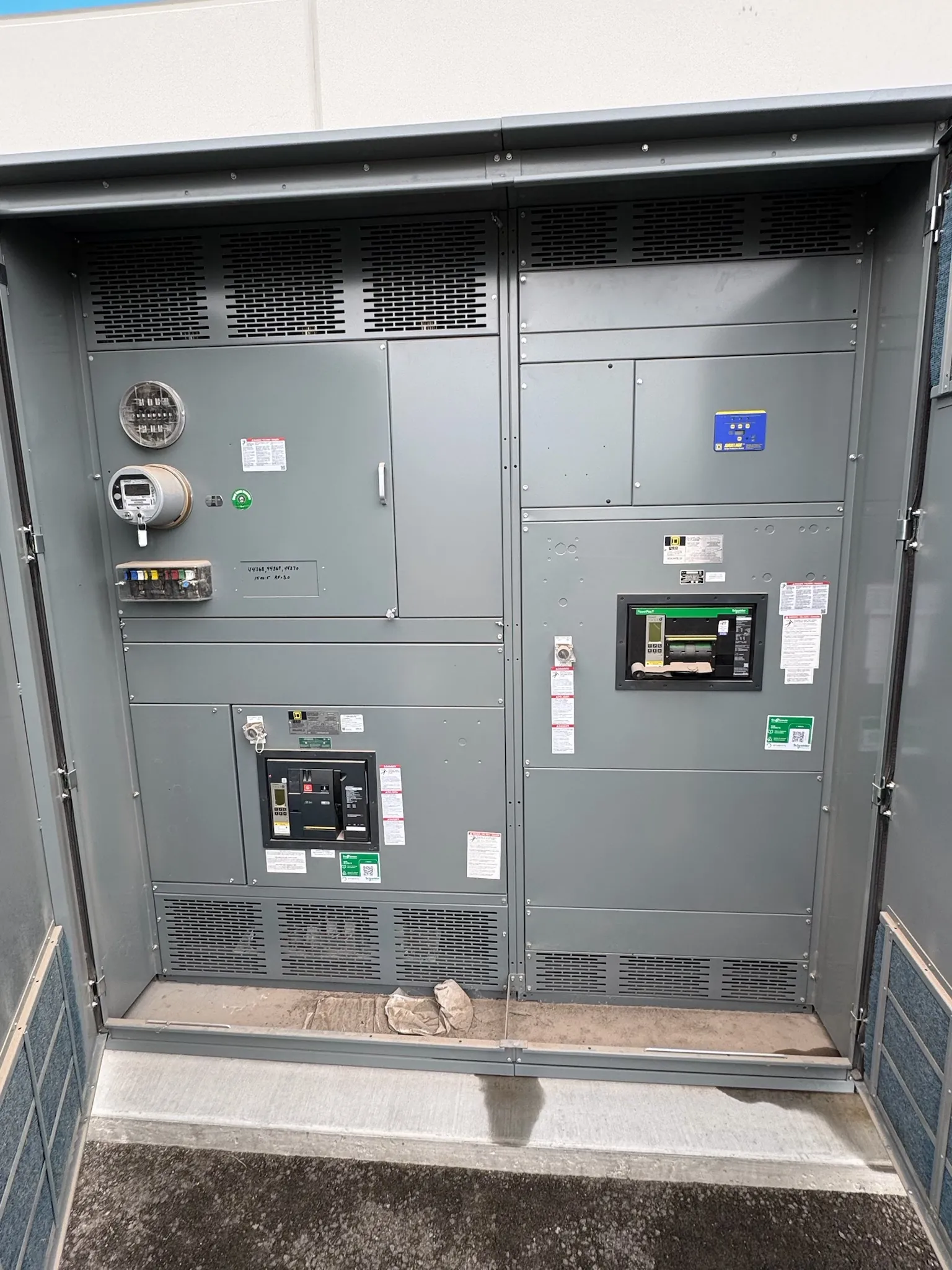
Planning Switchgear for a Hawthorne, Nevada Project
Projects in Hawthorne can require distribution equipment suited to a particular service arrangement, facility layout, and operating plan. The right assembly is not determined by location alone: it depends on the electrical system, the loads it must serve, the available fault current, and the conditions at the installation site. A U.S. manufacturer can build new custom power-distribution equipment and ship it to Nevada, but the project team must establish the design inputs before a configuration or schedule can be meaningfully quoted.
Start by identifying the equipment’s role. A switchboard serving a building distribution system has different design considerations from switchgear used in another part of a facility’s power system. Clarify whether the scope includes service equipment, distribution sections, source transfer provisions, metering, or connections to downstream equipment. These details help define the assembly and its interfaces without assuming a particular arrangement is appropriate for every Hawthorne site.
Define the Source Arrangement and Distribution Scope
Describe how power reaches the equipment and what the assembly must supply. Relevant inputs include the source configuration, system voltage, phase and wire arrangement, incoming conductors or bus connections, and the number and type of outgoing circuits. If the design includes more than one source, identify how sources are intended to interact and whether transfer or interlocking functions are part of the requested scope. Those requirements need engineering review; they should not be inferred from a brief description of the site.
Also identify the connected equipment and any important operating constraints. A load schedule, one-line diagram, or clearly marked distribution plan can help the manufacturer and project engineer understand feeder quantities, protective-device requirements, metering needs, and space limitations. Where a future expansion is anticipated, state that expectation early. Reserved space, spare provisions, and installed capacity are distinct design decisions and should be specified rather than treated as interchangeable.
Establish Fault Duty, Ratings, and Applicable Listings
Fault duty is a central selection input, not a value to estimate from the service voltage. Provide the available fault-current information at the proposed equipment location, along with upstream protective-device details when available. The qualified electrical engineer must evaluate the system and confirm the required equipment ratings and coordination. A rating should not be confused with system voltage: each describes a different aspect of the design, and both must be appropriate for the application.
For applicable low-voltage switchboards, UL 891 may be relevant to the requested product. It does not apply to every type of switchgear or automatically establish suitability for medium- or high-voltage equipment, busway, or an entire installation. Listing status, product scope, ratings, and project requirements require confirmation for the specific proposed assembly. Share the project specification and any owner or engineer requirements so they can be reviewed against the requested equipment rather than assumed.
Review Hawthorne Site Conditions and Access
Before equipment dimensions and shipping arrangements are finalized, document where the assembly will be installed and how it will reach that location. Relevant conditions include available floor area, clearances established by the project design, door and corridor dimensions, turning space, receiving access, and any lifting or placement constraints. Note whether the equipment will be indoors or exposed to outdoor conditions, and provide the environmental requirements needed for the enclosure and installation review.
Hawthorne projects may have site-specific access, receiving, or staging limitations that affect how equipment is prepared and delivered. Confirm the delivery address, receiving hours, unloading responsibility, site contacts, and any restrictions on vehicle access with the project team. These logistics should be coordinated before shipment; a destination in Nevada alone does not establish that a particular vehicle, unloading method, or installation path will work.
Prepare a Useful Quotation Package — Switchgear for Hawthorne, NV
A complete inquiry helps align the proposed equipment with the design and reduces avoidable assumptions. Include the one-line diagram or a written description of the source arrangement, system voltage, fault-current information, feeder schedule, specified protective devices, metering and control requirements, enclosure conditions, and available installation dimensions. Add project specifications, required submittals, requested listing criteria, and the anticipated delivery location and access notes when applicable.
Identify any items that remain under review, such as final fault-current data or unresolved interface requirements. The manufacturer can use the available information to clarify scope and identify questions, but a quotation is not a substitute for engineering approval. Ratings, component selection, coordination, and compliance with the project documents need confirmation by the responsible qualified professionals.
Coordinate Manufacturing, Review, and Delivery
Custom equipment is built around the information approved for the project, so changes to circuit counts, source interfaces, dimensions, or specified devices can affect design and manufacturing coordination. Establish who will review drawings, resolve comments, and approve the final configuration. Confirm the required submittal format and project milestones before relying on a schedule; no exact lead time should be assumed until the scope and production requirements are reviewed.
The manufacturer’s assemblies use all-American components, are built in the United States, and can ship nationwide, including to Hawthorne. Delivery planning still depends on the final equipment configuration and the site’s receiving conditions. Keeping the electrical engineer, contractor, equipment manufacturer, and receiving team aligned helps address technical interfaces and logistics as separate but connected parts of the project.