Automatic Transfer Switches for Hawthorne, Nevada Projects
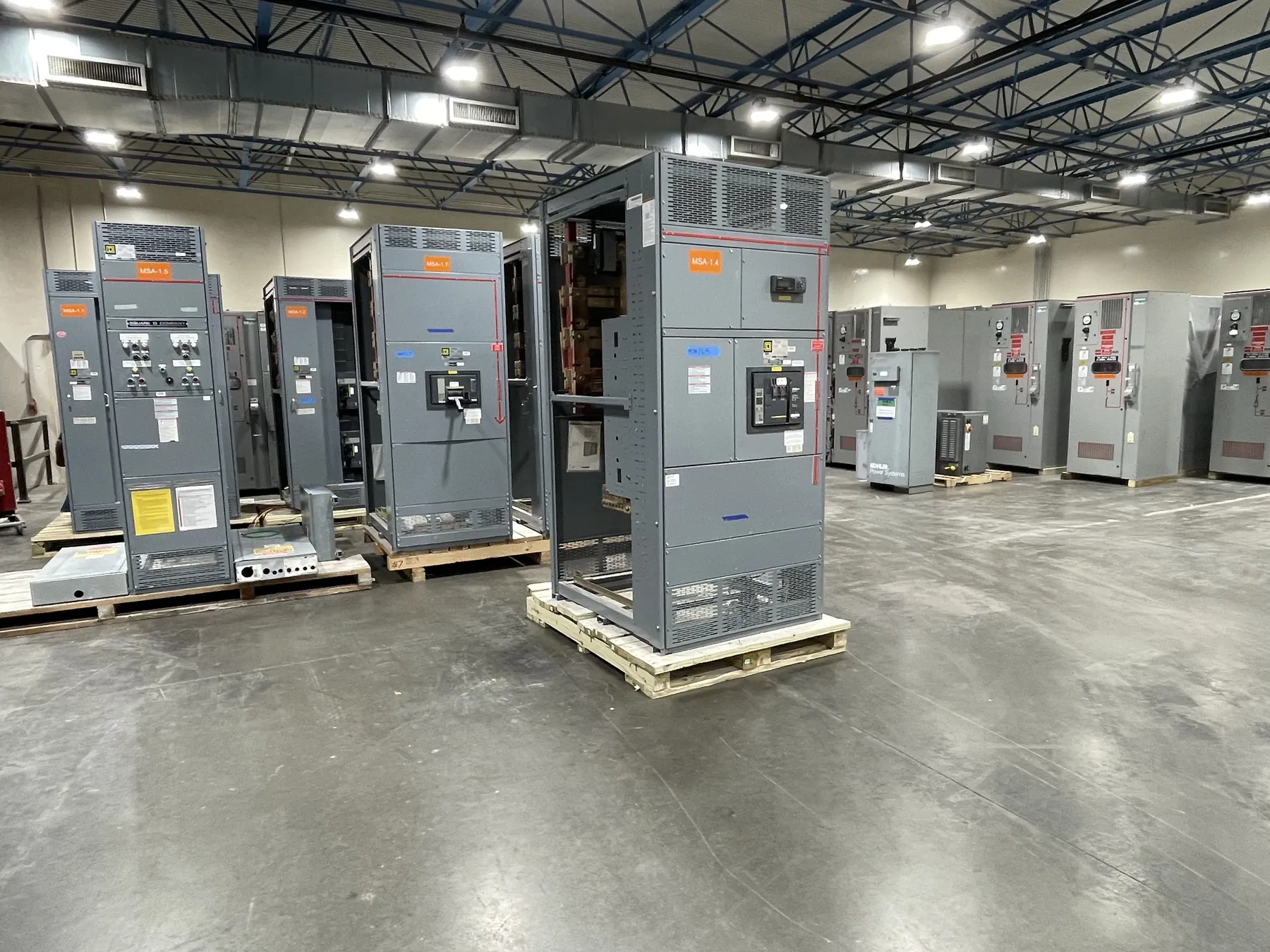
An automatic transfer switch (ATS) connects a designated load to one of two power sources and changes the connection when its control system detects that the preferred source no longer meets configured conditions. For a Hawthorne project, the right equipment depends on the actual source arrangement, the loads that must transfer, available fault current, and the installation environment—not just the switch’s ampere rating. We manufacture new custom power-distribution equipment in the United States using all-American components, and ship nationwide, including to Nevada. Project-specific switch selection and system design require review by qualified electrical engineers.
Transition behavior and source sensing — Automatic Transfer Switches in Hawthorne, NV
Transfer behavior is a design choice. An open-transition switch disconnects one source before connecting the other, creating a brief interruption. A delayed transition can add a neutral interval between source connections, which may suit applications that require time for residual voltage or connected equipment behavior to settle. Closed transition briefly overlaps the sources only where the sources, controls, protection, and applicable requirements permit that arrangement. It is not a default substitute for open transition.
Source-sensing settings also matter. Controls may monitor conditions such as voltage and frequency and apply project-defined limits and time delays before initiating a transfer or retransfer. Those settings should reflect the source characteristics, generator response if present, load behavior, and operating intent. Too little delay can cause unnecessary transfers during temporary disturbances; excessive delay may leave a load on an unacceptable source longer than intended. The engineer must define the sensing and timing requirements for the specific system.
Load rating, fault duty, and coordination
The ATS continuous-current rating must suit the connected load and system design, but that number alone does not establish whether a switch is appropriate. Its withstand and closing capability must be evaluated against the available fault current and the specified upstream protective device or other tested combination, as applicable. A mismatch can undermine the intended protection scheme. The project team should provide the system voltage, source configuration, calculated fault duty at the switch, protective-device information, and load characteristics so these details can be reviewed together.
Consider whether the transferred load includes motors, electronic power supplies, transformers, or other equipment with starting, inrush, or power-quality characteristics that affect transfer performance. Identify which loads are essential and whether they transfer together or in separate groups. Coordination with upstream and downstream protective devices, generator controls, and building or plant control systems should be addressed during design. No single rating or product selection can establish compatibility without the system details.
Neutral switching and grounding arrangement — Automatic Transfer Switches in Hawthorne, NV
Whether the ATS switches the neutral is a system-design decision, not a feature to select by habit. It depends on the source grounding arrangement, including whether a generator is treated as a separately derived source, how the neutral-to-ground connection is configured, and how the applicable electrical design handles grounding and bonding. A switched-neutral configuration and a solid-neutral configuration have different implications for the system. The engineer of record should determine the required arrangement and confirm that the selected equipment matches it. Provide source and grounding diagrams with the inquiry; a brief description such as “utility and generator” is not enough to establish neutral requirements.
UL 1008 and equipment documentation — Automatic Transfer Switches in Hawthorne, NV
UL 1008 applies to transfer-switch equipment where applicable. It is distinct from UL 891, which concerns applicable low-voltage switchboards; neither standard should be treated as a blanket statement about every product or installation. Confirm the required listing, labeling, product configuration, and documentation for the specific ATS and project. Do not assume that a standard reference, voltage designation, or component selection establishes a listing. Requirements can depend on the equipment type, intended use, installation, and the authority having jurisdiction. The project team should identify required standards and acceptance conditions in the specification for review.
Hawthorne project details for a useful quotation
For a Hawthorne-area request, share the one-line diagram or equivalent source information, system voltage, source types, load schedule, ATS location, transfer sequence, neutral and grounding requirements, and available fault-current data. Include the specified current and withstand requirements, protective-device details, control interfaces, enclosure and environmental conditions, and any required listing or submittal documentation. If access, delivery routing, receiving hours, lifting arrangements, or site coordination could affect shipment and installation, flag those constraints early. Nevada site conditions and project logistics should be verified by the project team rather than assumed.
Complete inputs help us identify the relevant design questions before equipment is configured. Ratings, listing requirements, and project details remain subject to engineering review and confirmation. We build new custom equipment in the United States and can coordinate nationwide shipment for approved project requirements.