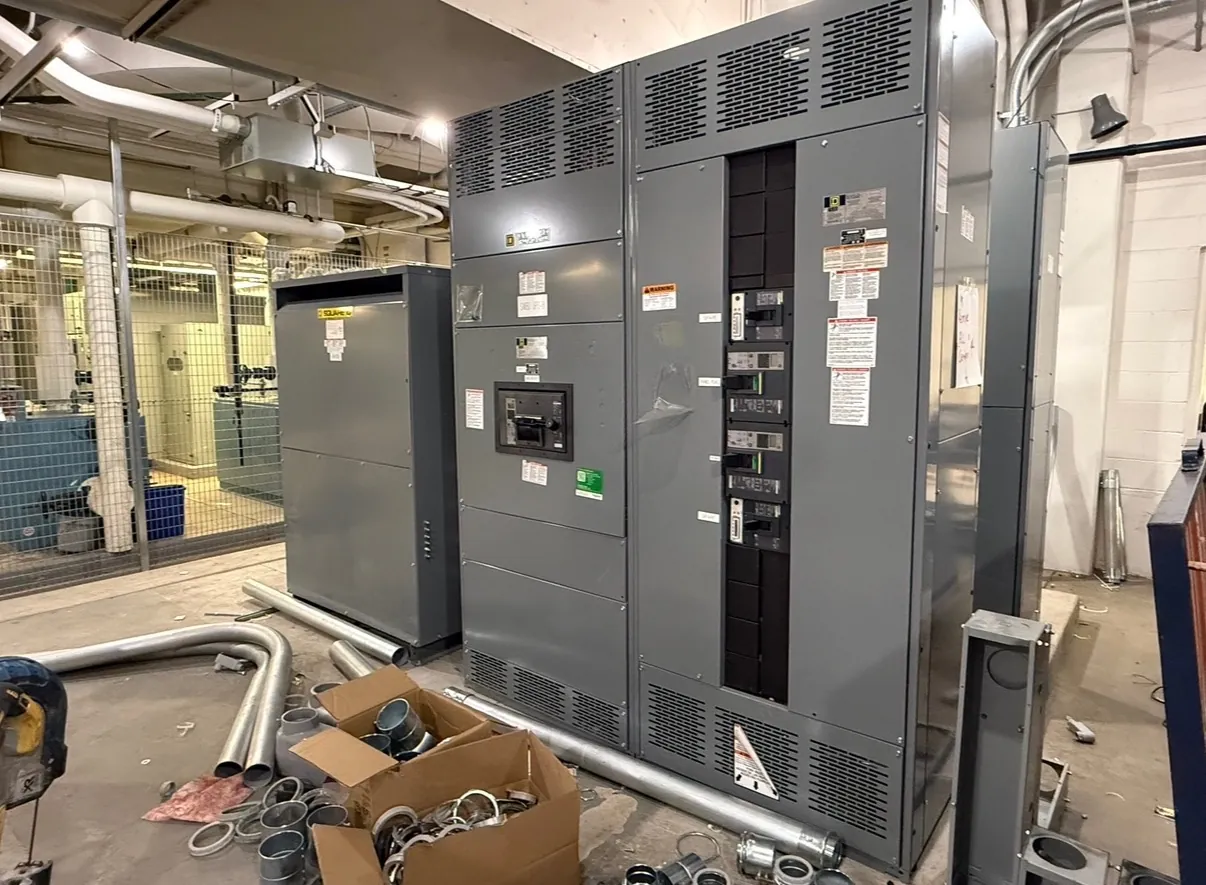
Low-Voltage Switchboards for Gardnerville Projects
Low-voltage switchboards distribute power from a service or other source to downstream feeders and equipment. For a Gardnerville project, the right configuration depends on the electrical design, connected loads, utility and service requirements, and the conditions at the installation site. We manufacture new custom power-distribution equipment in the United States using all-American components and ship nationwide, including to Nevada. A project review helps establish what the switchboard must interface with and what documentation the equipment must provide.
Start with the one-line diagram and the intended role of the assembly. A service switchboard, a distribution switchboard downstream of a transformer, and a board feeding several major loads can have different arrangements and requirements. Confirm the source, service entrance configuration where applicable, number and function of feeders, protective devices, metering needs, and space or connection requirements for future work. Equipment layout should follow the project documents rather than assumptions based on a general description of the facility.
Service and Feeder Arrangements — Low-Voltage Switchboards in Gardnerville, NV
Service and feeder sections must be coordinated with the distribution plan. The design team should identify incoming conductors, main overcurrent protection, outgoing feeder devices, and any required provisions for metering or auxiliary equipment. The physical arrangement also matters: cable entry direction, termination space, conduit locations, access clearances, and the orientation of adjacent equipment can affect whether a proposed lineup fits the room and supports the intended installation.
For quotation, provide the latest available one-line diagram, feeder schedule, electrical specifications, and applicable project notes. Include known requirements for the main device, feeder quantities and sizes, enclosure configuration, metering, and interfaces to transformers, generators, or other sources. These details help identify design questions early. Final equipment selections and interfaces must be reviewed against the project documents by qualified electrical professionals.
Bus Sizing and Available Fault Current — Low-Voltage Switchboards in Gardnerville, NV
Bus sizing is not determined by a single number in isolation. The project engineer considers the applicable current rating, load and feeder arrangement, temperature and enclosure conditions, conductor connections, and the equipment’s specified short-circuit withstand or interrupting requirements. The selected bus and protective devices must work as part of the complete distribution system. A higher ampere rating alone does not establish suitability for a particular installation.
Available fault current at the switchboard is a key coordination input. It depends on the source and system characteristics, including upstream equipment and conductor impedance; it should be supplied or confirmed by the project’s electrical engineer. The switchboard’s applicable ratings and protective-device characteristics must be evaluated against that system information. Changes to transformers, sources, or upstream protective equipment can affect the analysis, so a quotation based on preliminary data may require review when design information is updated.
UL 891 and Project-Specific Documentation — Low-Voltage Switchboards in Gardnerville, NV
UL 891 applies to low-voltage switchboards within its scope; it is not a blanket standard for every type of switchgear or every voltage class. Whether it applies to a particular assembly depends on the product configuration and project requirements. A specification that references UL 891 should be reviewed alongside the intended equipment scope, required ratings, and documentation expectations.
Do not infer a listing or certification from a product description or from a rating value. Request project-specific documentation identifying the applicable equipment and its listing status, ratings, and configuration, and have the design team verify that the documents satisfy the project specification and authority requirements. Ratings, listing details, and design compatibility require confirmation for the actual assembly; they should not be assumed from a general catalog category.
Gardnerville Site Conditions and Installation Planning — Low-Voltage Switchboards in Gardnerville, NV
Gardnerville’s elevation and the actual installation environment are relevant inputs for equipment selection and specification review. Confirm the site elevation rather than relying on a citywide assumption, and have the responsible engineers determine whether it affects applicable equipment requirements. Provide the intended installation location and any project-specific environmental criteria so the enclosure and assembly can be reviewed for that application.
Identify whether the switchboard will be installed indoors or outdoors. For either placement, document the conditions specified for the site, such as exposure, ambient environment, ventilation, and enclosure requirements. Outdoor equipment may face environmental conditions that differ substantially from a controlled electrical room; indoor placement still requires attention to room dimensions, access, clearances, and connection routes. Final suitability depends on the equipment specification and site review, not location name alone.
Quotation Inputs and Nationwide Delivery
A useful request for quotation includes the project location, one-line diagram, equipment specification, feeder schedule, available fault-current information, requested ratings, and required listing documentation. Add known dimensions, indoor or outdoor placement, verified installation elevation, cable-entry preferences, and relevant environmental specifications. Note which details are firm and which remain under engineering review. This makes it easier to identify open items without treating preliminary information as a final design.
We manufacture new custom switchboards in the USA and ship nationwide. Shipping arrangements to Gardnerville can be considered once the equipment scope and delivery requirements are defined; no local factory or office is implied. The project team should confirm site access, receiving constraints, unloading provisions, and installation sequencing with its contractors. A complete review of drawings, ratings, listing documentation, and site conditions is essential before equipment is released for a specific application.