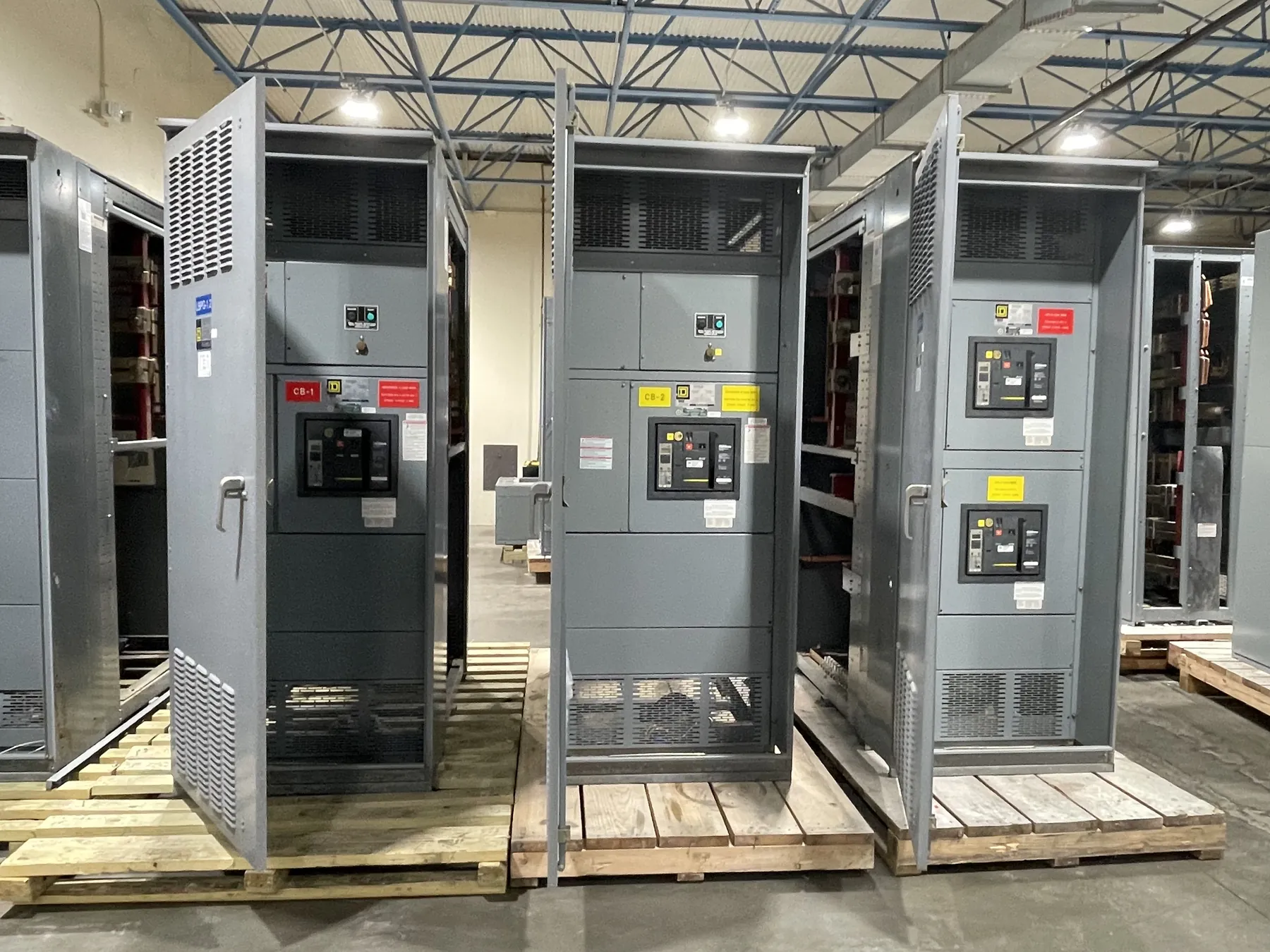
Planning Switchgear for a Gardnerville, Nevada Project
Projects in Gardnerville need distribution equipment selected for the electrical system and the conditions where the assembly will operate. Start by identifying the building or facility served, the source of power, the loads to be supplied and the intended location of the equipment. A one-line diagram, service information and project specifications give the manufacturer a useful basis for developing a configuration. Requirements vary by project, so a general equipment description alone is not enough to confirm suitability, ratings or compliance.
Equipment for Nevada projects is manufactured in the United States and can ship nationwide. Shipping to Gardnerville does not imply a local manufacturing facility or local inventory. Delivery planning should account for the receiving site’s access, unloading arrangements, interior route and final equipment location. These details can affect how the assembly is configured and shipped, and should be discussed before drawings and production plans are finalized.
Confirm Elevation, Placement and Site Conditions
Gardnerville’s elevation is an important input for engineering review, particularly where the project specification or applicable equipment documentation sets limits on installation altitude. Provide the site elevation rather than relying on a broad regional assumption. The manufacturer and project engineers can determine whether the proposed equipment and its ratings need additional review or adjustments for the actual installation conditions.
Specify whether the assembly will be installed indoors or outdoors, and describe the space in which it will operate. Indoor locations may still be exposed to dust, moisture, temperature variation, condensation or other environmental factors. Outdoor placement raises questions about weather exposure, enclosure requirements, access and the equipment’s surroundings. An enclosure designation or environmental specification should be selected for the real site conditions, not treated as a substitute for reviewing them.
Also note available floor space, ceiling height, door and corridor dimensions, equipment-room access, working clearances shown in project documents, and any restrictions on moving large sections into place. These constraints can influence section arrangement and shipping configuration. Site review and qualified design coordination are needed to resolve installation details.
Define the Electrical System and Equipment Scope
Identify the system voltage, number of phases and wires, available source information, service or feeder arrangement, and the loads the equipment must serve. Voltage describes the electrical system; it is not interchangeable with an equipment rating. Specify the required current ratings and fault-duty information from the project design, including the basis for those values, so the proposed assembly can be evaluated against the actual system.
Clarify whether the scope is a low-voltage switchboard, switchgear, or another distribution assembly. These terms are not interchangeable in every specification. UL 891 applies to applicable low-voltage switchboards; it should not be read as a blanket standard for all switchgear or for medium- and high-voltage equipment. Any listing, standard, rating or certification requirement must be confirmed for the particular product and configuration. Do not assume it from a product category alone.
Describe the functional arrangement: incoming source, distribution sections, feeder devices, metering or monitoring provisions, and any required ties or transfer interfaces. The project engineer should confirm protective-device selections and coordination with upstream and downstream equipment. Changes to breaker types, compartment arrangements or metering provisions can affect layout, interfaces and documentation.
Coordinate Interfaces Before Requesting a Quote
A useful quotation package typically includes the latest one-line diagram, equipment specifications, load or feeder schedule, available fault-current information, site elevation, installation environment and required delivery location. Identify governing project requirements and any requested drawings, submittals or documentation. If key electrical values are not yet established, flag them as pending rather than treating estimates as final design inputs.
Coordinate connections with the source equipment, transformers, downstream panels and other adjacent assemblies. Confirm cable or bus connections, entry direction, phasing, grounding provisions and space for terminations against the project documents. Building access and the planned installation sequence matter too: a configuration that fits electrically may still need revision if it cannot be moved through the available route or positioned as intended.
Review Drawings, Ratings and Applicable Requirements
Before release for manufacture, qualified project personnel should review the proposed arrangement and verify the electrical and physical interfaces. Confirm system voltage separately from equipment ratings, and check that interrupting or withstand requirements, protective devices and any specified listing are addressed for the actual assembly. Ratings, listings and project details require confirmation; they cannot be established from location or a general equipment description.
Code requirements, utility criteria and project-specific standards may affect the design, but their applicability depends on the installation and must be confirmed by the responsible engineers. Review drawings for section dimensions, access, connections, device functions and environmental assumptions. Resolve discrepancies between drawings and specifications before the design is approved for production.
Plan Manufacturing and Delivery to Gardnerville
After project requirements and interfaces are reviewed, the manufacturer can develop a configuration for the specified application. Assemblies use all-American components, are built in the USA and are designed to support short lead times; actual timing depends on the scope, approved design and project requirements and should be confirmed during quotation. Nationwide shipping can support delivery to Gardnerville, with freight and receiving arrangements coordinated for the site.
For an efficient handoff, provide a project contact, delivery constraints, receiving hours and any site-specific unloading or access requirements. Confirm the ship-to location and delivery sequence before shipment planning. These practical details, together with accurate engineering inputs, help align the equipment configuration with the Gardnerville installation without assuming a local facility or a particular project outcome.