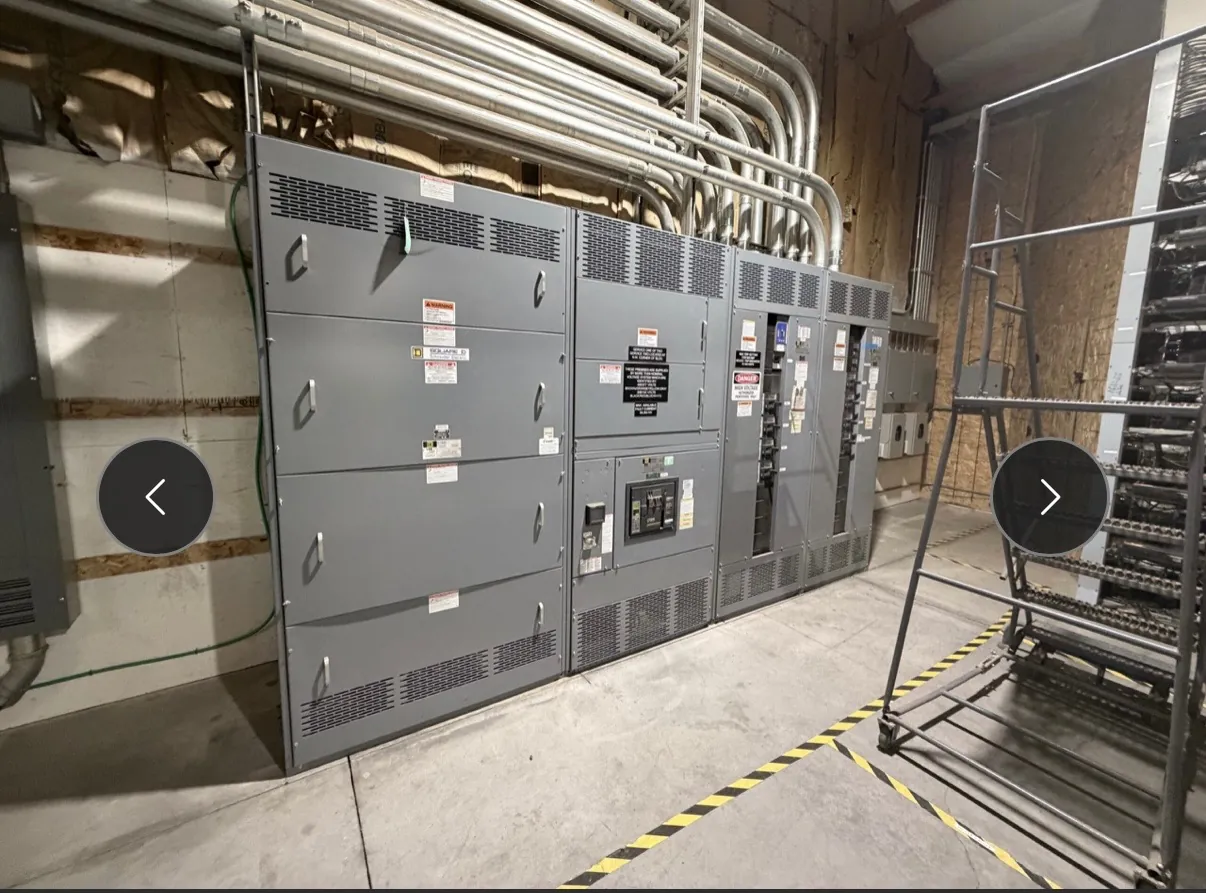
Automatic Transfer Switches for Gardnerville Projects
An automatic transfer switch (ATS) connects a load to one of two power sources and changes the connection when its controls detect a qualifying source condition. In a Gardnerville project, the right configuration depends on the facility’s load, normal and alternate sources, operating priorities, and installation environment—not on a product label alone. We manufacture new custom power-distribution equipment in the United States using all-American components, and can ship equipment nationwide, including to Nevada. Project-specific ratings, listings, and configuration must be confirmed through engineering review.
Early planning should establish whether the switch serves a whole facility, selected distribution equipment, or a particular critical load. That distinction affects switch ampere rating, enclosure and connection arrangement, source-control interfaces, and coordination with upstream and downstream protective devices. It also helps identify what should happen when a source returns or becomes unstable.
Transition Behavior and Source Sensing — Automatic Transfer Switches in Gardnerville, NV
Transfer behavior describes how the load moves from one source to the other. An open-transition switch disconnects from the first source before connecting to the alternate; a closed-transition design can briefly overlap the sources when the system and application permit it. These approaches have different implications for continuity, source compatibility, utility or generator interfaces, and project approvals. Neither should be selected solely on the assumption that uninterrupted power is required.
Controls may monitor conditions such as voltage and frequency, along with phase-related conditions where applicable. The project team should define which source conditions initiate transfer, any required time delays, how restoration is handled, and whether manual control or alarms are needed. Generator start and stop signals, remote status points, and building-management interfaces should be identified early. Their details must be coordinated with the source equipment and control scheme rather than presumed from the ATS model.
Load, Withstand, and Coordination Ratings
Several ratings describe different aspects of an ATS. Its current rating must suit the connected load and the project’s electrical design. Its short-circuit withstand and closing capability address its ability to perform under specified fault conditions when applied with the required upstream protective device. These ratings are not interchangeable, and they do not by themselves establish the system voltage or determine whether the switch is suitable for a particular installation.
Selection therefore requires more than matching a nominal current value. Engineering review should consider available fault current, the protective device and its settings, conductor arrangement, source characteristics, and the intended system voltage. The coordination study and project documents should establish the applicable requirements. Confirm the exact equipment rating and any conditions of use before release; do not infer fault performance from enclosure size or a general product description.
Neutral Switching and System Grounding — Automatic Transfer Switches in Gardnerville, NV
Whether the ATS switches the neutral is a system-design decision. It is tied to the source grounding arrangement, generator configuration, bonding points, and the way the electrical system is designed to manage neutral current and ground-fault protection. A switched-neutral arrangement may be appropriate in some applications, while others call for a solid neutral. Choosing between them without reviewing the complete grounding scheme can create coordination problems.
For a Gardnerville quotation, provide the one-line diagram and describe the normal and alternate sources, including generator details if applicable. Note the grounding and bonding approach, required protective devices, and any ground-fault sensing or control interfaces. The responsible electrical engineer should confirm the intended neutral arrangement and its compatibility with the rest of the system.
UL 1008 and Equipment Documentation — Automatic Transfer Switches in Gardnerville, NV
UL 1008 is the standard associated with transfer-switch equipment. Its applicability and any required listing depend on the equipment and project specifications. Do not assume that every configuration is listed, or that a listing substitutes for checking ratings, installation conditions, and system coordination. The quotation and submittal review should identify the requested standard, listing requirements, transfer mode, and relevant switch ratings so they can be evaluated for the specific design.
Include the project voltage and phase, load and current requirements, fault-current information, source types, protective-device details, enclosure requirements, and control or communications points in the inquiry. Drawings and specifications help resolve omissions. Any proposed configuration and documentation require confirmation before manufacture.
Gardnerville Site Conditions and Installation Planning — Automatic Transfer Switches in Gardnerville, NV
Gardnerville’s project conditions should be treated as site-specific. Confirm the installation elevation and whether the ATS will be indoors or outdoors. Elevation can affect equipment application requirements, while location and enclosure selection depend on exposure, ambient conditions, ventilation, and the project’s environmental specifications. Outdoor placement may call for enclosure features different from those suited to a controlled electrical room; the site documents should define the necessary protection and access constraints.
Share the intended mounting location, available space, cable-entry direction, conductor termination needs, and any transportation or receiving limitations. These details help assess enclosure arrangement and shipment planning without assuming a particular site layout. With complete electrical and environmental inputs, our engineering team can review a custom new ATS configuration for the project and confirm applicable ratings, documentation, and manufacturing details before an order proceeds.