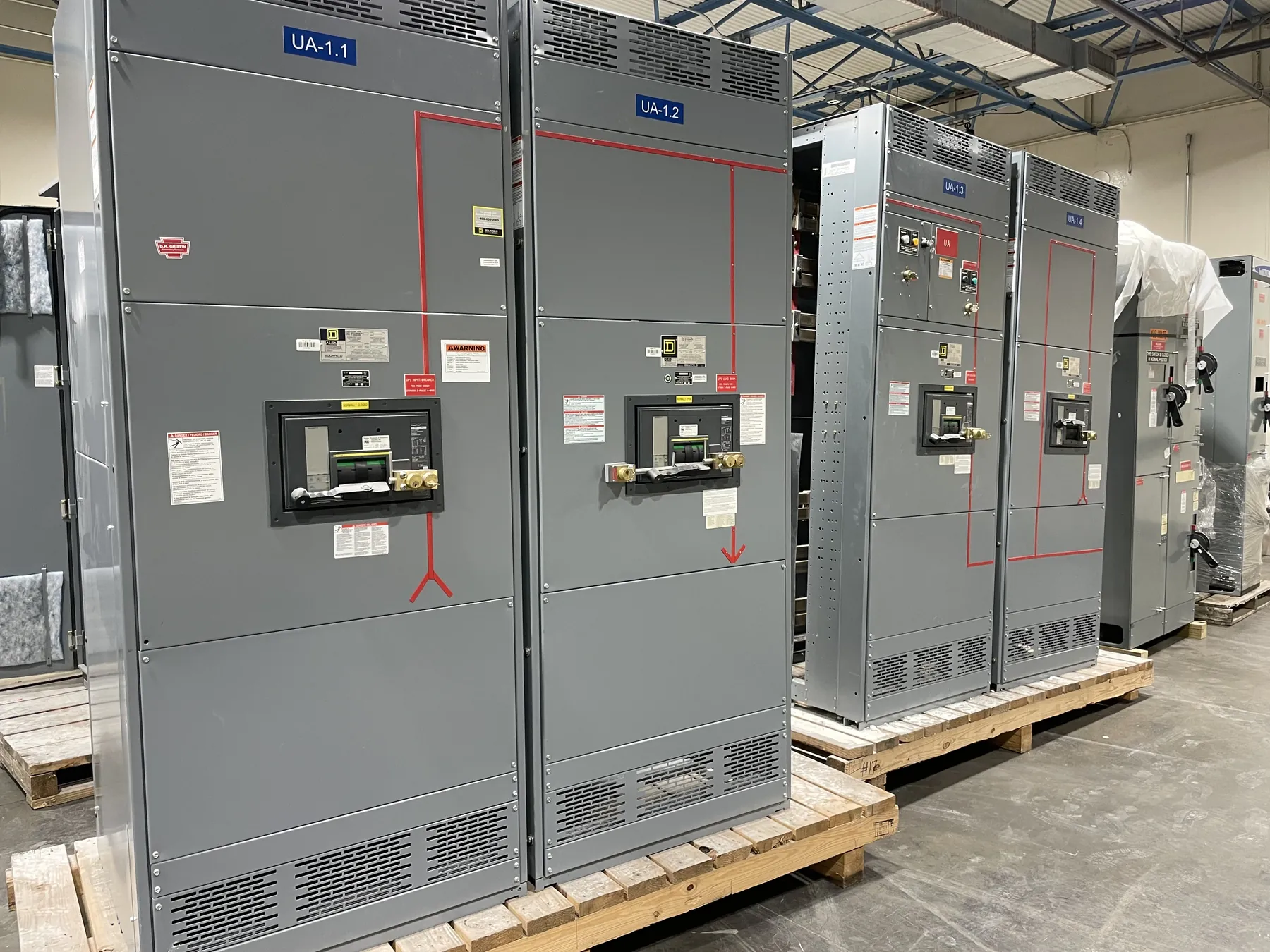
Manufacturing Switchgear for Gardnerville Facilities
Manufacturing operations depend on electrical distribution that fits the production process, not just the building’s service entrance. A custom switchboard or switchgear assembly may need to serve production lines, motors, HVAC, compressors, process equipment, lighting and support systems while allowing planned maintenance or future changes. For a Gardnerville project, the design conversation should begin with the facility’s actual loads, operating priorities and electrical infrastructure. Equipment selection and system design require review by qualified electrical professionals using project documents and site conditions.
Our U.S.-manufactured assemblies use all-American components, are made new to project requirements and can ship nationwide, including to Nevada. Lead times depend on the equipment scope and confirmed specifications; schedule needs should be discussed during quotation rather than assumed from a general estimate.
Map Production Loads and Motor-Control Interfaces
A useful load schedule identifies what each production area needs and how those loads interact. It should distinguish major motors and process equipment from general building loads, note expected operating patterns, and identify equipment that must remain available when other loads are offline. Motor starting characteristics and control requirements can influence feeder selection, protective-device coordination and the division of loads among sections. Where motor control is supplied separately, confirm who provides the starters or drives, how they connect to the distribution equipment and which party is responsible for controls interfaces.
Also identify standby sources, power-conditioning equipment or other systems that may affect the distribution arrangement. Their connection points and operating modes should be documented by the project team. Switchgear does not replace process controls, motor drives or system-level engineering; interfaces need to be assigned and reviewed so the specified assembly suits the complete electrical design.
Balance Uptime Priorities Against a Workable Shutdown
Production continuity can shape both equipment arrangement and project sequencing. Ask which loads can be interrupted, which require a planned outage and whether the facility needs separately organized distribution for critical production areas. Dividing loads can support clearer maintenance planning, but it may add equipment, connections and coordination effort. The appropriate arrangement depends on the one-line diagram, available space, operating strategy and engineering review—not on an assumed universal configuration.
For replacement or expansion work, the facility team should establish how existing equipment will be isolated, removed or connected, and when the work can occur. A shutdown sequence is a project coordination plan, not something a switchgear quotation can establish by itself. The electrical contractor, facility operators, engineer and equipment manufacturer should align on existing conditions, scope boundaries, connection details and commissioning responsibilities before the schedule is committed.
Plan Feeder Space for Expansion Without Overdesign
Manufacturers may add machinery, reorganize production or change process loads over time. Discuss likely expansion areas, spare feeder positions and whether future circuits are expected to serve known equipment or remain undefined. Physical space for future devices is not the same as electrical capacity: bus ratings, protective-device ratings, available fault current and other design limits must be evaluated against the system and applicable requirements.
Leaving room can improve flexibility, but unused sections and higher ratings may affect footprint, cost and coordination. Provide both current load information and realistic planning assumptions so the engineer can decide what should be included now. Future feeder details should be revisited when the equipment and load are known rather than treated as approved solely because a space is reserved.
Verify Gardnerville Site and Installation Conditions
Equipment arrangements should account for where the assembly will be installed and how it will reach that location. Confirm indoor or outdoor placement, available working and service space, access routes, mounting conditions and the enclosure or environmental specifications required for the site. For a Gardnerville installation, the project team should specifically check installation elevation and determine whether it affects applicable equipment ratings or design requirements. Do not infer a rating from the city name; the manufacturer and project engineer need the actual site and system information.
Shipping to Nevada is available nationwide, but delivery planning still depends on confirmed dimensions, access, receiving arrangements and the project schedule. Verify transport and placement constraints early, especially where doors, corridors, lifting access or an existing electrical room could limit the assembly configuration.
Prepare a Complete Manufacturing Switchgear Quotation Package
To develop a project-specific quotation, provide the latest one-line diagram, load schedule, system voltage, requested equipment ratings, available fault-current information and any specified protective-device or metering requirements. Include motor-control scope, required interfaces, indoor or outdoor location, installation elevation, environmental conditions, physical constraints, future feeder needs and the desired shipment window. Identify applicable project specifications and any required listing or standard so they can be reviewed against the equipment type. UL 891 applies to applicable low-voltage switchboards; it should not be treated as covering every switchgear assembly or voltage class.
Ratings are equipment characteristics, not a substitute for confirming system voltage or suitability. Listings, ratings, configuration, shipment timing and project details must be confirmed for the specific design. Clear inputs help the engineering and manufacturing teams resolve open questions before production planning and support a better-coordinated fit for the facility.