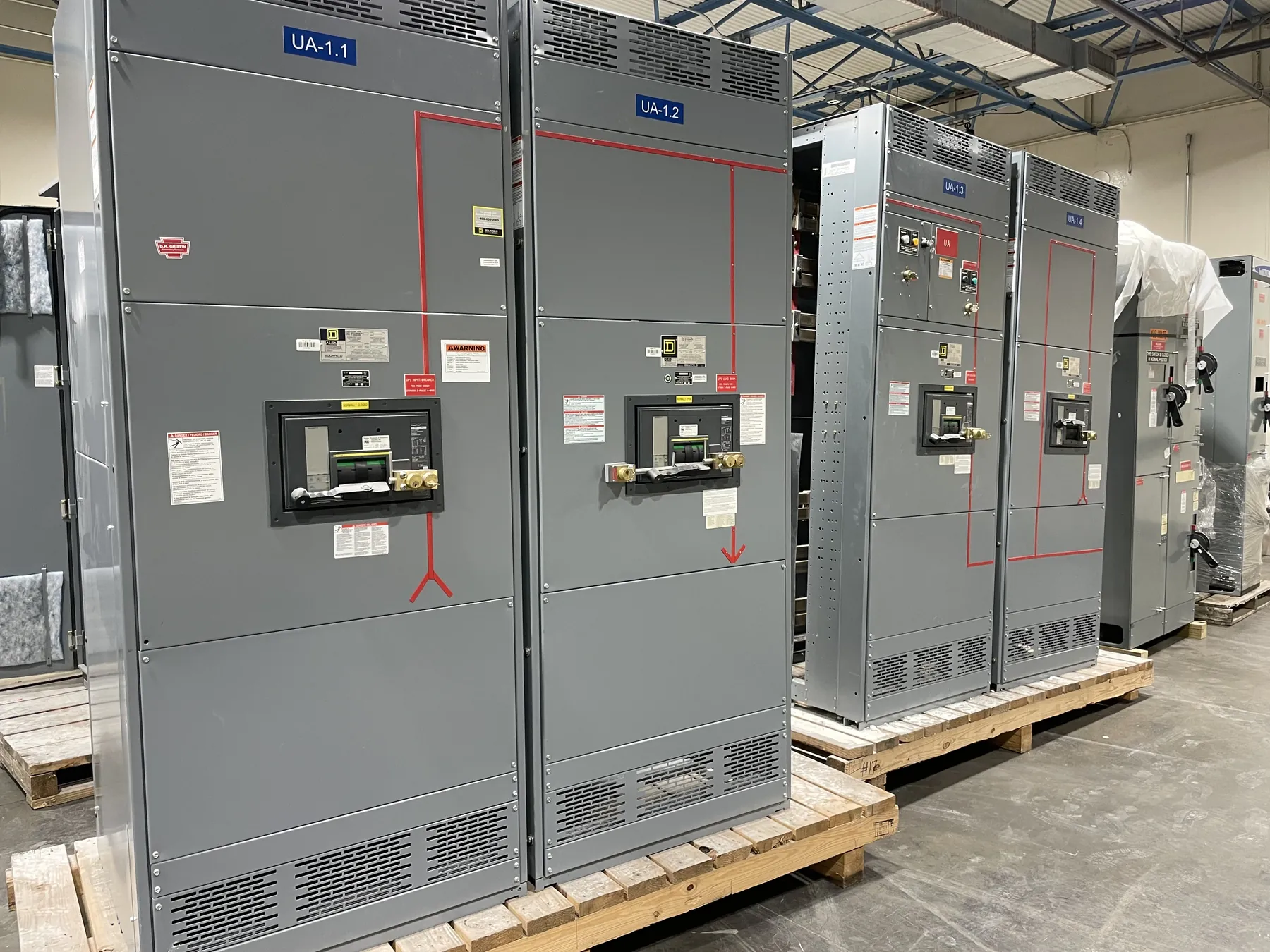
Metal-Enclosed Switchgear for Fernley, NV, Projects
Metal-enclosed switchgear can provide a coordinated arrangement of switching or interrupting devices, bus, protective components and cable connections within grounded metal compartments. For a Fernley facility, the right design depends on the power source, distribution layout, installation setting and consequences of an interruption—not simply on selecting an enclosure. A project may call for switches with fuses, circuit breakers, or a combination of devices, depending on the required protection and operating functions. Each configuration must be evaluated against the electrical system and the applicable project requirements.
Planning should also account for the site. Indoor or outdoor placement, available floor space, access routes, cable entry, environmental exposure and room for future work can affect the arrangement. Conditions vary among facilities, so drawings and site information should be reviewed before equipment is specified. The manufacturer builds new custom power-distribution equipment in the United States using all-American components and supports short lead times; equipment ships nationwide, including to Nevada.
Choosing Switch, Fuse and Breaker Configurations
A switch-and-fuse arrangement and a circuit-breaker arrangement do not serve identical purposes. Fuses provide overcurrent interruption within their selected application and characteristics, while breakers can provide switching and protective functions according to their design, trip unit and settings. A switch may provide isolation or load switching as specified, but it should not be assumed to interrupt every type of fault. The one-line diagram, load characteristics, available fault current and protection objectives help determine which device arrangement is appropriate.
Combination configurations can be useful where different feeders or source connections have distinct requirements. Engineers must review how devices interact, including protection coordination, interrupting capability and the intended operating sequence. If source reliability is a concern, clarify whether the design must accommodate alternate sources, transfer functions, tie equipment or a particular restoration strategy. Those features require system-specific engineering; a product description alone cannot establish that a configuration will meet a facility’s reliability objectives.
Barriers, Compartments and Access Considerations
Compartmentation and barriers can separate functional areas, such as switching devices, bus sections and cable terminations. The needed arrangement depends on equipment design, project specifications, maintenance access expectations and the consequences of an internal fault. More separation can affect enclosure dimensions, component placement and cable routing, so barrier requirements should be stated early rather than treated as a cosmetic detail. The final construction and access provisions must be confirmed for the specific product and installation.
For a Fernley site, consider how equipment will be brought to its final location, how doors or removable panels will be accessed, and whether the room layout leaves adequate working and service space under the applicable design. Outdoor placement calls for review of exposure and enclosure requirements; indoor placement calls for attention to room conditions, ventilation needs and adjacent equipment. These are design inputs for qualified project professionals, not assumptions that can be settled by the city name alone.
Metal-Enclosed and Metal-Clad Are Not Interchangeable Terms
Metal-enclosed switchgear is a broad construction category: switching and protection equipment is housed in grounded metal enclosures. Metal-clad construction describes a more specific arrangement, commonly associated with distinct compartments and features intended to isolate major components. The two terms should not be used as synonyms in a specification. A project that calls for metal-clad equipment should identify that requirement explicitly, and the proposed construction should be checked against the applicable specification and service conditions.
Construction terminology does not by itself establish voltage class, fault withstand capability, accessibility, listing status or suitability for a particular duty. Request documentation that identifies the proposed equipment type and construction, then have the project engineer confirm that it matches the drawings and procurement requirements.
Fault Duty, Grounding and Rating Review
Fault duty is a central selection consideration. The available fault current at the equipment, the protective device capabilities and the assembly’s applicable ratings must be evaluated together. A device rating is not the same thing as system voltage, and a rating that appears adequate in isolation does not prove that the complete lineup is suitable. Confirm the system voltage, short-circuit information, required withstand or interrupting ratings, and the conditions under which those ratings apply.
Grounding provisions also need to match the system design, including equipment grounding connections and any specified grounding method. Engineers should review how the switchgear interfaces with upstream protection, downstream feeders, transformers and other sources, and coordinate settings and protective characteristics across the system. Applicable listings and standards depend on the product and configuration. UL 891 applies to certain low-voltage switchboards; it should not be treated as a blanket standard for all switchgear or voltage classes. Any claimed listing or standard compliance must be confirmed for the equipment being quoted.
Quotation Inputs for a Fernley Installation
A useful request for quotation includes the one-line diagram, system voltage, source and available fault-current data, feeder count and ratings, device preferences, grounding requirements, enclosure location and project specifications. Identify any spare feeder positions or provisions for future expansion, along with the expected cable entry direction and interface points. Clarify power-source reliability needs and whether the project includes alternate sources or transfer arrangements. These details help determine a practical lineup and reduce uncertainty during design review.
Include site dimensions, access constraints, environmental conditions and the intended installation location when available. Shipping to Fernley can be planned as part of the nationwide shipment, but site access, unloading arrangements and installation responsibilities should be coordinated by the project team. Final ratings, construction, listings and interfaces require confirmation by qualified engineers through review of the system and site requirements.