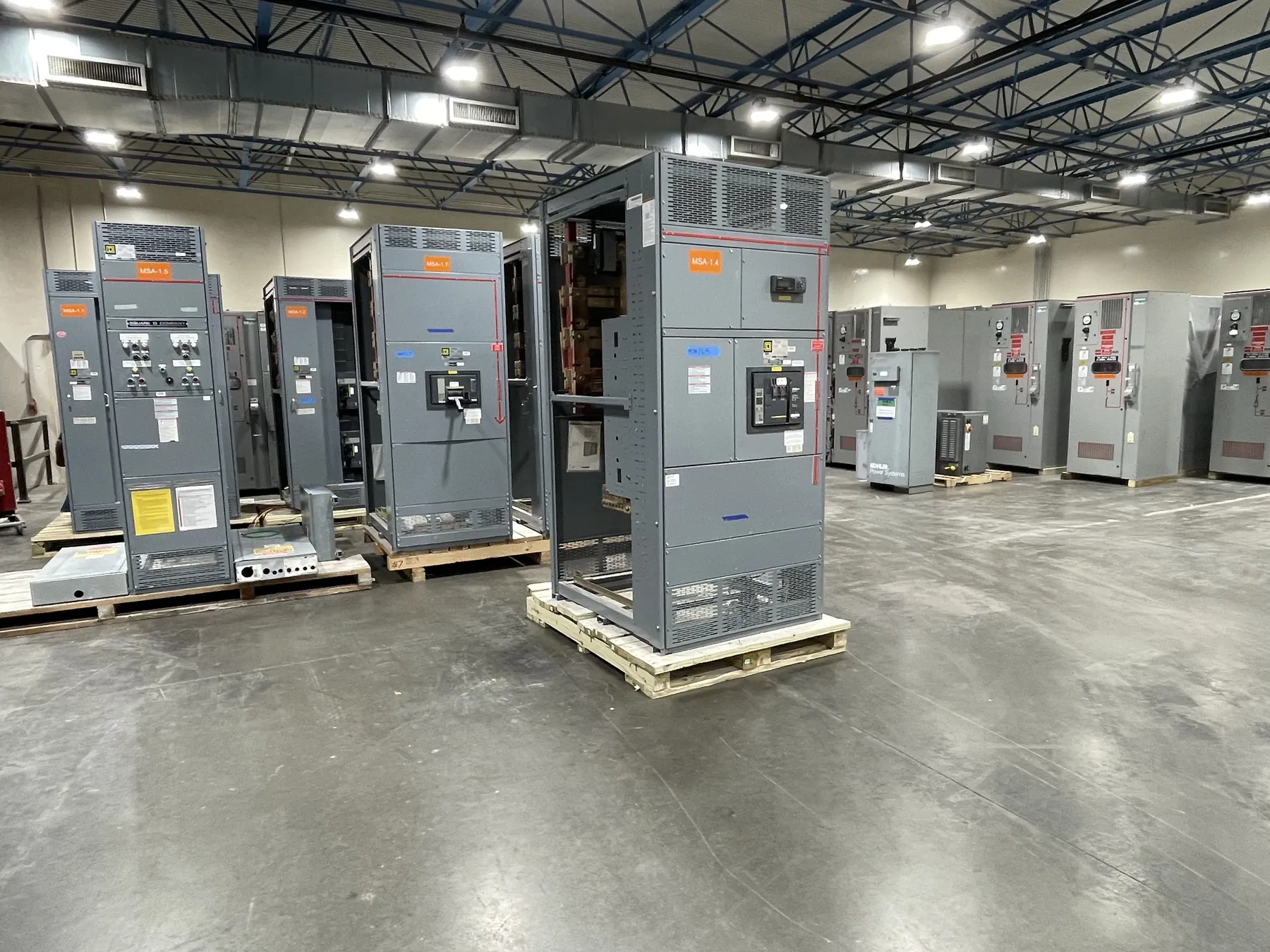
Planning Switchgear for a Fernley, Nevada, Project
Fernley projects can call for new distribution equipment serving a commercial building, industrial operation, municipal facility, or other site. The right switchgear configuration depends on the electrical system and the work it must support—not simply on the city or a general equipment label. Start by establishing the project’s power source, distribution arrangement, operating priorities, and installation constraints. A U.S. manufacturer can build custom equipment for the project and ship it to Fernley; that does not imply a local factory or service office.
Early coordination helps turn the project’s requirements into a practical equipment scope. Identify whether the assembly is intended for a new installation, a planned expansion, or replacement within an existing distribution system. For work involving existing infrastructure, document the equipment interfaces and site conditions before selecting a design. A qualified electrical engineer should review the application and confirm that the proposed equipment is appropriate for the installation.
Confirming Power-Source Reliability and Distribution Needs
Describe the normal power source and any alternate source, if one is part of the project. Explain which loads require continued service during a source interruption, how the sources are intended to interact, and whether the design calls for transfer equipment or other distribution provisions. These details influence the arrangement and coordination requirements; they should not be assumed from a request for “reliable power.” Source characteristics, protective-device coordination, and operating sequence require project-specific engineering review.
Provide available system documentation, such as one-line diagrams and information about the upstream distribution equipment. The engineer needs to determine system voltage, fault-current conditions, grounding arrangement, and protection requirements from reliable project data. A product’s current or interrupting rating is not the same thing as system voltage. Ratings and compatibility must be checked against the actual system and the complete assembly design.
Planning Feeders, Spare Capacity, and Future Work
List the outgoing feeders the equipment must serve, along with their intended loads and any known requirements for protective devices, metering, or control interfaces. If spare feeders are needed, state how many are desired, whether they are to be equipped or reserved, and what future loads or expansion plans they are meant to accommodate. A spare provision can affect section layout, bus arrangement, physical dimensions, and the equipment schedule. Calling for “future capacity” without defining its purpose leaves important design questions unresolved.
Review expected demand and planned additions with the project engineer rather than relying on unused physical space as a substitute for electrical capacity. Changes to feeder quantity, load characteristics, or protection can affect the design and coordination with upstream and downstream equipment. Clear requirements at quotation time reduce ambiguity while preserving a qualified engineer’s role in establishing the final design.
Matching the Assembly to Fernley Site Conditions
Describe where the equipment will be installed: indoors or outdoors, in a dedicated electrical room or another setting, and whether access is constrained by doorways, corridors, overhead clearance, or existing equipment. Provide available room dimensions, access routes, mounting or housekeeping-pad information, and any known restrictions on delivery or staging. These details help assess enclosure selection, assembly layout, shipping configuration, and installation planning without assuming conditions at an unvisited site.
Fernley’s local climate and the actual installation environment both matter. Tell the manufacturer and design team whether the equipment will be exposed to outdoor conditions, dust, moisture, temperature variation, or other site-specific influences. Do not select an enclosure or environmental feature by location name alone. The required construction should follow the installation conditions and applicable project criteria confirmed by the responsible professionals.
Information for a Clear Equipment Quotation — Switchgear for Fernley, NV
A useful quotation package typically includes the project one-line diagram, equipment schedule, system information, feeder requirements, requested options, installation location, and target project milestones. Include preferred dimensions or interface constraints when known, along with the identity and requirements of connected equipment. If specifications call for a particular standard or listing, identify the applicable product and scope. UL 891 applies to applicable low-voltage switchboards; it should not be treated as a blanket standard for every switchgear product or voltage class.
Requested ratings, listings, features, and schedule assumptions need confirmation during engineering and quotation review. The manufacturer can use the submitted information to define a proposed scope, identify open questions, and coordinate drawings and interfaces. Do not treat a preliminary description as approval of electrical design, code compliance, utility acceptance, or a final rating.
Manufacturing, Review, and Delivery to Fernley
Custom equipment is built to the agreed project scope using all-American components and manufactured in the United States. Submittal review is an important coordination point: the project team should check arrangement, dimensions, feeder designations, interfaces, and other specified details before production proceeds. Revisions after approval may affect the design or schedule, so unresolved requirements should be raised early. Lead time depends on the confirmed scope and current project conditions; no exact duration should be assumed until it is reviewed.
Equipment ships nationwide, including to project destinations in Fernley. Coordinate delivery planning with the site team, including receiving hours, unloading arrangements, access restrictions, storage conditions, and the sequence of installation work. Before the equipment is connected or energized, qualified professionals must review the installation and its coordination with the site electrical system. That review ensures site-specific requirements are addressed rather than inferred from a general equipment description.