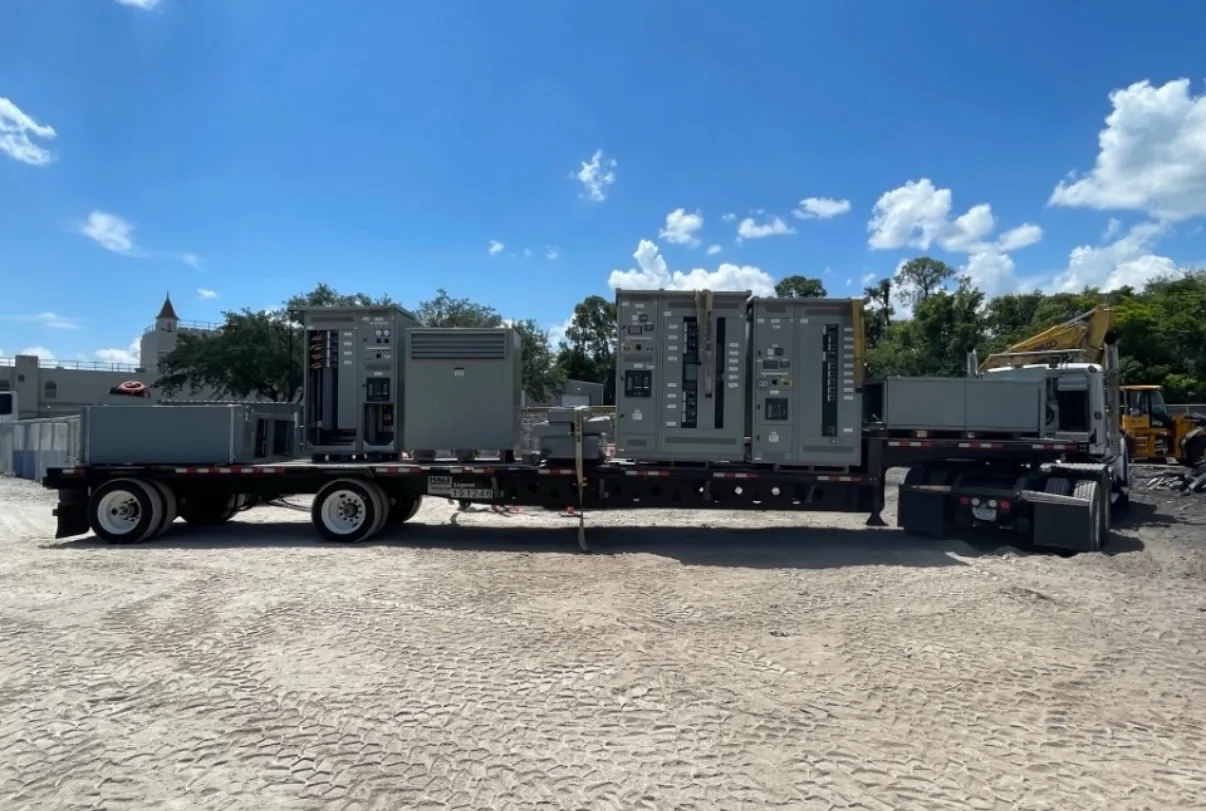
Low-Voltage Switchgear for Fernley, NV Projects
Fernley facilities considering low-voltage switchgear need an assembly designed around the actual service source, distribution plan and operating priorities—not simply a nominal voltage label. Low-voltage power circuit breaker switchgear can provide a centralized way to control and protect incoming and feeder circuits, but its configuration depends on the electrical design, available fault current, connected loads and installation conditions. A project may serve a commercial, industrial, municipal or other facility; the appropriate lineup and ratings must be established for the particular site.
Our U.S. manufacturing team builds new custom power-distribution equipment using all-American components. We work from project requirements to define an assembly for the intended application, with nationwide shipping available, including to Fernley. The equipment is manufactured in the United States; shipment to a Nevada destination does not imply a Nevada factory or local office.
Choose a Breaker Arrangement Around Operating Priorities
Low-voltage power circuit breaker arrangements can differ in how incoming power, bus sections, ties and outgoing feeders are organized. A single-source lineup may be appropriate for a straightforward distribution plan, while a design involving multiple sources or bus sections requires careful definition of normal and alternate operating states. A tie breaker, where included, affects how sections can be connected and what protection and interlocking functions the design must address. It should not be treated as a substitute for a documented power-system strategy.
Discuss how the facility expects to manage outages, maintenance and changes in load. For example, determine whether selected loads must remain supplied when a source or section is unavailable, and whether operating states are manual, automatic or otherwise controlled by project requirements. Those decisions influence breaker quantity, compartment arrangement, controls, metering and protection interfaces. Qualified electrical engineers must establish the system design and verify that the proposed arrangement fits the source and facility.
Compare Maintainability and Future Feeder Needs
Maintainability is shaped by more than breaker type. Consider access to breaker compartments, the space available in the electrical room, cable entry and termination requirements, control wiring, ventilation and the route used to move equipment into position. Room dimensions, doorways, floor conditions and nearby piping or other services can constrain the lineup’s physical arrangement. Fernley site conditions and the building layout should be confirmed rather than assumed from the city alone.
Identify spare feeder needs early. A planned spare position, a provision for future circuits or a reserved section can affect lineup length, bus planning and the initial arrangement. A spare breaker position is not automatically a complete future feeder: its eventual use may require additional protection, conductors, controls and coordination review. Clarify what is expected at initial installation and what is only a future possibility so the quotation can reflect the intended scope.
Evaluate Bus Ratings and System Conditions Together — Low-Voltage Switchgear in Fernley, NV
Bus ratings are equipment characteristics, not a substitute for specifying the system voltage. The lineup’s bus and circuit ratings must be evaluated against the electrical design, including continuous load, source capability and the conditions at the point of connection. Available fault current and protective-device ratings also matter; a rating that appears suitable in isolation does not establish that the assembly will perform appropriately in the complete system.
Provide the documented source and load information, one-line diagram if available, required incoming and feeder ratings, and the project’s fault-current and protection data. Identify conductor-entry preferences and any metering or control interfaces. If key inputs are not yet confirmed, note them as open engineering items rather than relying on assumptions. Final ratings and configuration require review by qualified electrical professionals and confirmation against site conditions.
Coordinate Protection and Applicable Standards
Protective-device coordination should be assessed across the source, switchgear and downstream equipment. The objective is to understand how devices are expected to respond to faults and overloads under the project’s defined operating conditions. Multiple sources, a bus tie, transformer characteristics and changes in system configuration can affect that assessment. Coordination cannot be established from a product description alone; it requires suitable system data and engineering analysis.
UL 1558 may be relevant to low-voltage metal-enclosed power circuit breaker switchgear, depending on the product scope and project requirements. Its applicability and any listing status must be confirmed for the specific assembly; this page does not claim that a particular product is listed. UL 891 applies to applicable low-voltage switchboards and should not be treated as covering all switchgear. The required standard, ratings and project documentation should be specified and reviewed before equipment is finalized.
Prepare a Fernley Project Inquiry
For a useful quotation, provide the service voltage and source arrangement, preliminary one-line diagram, incoming and feeder requirements, bus rating basis, fault-current information, preferred breaker arrangement, spare feeder expectations and any metering or control needs. Include the proposed installation location, room dimensions, access path, cable-entry direction and known environmental constraints. These details help identify questions that could otherwise affect enclosure layout, interfaces, coordination or equipment shipment.
Also explain the facility’s power-source reliability needs and which loads, if any, have priority during an interruption or maintenance condition. The manufacturer can develop a custom equipment proposal from defined project inputs, while the responsible engineering team confirms system design, protection and site suitability. Lead time and shipping arrangements depend on the finalized scope and should be confirmed for the specific order; equipment is not assigned a delivery date until those details are established.