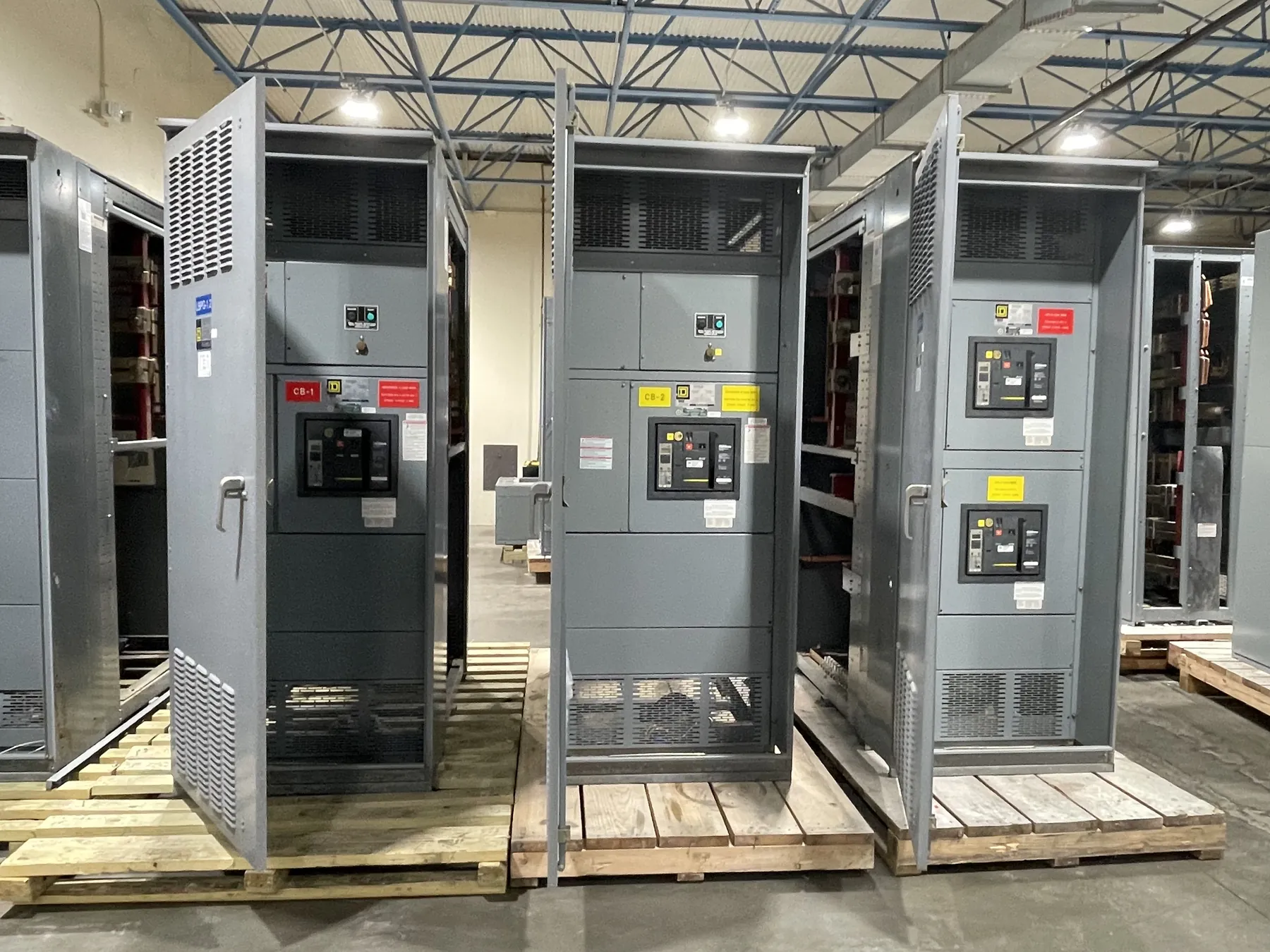
Metal-Clad Switchgear for Fernley, NV Projects
Fernley facilities considering metal-clad switchgear should begin with the electrical system’s operating needs, not a catalog designation. The assembly’s configuration depends on the source arrangement, system voltage, available fault current, load profile, protection scheme and site conditions. A project may need to support a single source, alternate sources, or a defined transfer arrangement; each changes the lineup, controls and operating requirements. Confirm how dependable the incoming power must be, what loads are critical, and what response is expected during a source interruption. These details help determine whether the proposed equipment and operating scheme fit the facility.
We manufacture new custom power-distribution equipment in the United States using all-American components. We can ship equipment nationwide, including to Nevada, and support short lead times; the schedule for a particular project depends on its engineering, configuration and production requirements. A quotation should be based on reviewed project information rather than an assumed standard lineup.
Compartmentalization and Withdrawable Breakers — Metal-Clad Switchgear in Fernley, NV
Metal-clad construction separates major primary circuit components into grounded compartments, with barriers intended to limit exposure between functional sections. The precise compartment arrangement and construction details must be verified against the specified design and applicable requirements. Breakers are generally mounted on withdrawable units so they can be connected or moved to designated positions within the switchgear. This arrangement can support equipment isolation and maintenance planning, but it does not replace the facility’s approved procedures or qualified personnel.
For the project, identify the breaker positions and functions, such as incoming, tie and feeder circuits, along with the required breaker technology and control features. Consider how the equipment will be accessed for inspection or service and whether the room layout provides suitable working and removal space. Door clearances, aisle arrangement, cable routing and the path for moving breaker units can affect both the lineup design and building coordination. Confirm these conditions before finalizing dimensions.
Ratings, IEEE C37.20.2 and Project Scope
IEEE C37.20.2 addresses metal-clad switchgear requirements. The project team should identify the applicable edition and establish whether the specified assembly, voltage class, construction and ratings fall within its scope. Do not infer compliance or a listing from the product category alone: the offered design and documentation must be reviewed against the project specification. UL 891 applies to applicable low-voltage switchboards; it is not a blanket standard for metal-clad switchgear or equipment at every voltage level.
Switchgear ratings are not interchangeable with the system’s nominal voltage. Confirm system voltage and frequency, continuous-current requirements, short-circuit withstand and interruption requirements, and the relevant design conditions with the responsible electrical engineer. Rating selection depends on the system study and equipment application. The project documents should also clarify any required instrumentation, control power, metering, communications, enclosure details and interface points. Listings, standards, ratings and final configuration require confirmation for the specific equipment and project.
Grounding, Relaying and Coordination
Grounding details affect both the switchgear arrangement and the protection scheme. Provide the system grounding method, source grounding information, ground-fault protection requirements and the intended connection to the facility grounding network. The grounding path and equipment provisions must be designed for the actual system; they should not be selected from assumptions about another site or utility arrangement.
Relay functions and settings must coordinate with upstream and downstream protective devices and with the facility’s operating priorities. Useful quotation inputs include available fault-current information, existing or proposed protective-device data, transformer characteristics, motor or other significant load information, and the latest coordination or arc-flash study when available. A qualified engineer must review the protection design and site conditions. Device selection or relay settings cannot be established responsibly from a general product description.
Fernley Site Conditions and Installation Planning
For a Fernley installation, verify where the switchgear will be located and how it will reach that location. Indoor electrical rooms and outdoor installations present different enclosure, access and environmental considerations. Provide the room or pad layout, access openings, floor or mounting details, cable entry direction, conduit or trench locations, and any known constraints on the delivery route. Nevada shipping and the site’s receiving arrangements should be coordinated with the installation schedule; no local factory or project-specific delivery date is implied.
Facility conditions matter as much as the equipment outline. Document ambient conditions, exposure to dust or moisture, ventilation, available lighting and the space reserved for electrical work and future removal of components. Confirm building interfaces and cable landing requirements early so that switchgear design, civil work and electrical installation remain aligned.
Spare Feeders, Reliability Needs and Quotation Inputs
State whether spare feeder positions are required at initial installation and what future loads they are intended to accommodate. A spare position can affect lineup length, bus arrangement, breaker provisions, controls and protection coordination. Clarify whether the requirement is for an installed breaker, a prepared position, or another defined arrangement; these options are not equivalent. Also identify any planned expansion, source redundancy, tie operation or load-shedding needs so the design team can assess the implications.
A useful project package includes the one-line diagram, equipment schedule, system study information, protection requirements, site layout, cable details, environmental conditions and applicable specification sections. Include the desired delivery window and any known sequencing constraints without treating them as a guaranteed lead time. With these inputs, our team can develop a new custom metal-clad switchgear proposal for engineering review, with ratings, construction, applicable IEEE C37.20.2 requirements, listings and interfaces confirmed for the Fernley project.