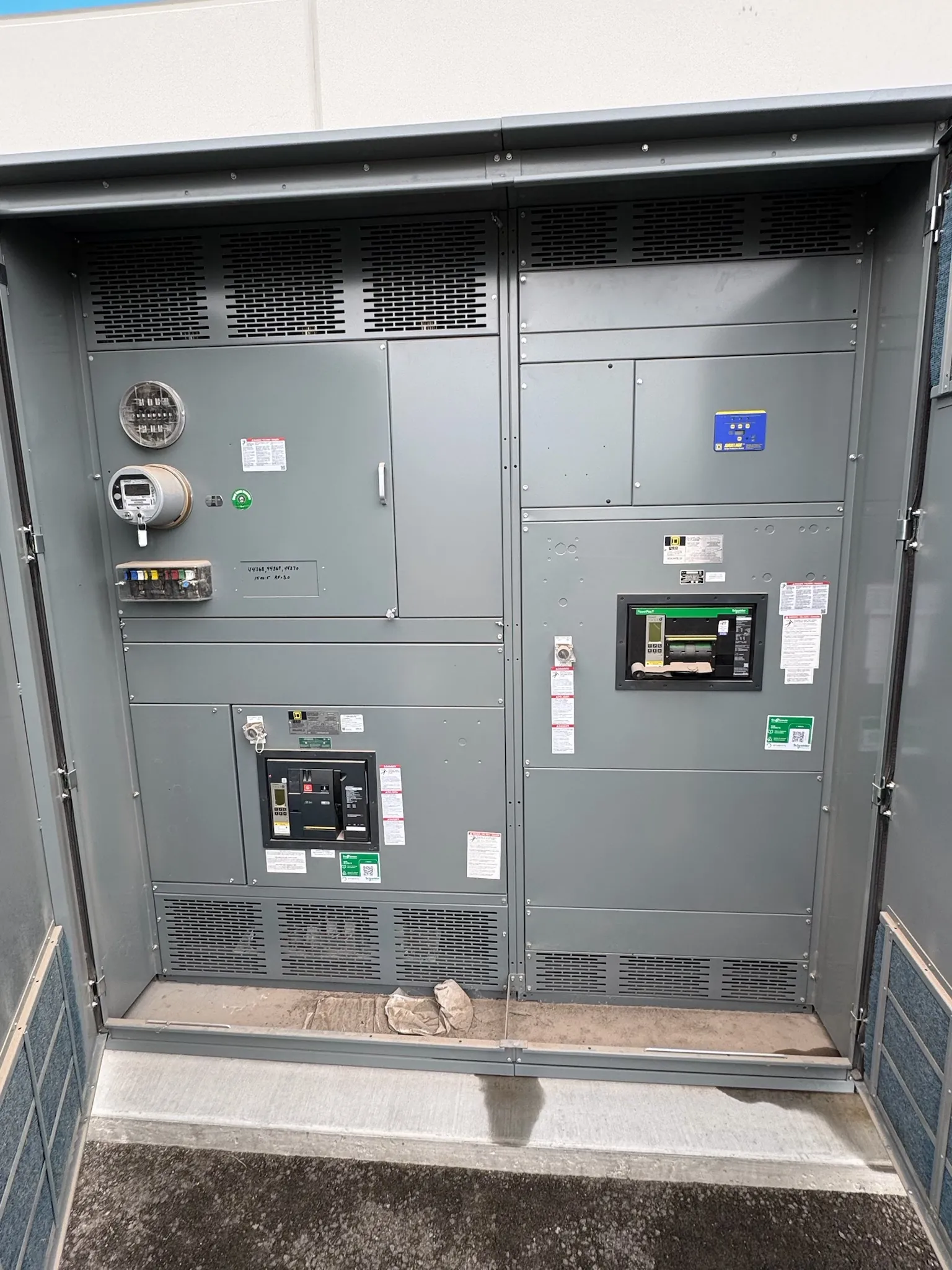
Low-Voltage Switchboards for Fallon, Nevada Projects
A low-voltage switchboard distributes power from a service or other source to downstream feeders and loads. For a Fallon project, its arrangement should follow the facility’s electrical design, the utility or source connection, and the way loads operate—not a generic equipment schedule. A commercial building, agricultural facility, public-service site, or industrial operation can have different service boundaries, demand patterns, expansion plans, and environmental conditions. Our U.S.-manufactured switchboards are made new to project requirements, use American components, and can be shipped nationwide, including to Nevada. Project drawings and site conditions must establish the final configuration.
Early decisions include the switchboard’s service and feeder arrangement, the number and type of outgoing circuits, and how equipment interfaces with transformers, generators, transfer equipment, or downstream panels. Confirm which components are inside the switchboard scope and which are supplied or installed by others. Clear responsibility at these interfaces helps prevent conflicts between the one-line diagram, equipment schedule, and field installation plan.
Service and Feeder Arrangements That Match the Facility
The service section, main protective device, and feeder sections need to reflect the approved electrical design. Depending on the application, the design may call for a main device with multiple feeders, a distribution section arranged around particular load groups, or provisions for future circuits. The physical layout and access requirements also matter: available electrical-room space, cable entry direction, conductor routing, working space, and connection points can constrain section placement and construction.
For a Fallon site, provide the planned equipment location and any known limits on access or delivery routing. Nevada’s dry climate does not by itself establish an enclosure or environmental rating. Dust exposure, temperature range, indoor or outdoor placement, ventilation, and other site conditions should be identified by the project team so the appropriate construction can be evaluated. Confirm dimensions and conduit or cable entry details against the installation drawings before release.
Bus Sizing, Load Profiles, and Motor Starting
Bus sizing is an engineering decision, not simply a choice based on the sum of breaker handles. The design professional should provide the applicable load calculations and identify the intended service or feeder loading, continuous loads, diversity assumptions, and any planned growth. The switchboard’s current rating must be selected for the documented application and verified with the equipment configuration, conductor terminations, and applicable project requirements. A bus rating is not the same thing as the system voltage; both must be specified and confirmed separately.
For Fallon projects with pumps, fans, compressors, irrigation equipment, or other motor loads, describe normal operation and starting behavior. Motor starting can affect voltage drop and protective-device selection, particularly where several loads may start together or where a generator is part of the system. Provide motor data, starting method, operating sequence, and any limits established by the facility design. The equipment manufacturer should not infer these conditions from a brief equipment description.
Available Fault Current and Protective-Device Coordination — Low-Voltage Switchboards in Fallon, NV
Available fault current at the switchboard is essential to selecting and documenting equipment ratings. The project engineer should establish the value at the equipment location, accounting for the source and system configuration. Do not use a voltage rating or a general service description as a substitute for this information. The switchboard’s short-circuit rating and the ratings of its protective devices must be appropriate for the calculated conditions and the specified arrangement; final acceptance depends on project-specific engineering and documentation.
Identify the coordination objective for upstream and downstream protective devices. The design may seek selective coordination for particular circuits or functions, or may use another documented strategy based on the facility’s priorities and applicable requirements. Coordination depends on device types, settings, available fault current, and the time-current behavior of the complete system. Provide the engineer’s study criteria and required device data. Any proposed changes to protective devices or settings should be reviewed by qualified professionals for the affected system.
When UL 891 May Apply—and What to Confirm
UL 891 applies to low-voltage switchboards within the scope of that standard; it is not a blanket designation for all switchgear or every power-distribution product. Whether it applies to a particular Fallon project depends on the equipment type, construction, specification, and required listing. A design description alone does not establish that a particular assembly is listed, and no listing should be assumed before it is verified for the offered configuration.
For quotation and submittal review, state the required standard and listing language, if specified, and request project-specific documentation for the proposed assembly. Confirm that documentation covers the equipment type and configuration being furnished. Ratings, listings, and approval requirements must be checked against the project documents and applicable authority requirements; they cannot be determined solely from a product name or location.
Information to Provide for a Fallon Switchboard Quote
A useful quotation package includes the latest one-line diagram, equipment schedule, system voltage, required bus and main-device ratings, feeder count and ratings, available fault current, and any specified short-circuit or listing requirements. Include load profiles, motor starting details, the protective-device coordination objective, enclosure location, cable entry preferences, and known room or delivery constraints. Note generator or transfer-equipment interfaces and identify any future feeder provisions. Our team can use these inputs to develop a new manufactured equipment proposal and identify items requiring engineering confirmation. Lead time and shipment planning depend on the finalized scope, documentation, and project schedule; shipping to Nevada is supported nationwide.