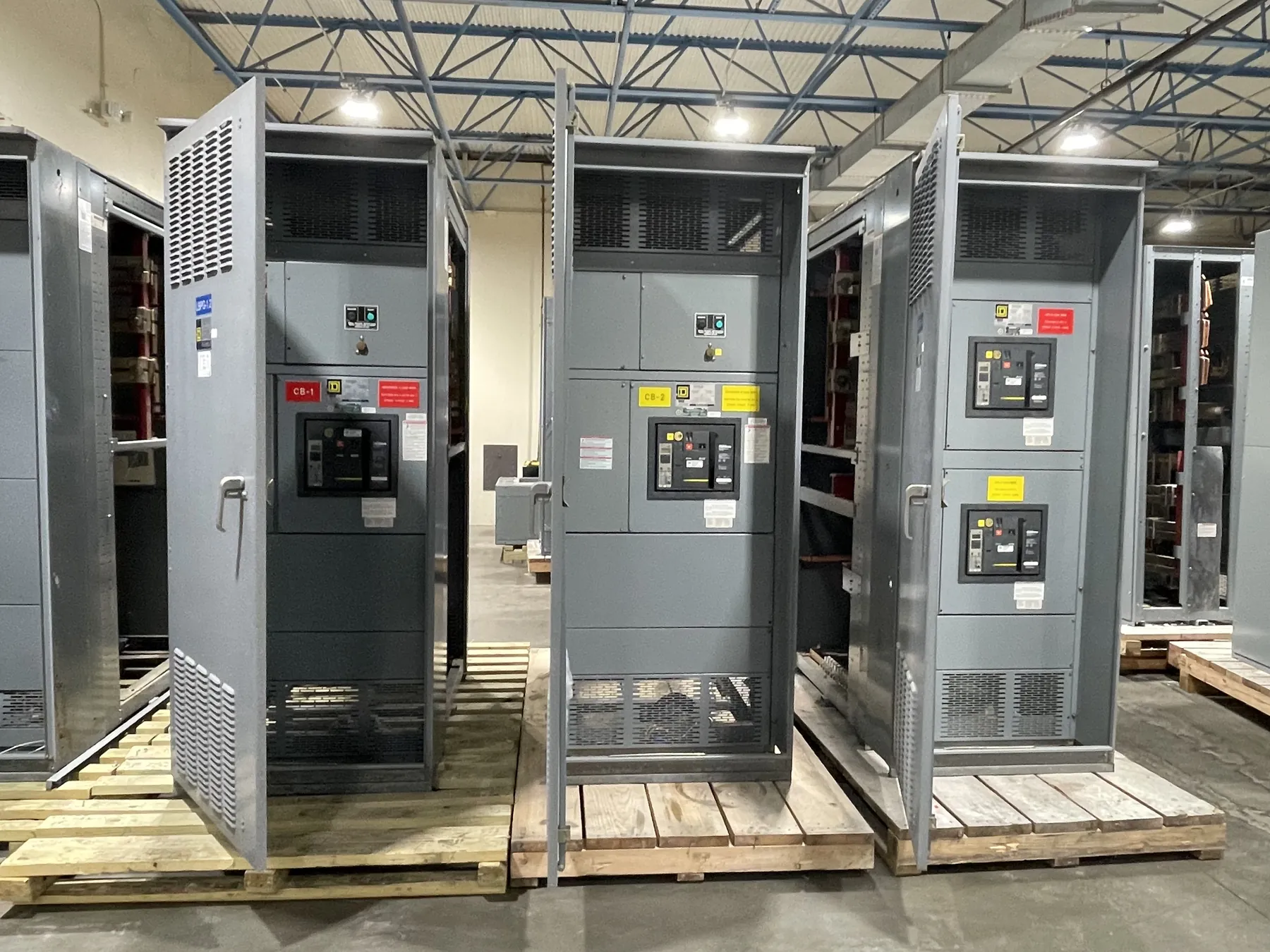
Automatic Transfer Switches for Fallon, NV Projects
An automatic transfer switch (ATS) moves designated loads between normal and alternate power sources when its controls detect a qualifying change in source conditions. For a Fallon project, the selection should begin with what the equipment must keep operating, which source is primary, and how the alternate source responds to a transfer command. A generator-backed facility, for example, has different transition and timing considerations from an installation with two utility sources. The ATS does not generate power or determine whether the overall system can support a load; those questions require project-specific electrical engineering.
We manufacture new custom power-distribution equipment in the United States using all-American components, with nationwide shipping that can serve Nevada projects. Equipment configuration, ratings, applicable listings, lead time, and shipping details must be confirmed for the particular scope. A Fallon destination alone does not establish site conditions or equipment suitability.
Choose the Transfer Transition for the Load — Automatic Transfer Switches in Fallon, NV
Transition describes how the ATS changes connections between sources. An open-transition switch disconnects one source before connecting the other, avoiding intentional overlap between sources. That break can interrupt the load briefly. A closed-transition design can momentarily connect sources in parallel, but it is appropriate only where the sources, controls, protection, and project requirements permit that operating mode. It should not be treated as a simple upgrade or assumed acceptable for a utility interface.
Some applications need a delayed transition, in which the load remains disconnected for a configured interval before reconnection. This can allow residual voltage or rotating loads to decay, but the acceptable interval and method depend on the connected equipment and system design. The engineer should identify whether brief interruption, delayed reconnection, or any source overlap is allowed, and whether the ATS must coordinate with generator controls or other transfer equipment.
Source Sensing and Control Interfaces — Automatic Transfer Switches in Fallon, NV
ATS controls typically monitor source conditions against defined limits and initiate transfer or retransfer according to the selected control logic. Relevant project decisions include which voltage and frequency conditions are monitored, whether both sources are evaluated, how long an abnormal condition must persist before action, and whether return to the preferred source is automatic or subject to an operating delay. These settings should reflect the source characteristics and the facility’s tolerance for interruption, not be copied from an unrelated installation.
For generator applications, the control interface may need to request generator start, recognize when the alternate source is acceptable, and signal when it can be released after retransfer. Confirm the required contacts, communications, remote status points, and interface responsibilities with the generator and facility-control teams. Utility arrangements, metering boundaries, and source availability also need review; an ATS cannot resolve a utility approval or interconnection question by itself.
Load Profile, Motor Starting, and Ratings
Load information matters beyond the panel’s steady-state demand. Motors can draw substantial starting current and may create voltage dips that affect other connected equipment. Provide motor horsepower or other relevant nameplate data, starting method, expected sequencing, and whether motors may restart together after transfer. Also identify transformer inrush, electronic loads, nonlinear loads, and any equipment that must be shed or restored in stages. These details help engineers assess the transfer switch and the complete source-and-protection arrangement.
ATS selection involves distinct ratings, including the equipment’s applicable voltage, continuous-current rating, and ability to withstand and close onto fault current under specified conditions. A current rating is not the same as system voltage, and neither alone establishes suitability. Fault-current capability and the upstream protective device must be evaluated together using the actual system information. Required enclosure, mounting, available space, conductor entry, and environmental conditions should also be documented for the Fallon installation.
Neutral Switching and Protective-Device Coordination
Whether the neutral is switched is an engineered system decision, not a universal preference. It depends on source grounding and bonding arrangements, generator configuration, and the overall grounding design. A switched-neutral ATS and a solid-neutral arrangement have different implications for how the sources are treated. Provide the one-line diagram and source grounding details so the responsible engineer can determine the required configuration; do not infer it from the equipment location or generator nameplate alone.
Coordination is another project objective to define clearly. The designer may need protective devices to operate selectively so a fault is isolated as close as practical to its origin, while still meeting equipment withstand limits and the facility’s protection requirements. The ATS short-circuit withstand and closing ratings, upstream device type and settings, available fault current, and downstream protection should be reviewed as a coordinated system. No single ATS rating establishes the coordination result.
Submittal Details for a Fallon Quotation
A useful quotation package includes the one-line diagram, system voltage and frequency, source types, load schedule, motor-starting information, desired transition behavior, grounding and neutral requirements, protective-device data, control-interface needs, and installation constraints. Include the intended application of any required standard or listing, along with enclosure and connection preferences. UL 1008 applies to transfer-switch equipment where required; its applicability and the exact equipment listing must be confirmed for the proposed product and project. It should not be taken as a certification of the entire electrical installation.
Fallon site logistics can affect equipment dimensions, access, unloading, and delivery coordination, so provide known constraints and the receiving location’s requirements early. Final design choices and ratings require qualified engineering review of the system and site. With a defined scope, we can review the requested new ATS configuration, confirm applicable product details, and discuss manufacturing and nationwide shipment planning without assuming an unverified delivery date.