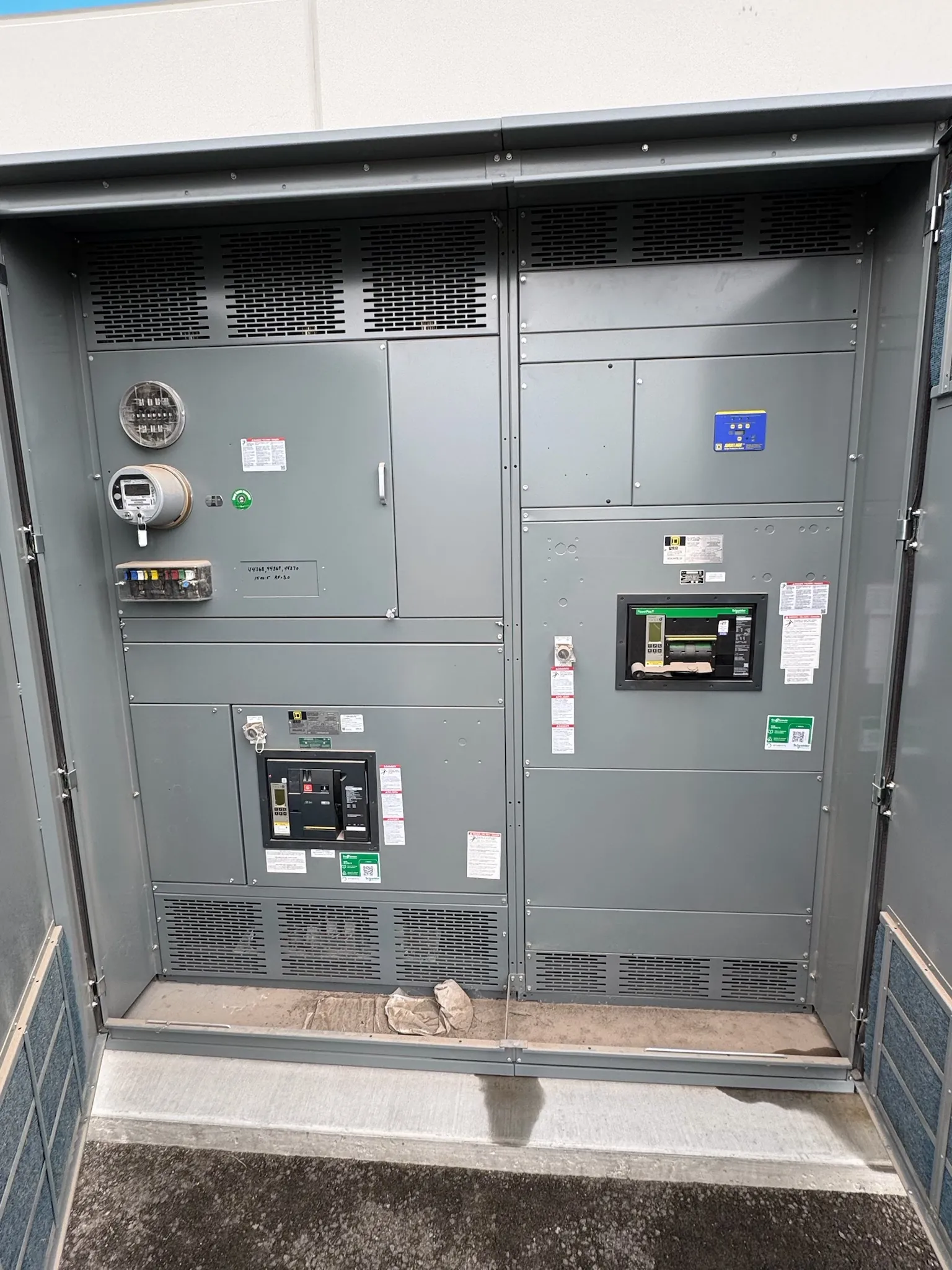
Mining Switchgear for Fallon, Nevada Projects
Mining facilities in and around Fallon need electrical distribution designed around the actual process, not a generic equipment schedule. A switchboard or switchgear assembly may serve mine-process motors, ventilation, pumping, material handling, workshops, or site services, with different consequences when each load trips or restarts. Our U.S.-manufactured equipment is built new to project requirements, using all-American components, and can ship nationwide to Nevada. Final equipment selection depends on the electrical design, site conditions, and confirmed project specifications.
Start by identifying the source and distribution arrangement, system voltage, available fault current, grounding method, and the loads served by each section. Equipment ratings are not the same as system voltage, and neither should be assumed from a general description of the site. A qualified engineer must confirm the design basis and equipment suitability for the specific installation.
Define Motor and Feeder Duties Before Selecting Sections
For each feeder, document the connected equipment, operating duty, expected loading, and whether the load is continuous, intermittent, or subject to frequent starts. Motor schedules should identify motor characteristics and starting method, such as across-the-line starting, reduced-voltage starting, or a drive where applicable. These choices influence feeder protection, switching devices, control interfaces, and the effects of starting current on the distribution system.
Consider process dependencies as well as individual nameplate data. A ventilation fan, pump, crusher, or conveyor can have different restart priorities and operating patterns. Where simultaneous starts could create an unacceptable demand or voltage disturbance, the project team should define sequencing or other control requirements. The equipment scope can then be reviewed for compatible compartments, feeder arrangements, controls, and connections. Do not infer motor suitability from a switchgear rating alone.
Set the Fault-Protection and Coordination Objective
Protection must respond to faults while supporting the operating objective for the mining process. The engineer coordinating the system should establish the available fault current at relevant locations, identify protective devices upstream and downstream, and determine which devices are intended to operate for different fault conditions. Selectivity, equipment protection, continuity of service, and practical settings constraints may compete; a coordination study can help evaluate those tradeoffs.
Provide available-device data, proposed feeder loads, transformer information, and upstream protective-device details when available. Confirm interrupting ratings, short-circuit withstand requirements, and the applicable assembly ratings against the completed system study. Settings and coordination cannot be responsibly determined from a city, industry, or equipment category alone. Changes to source conditions or connected loads may require the design and study to be revisited.
Account for Dust, Ventilation, and Site Conditions — Mining Switchgear in Fallon, NV
Mining environments can expose electrical equipment to airborne dust, process residue, heat, vibration, moisture, or changing outdoor conditions. The project should describe where the assembly will be installed: an interior electrical room, an enclosure within an industrial building, or a location exposed to the elements. Include expected ambient conditions, ventilation or cooling provisions, elevation where relevant, and any site requirements for enclosure construction or environmental protection.
Dust control is not solved by specifying a tighter enclosure without considering heat removal, access, cable entry, and maintenance needs. Likewise, ventilation around equipment must be coordinated with the room layout and heat produced by the installed devices. The owner and design team should establish cleaning and inspection expectations and identify any hazardous-area classification that applies. Do not assume a mining site is classified—or unclassified—without a site-specific determination by qualified professionals.
Coordinate Equipment Interfaces and Installation Logistics
Before quotation, clarify incoming and outgoing cable or bus connections, conductor entry direction, termination space, lineup arrangement, control power, metering, communications, and interface points with other systems. Include drawings or schedules that show room dimensions, access routes, working clearances, and the planned equipment location. These details can affect assembly configuration and whether the proposed arrangement fits the facility.
Fallon project logistics should be considered without assuming a particular site or delivery route. Confirm the delivery address, unloading arrangements, site access, receiving hours, and any packaging or sequencing requirements with the project team. Nevada shipments are supported from the U.S. manufacturing operation, with nationwide shipping; a delivery date and schedule must be confirmed for the specific order.
Prepare a Project-Ready Quotation Package — Mining Switchgear in Fallon, NV
A useful request for quotation includes the one-line diagram, load and motor schedules, system voltage and source data, fault-current information, protection and coordination objectives, environmental conditions, and applicable project specifications. Add required device functions, metering or control needs, connection details, preferred arrangement, and any specified standards or listing requirements. UL 891 applies to applicable low-voltage switchboards; it should not be treated as a blanket standard for all switchgear or voltage classes. Ratings, listings, and project details require confirmation for the exact assembly.
Our team manufactures new custom power-distribution equipment rather than reselling equipment from other sources. Complete engineering inputs help us review configuration, interfaces, ratings, and schedule assumptions accurately. Final selection and approval remain subject to qualified engineering review and site-specific requirements, including applicable codes and coordination with the rest of the electrical system.