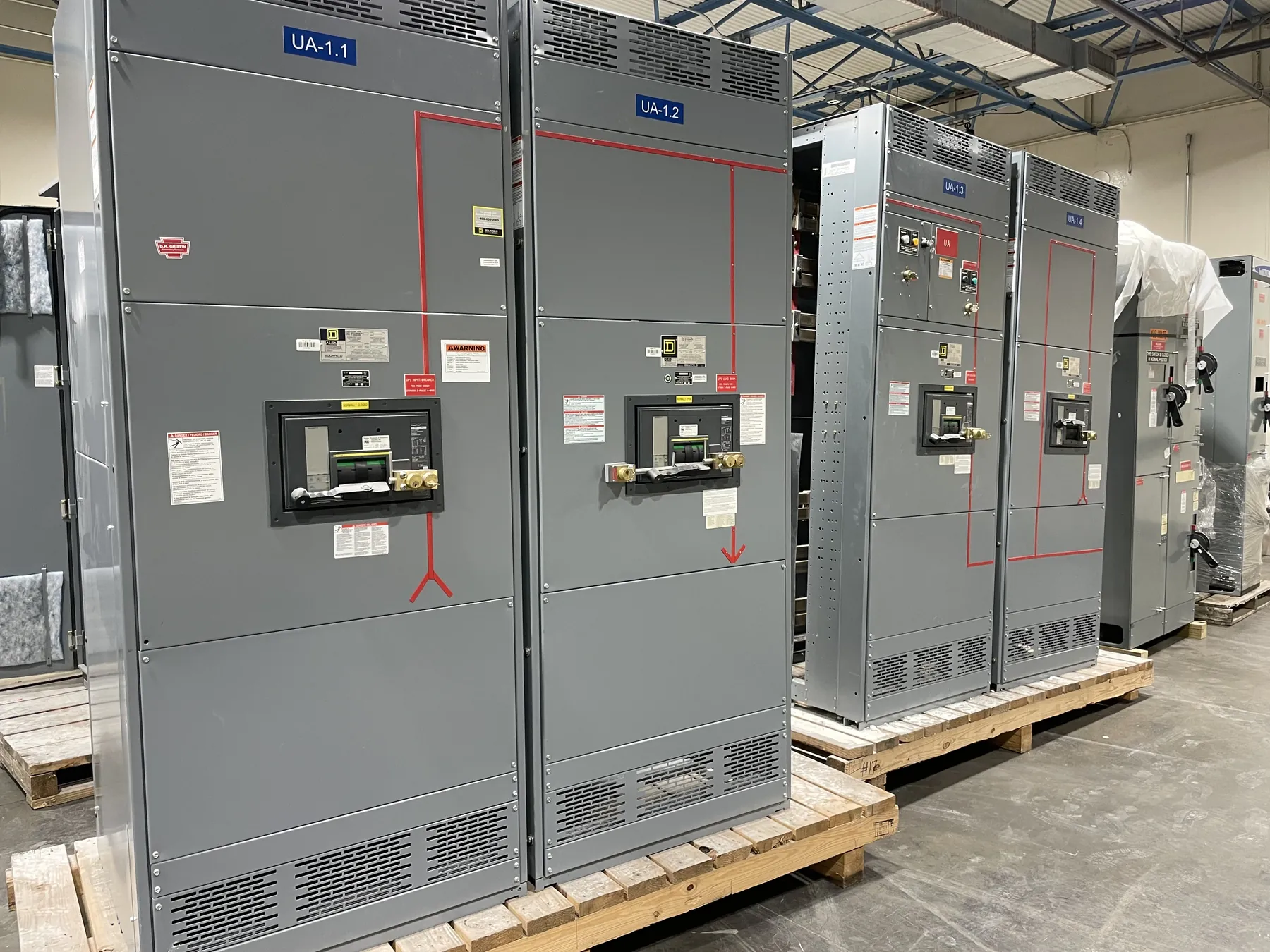
Mining Switchgear for Motor and Feeder Loads
Mining facilities depend on electrical distribution for equipment with different operating demands: motors, process systems, ventilation, lighting, and supporting services. A switchgear package should reflect the actual load schedule and operating conditions, not just a facility’s total power requirement. Motor starting and restarting behavior can influence equipment selection, protective-device coordination, and the way loads are grouped. Feeders serving other loads may call for different protection and interruption characteristics. Identifying each duty early helps the design team develop an assembly suited to the mine’s distribution plan.
Custom switchgear can be configured around the required incoming source, bus arrangement, outgoing feeders, and provisions for future circuits. The appropriate arrangement depends on the electrical design, available space, operating priorities, and project requirements. A mining operator or project engineer should provide the one-line diagram and load information so the equipment manufacturer can review the intended configuration. Changes to motors, process equipment, or power sources can affect the design and should be considered before specifications are finalized.
Fault Protection and Coordination Across Mine Distribution
Fault protection must be evaluated as part of the complete electrical system. Protective-device selection and settings depend on available fault current, conductor and equipment characteristics, upstream and downstream devices, and the required coordination approach. A device’s interrupting rating must be suitable for the conditions at its installation point; a nominal system voltage alone does not establish that suitability. Ratings, device combinations, and coordination requirements need confirmation by qualified electrical engineers using project-specific system information.
Where motor feeders and general feeders share an assembly, their protection needs may differ. Motor circuit requirements can involve starting current and the selected motor-control arrangement, while other feeders serve loads with different current profiles. Coordination objectives may also vary across a mine’s distribution network. The switchgear specification should identify required protective functions and interfaces, while the responsible design team verifies the system study, settings, and applicable code requirements. Equipment selection cannot replace that engineering review.
Dust, Ventilation, and Environmental Conditions
Dust exposure is a significant enclosure and installation consideration, but “mining environment” is not a single design condition. The equipment location may be indoors, in a controlled electrical room, or in an area with different levels of airborne dust, moisture, temperature variation, vibration, or corrosive contaminants. Describe the actual room and exposure conditions rather than assuming a standard enclosure will suit every site. Enclosure construction, access, and cooling provisions should be evaluated against the specified environment and the equipment’s heat-producing components.
Ventilation has to be considered alongside enclosure protection and room design. Restricted airflow, elevated ambient temperatures, or dust accumulation can affect thermal conditions and maintenance planning. The project team should provide expected ambient conditions, ventilation arrangements, and any environmental limits for the installation. The manufacturer can use those inputs to assess equipment configuration, but the suitability of the room, ventilation system, and installation remains tied to site-specific engineering and review.
Ratings, Assembly Scope, and Interfaces
Specifications should distinguish system voltage from equipment ratings. Voltage, continuous-current requirements, short-circuit withstand or interrupting requirements, and enclosure details are separate design inputs; none should be inferred from a general description of the mine. The required ratings depend on the system study and project documents. For applicable low-voltage switchboards, UL 891 may be relevant to the specified assembly. It does not apply to every type of switchgear or establish that a particular product is listed. Confirm the product scope, ratings, and any required listing for the exact configuration.
Interface details matter as well. Incoming cable or bus connections, metering, control power, communications, and connections to motor-control equipment may affect compartment layout and construction. Identify which functions belong in the switchgear and which are furnished elsewhere. Clear boundaries reduce ambiguity between the equipment package and the broader electrical installation, including field wiring and control-system integration.
Information That Supports a Mining Switchgear Quote
A useful quotation package includes the one-line diagram, load schedule, source and system data, required ratings, and project specifications. Also provide motor details relevant to starting and protection, feeder descriptions, preferred bus or lineup arrangement, room dimensions and access constraints, environmental conditions, and required metering or control interfaces. Note applicable codes, project-specific listing requirements, documentation expectations, and any planned future feeders. If information is preliminary, identify assumptions and open items so they can be reviewed rather than silently treated as final.
These details help determine the assembly scope and highlight questions that need engineering resolution before release. Final equipment ratings and configuration require confirmation against the project design and site conditions. Revisions to source data, loads, or installation requirements may change the specified equipment and should be communicated during the design process.
Manufactured Equipment for Nevada Mining Projects
For Nevada projects, logistics and facility conditions are part of planning: delivery access, receiving arrangements, the electrical-room route, and the installation sequence can influence lineup dimensions and shipment coordination. Share these constraints with the project team when defining the equipment package. Our company manufactures new custom switchgear and power-distribution equipment in the United States using all-American components, supports short lead times, and ships nationwide, including to Nevada. Specific configuration, schedule, ratings, and project requirements must be confirmed for each order.