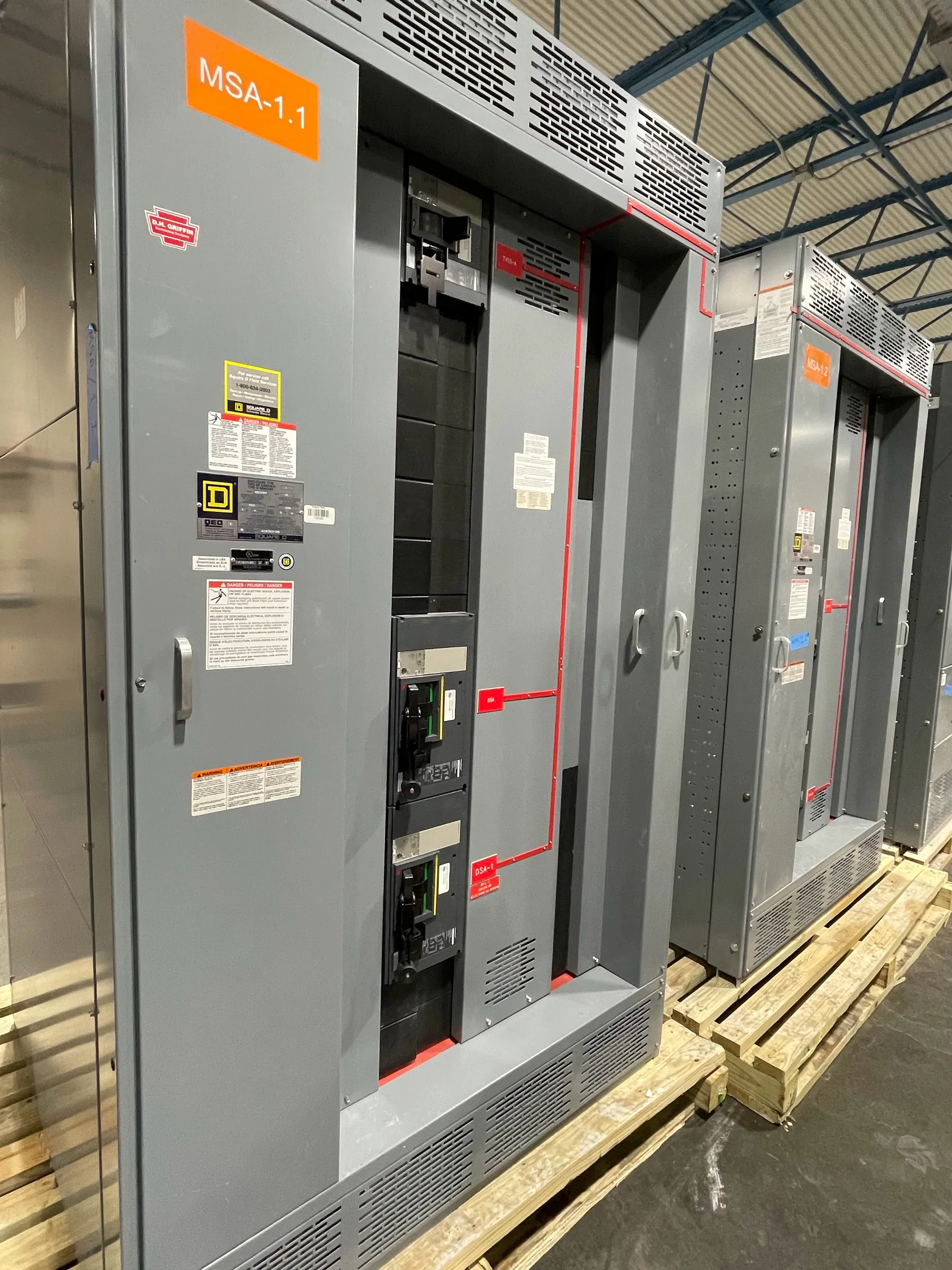
Low-Voltage Switchgear for Ely, Nevada Facilities
Low-voltage switchgear for an Ely project should be selected around the facility’s electrical system, operating priorities and installation conditions—not just a nominal voltage or a preferred lineup size. A custom assembly can be configured for the project’s incoming source, distribution feeders, protective devices and connections to downstream equipment. The design team should confirm the applicable system voltage, available fault current, grounding arrangement and project requirements before equipment ratings or construction details are finalized.
Site conditions deserve particular attention. Ely’s elevation and the actual equipment-room environment may affect design assumptions, so provide the equipment designer with verified site altitude, expected ambient temperatures, ventilation details and any other relevant environmental conditions. The designer can determine whether those conditions require equipment derating or other changes. Do not assume a published rating automatically applies unchanged at a specific site.
Choose a Power Circuit Breaker Arrangement Around the Work
Low-voltage power circuit breaker arrangements can be considered in terms of how the breakers are installed and how the lineup is expected to be maintained. Depending on the design, drawout breakers may allow a breaker to be withdrawn from its connected position for inspection or service. Fixed-mounted arrangements may suit projects with different space, cost or maintenance priorities. Neither approach is automatically best; the choice depends on the equipment specification, operating plan, available working space and the consequences of taking a circuit out of service.
Review the intended arrangement for the main, tie and feeder breakers, including any required interlocking or transfer functions. A tie breaker can affect how sources and bus sections are connected, but its use must be coordinated with the system design and operating requirements. Ask the designer to identify which functions are included and which depend on external controls or project-specific devices. Allow for breaker access, removal paths, cable terminations and room clearances in the facility layout rather than evaluating the lineup only by its overall footprint.
Evaluate Bus Ratings and System Conditions Together — Low-Voltage Switchgear in Ely, NV
Bus ratings are not interchangeable with system voltage. The specification should distinguish the assembly’s voltage class from the ratings needed for continuous current and short-circuit duty. Main and distribution bus requirements should reflect the actual load, source characteristics, anticipated operating configurations and project criteria. Where a lineup has multiple sections or a tie, confirm the required bus rating for each section and the conditions under which sections may be connected.
Short-circuit ratings and protective-device capabilities must be appropriate for the available fault current at the equipment location. Source changes, transformers, generators or parallel operating arrangements can affect that value. A qualified electrical engineer should establish the system conditions and review the proposed equipment against them. The equipment designer needs those confirmed inputs to develop a suitable configuration; a rating should not be selected from a general description of the facility alone.
Coordinate Protection and Maintainability — Low-Voltage Switchgear in Ely, NV
Protection coordination is a system-level task. Breaker trip units, settings, upstream protection and downstream devices should be reviewed together so the design addresses the project’s coordination objectives and fault-current conditions. The equipment quotation can identify the proposed breaker types and available trip-unit features, but final settings and coordination conclusions require the project’s electrical study and qualified engineering review. Do not assume that specifying a particular breaker arrangement, by itself, establishes selective coordination.
Maintainability also depends on the surrounding installation. Consider space for inspection and service, access to operating mechanisms, cable entry and routing, provisions for future circuits, and the facility’s plan for outages. These details can influence lineup sectioning and device placement. Provide the manufacturer with the one-line diagram, equipment schedule, service conditions and relevant control requirements so proposed construction can be evaluated against the intended use.
Consider UL 1558 and Project Documentation
UL 1558 is a standard associated with applicable low-voltage metal-enclosed power circuit breaker switchgear. It may be relevant when the project specification calls for that construction and the proposed equipment falls within the standard’s scope. Its mention does not establish that a particular assembly is listed, nor does it apply to every low-voltage product or system. Confirm the required standard, listing status and documentation for the specific proposed equipment during design and quotation review.
Useful quotation inputs include the one-line diagram, system voltage, calculated available fault current, bus requirements, breaker schedule, control schematics and installation conditions. Include required accessories, metering, communications interfaces, cable entry preferences and any project-specific documentation. Ratings, listings and final configuration remain subject to review against the project requirements.
Plan Delivery to Ely With Site Readiness in View
Custom equipment manufactured in the United States with all-American components can be shipped nationwide, including to Ely. Short lead times may be supported, but timing depends on the approved design, component requirements and project schedule; confirm the schedule for the specific order rather than assuming a delivery date. Before shipment planning, coordinate receiving access, unloading capability, the route into the electrical room and whether the installation area is ready for the specified lineup sections.
Clear information at the start helps align equipment design, site conditions and logistics. Confirm the required footprint, elevation and ambient data, connection locations, project ratings and applicable documentation with the project’s electrical engineer and equipment designer. Those reviews establish whether the proposed low-voltage switchgear is appropriate for the Ely installation.