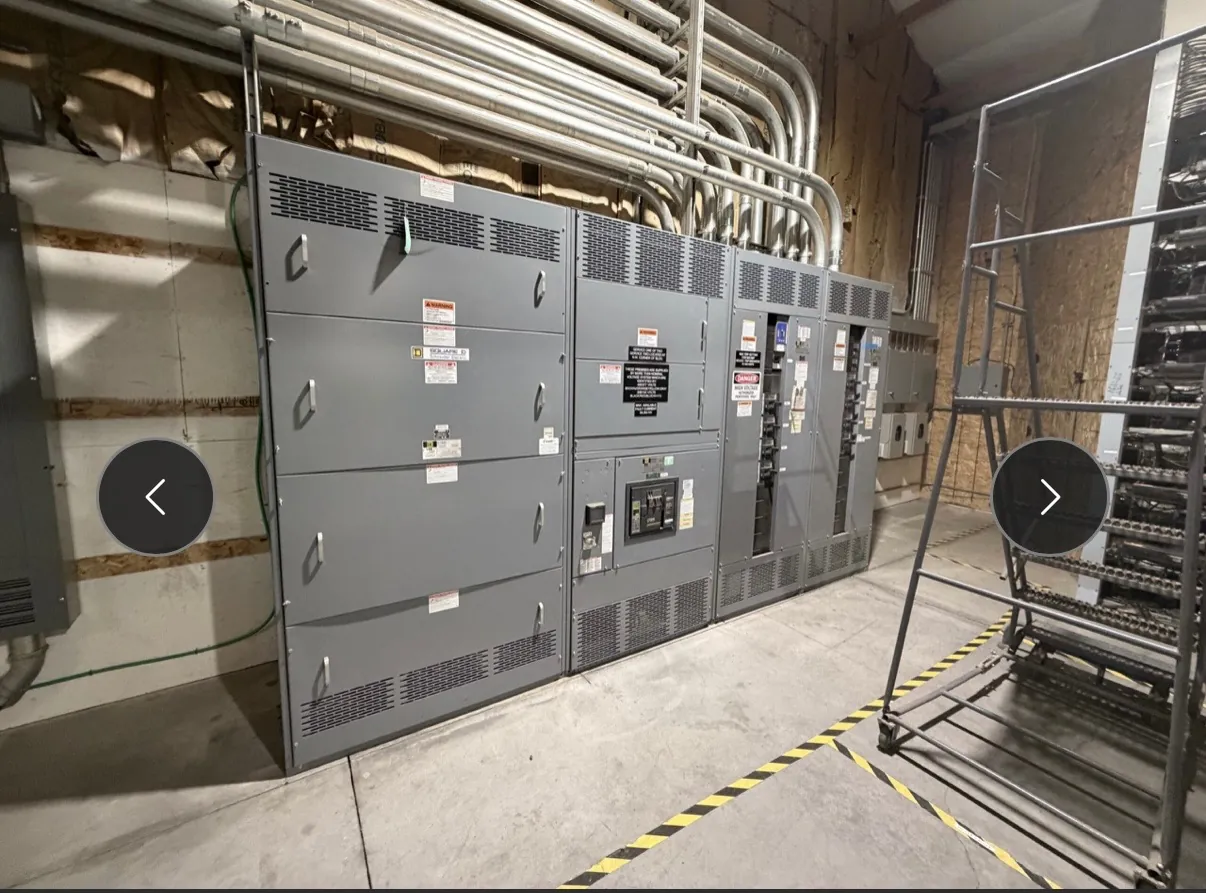
Metal-Enclosed Switchgear for Ely, Nevada Projects
Metal-enclosed switchgear is a coordinated assembly of switching and protective devices housed within a metal enclosure. For an Ely facility, the right configuration depends on the electrical system, the equipment being served, available space, operating conditions and the project’s protection requirements—not simply on a product label. Our U.S. manufacturing team builds new custom power-distribution equipment with all-American components and ships nationwide, including to Nevada. Project-specific design, ratings and applicable listings must be confirmed for the intended installation.
Early planning should establish whether the assembly will serve a utility interface, a facility distribution system, a transformer, motors or another load. One-line diagrams, system voltage, available fault current and the required switching functions help define the equipment. These details also indicate which questions need review by the project’s qualified electrical engineer and the equipment designer before a configuration is quoted.
Switches, Fuses and Breakers: Choosing a Configuration
A switch-and-fuse arrangement and a breaker arrangement provide different ways to switch and protect a circuit. Fuses can provide overcurrent protection when selected and coordinated for the application; a switch provides the circuit-control function. A circuit breaker combines switching and protective functions, but its suitability depends on the system, protection scheme and specified device characteristics. Neither approach is automatically the better choice for every Ely project.
Selection can turn on the load, the required protection functions, coordination with upstream and downstream devices, maintenance strategy and the operator’s preferred equipment arrangement. A project may also need provisions for metering, relaying or control interfaces. The design team should identify those requirements early, since device selection affects enclosure layout, wiring, access and integration with other equipment. The quoted configuration should state the intended functions rather than relying on a general description such as “switchgear.”
Enclosure Barriers, Access and Metal-Clad Distinctions — Metal-Enclosed Switchgear in Ely, NV
Metal-enclosed describes equipment housed in a metal enclosure; it does not mean every component is isolated in the same way. Internal barriers and compartments can vary according to construction and the devices included. Ask the designer to clarify which parts are separated, what access is required for inspection or service, and how cable, bus and control compartments are arranged. Barrier provisions should suit the design and operating needs without being mistaken for a substitute for an engineered safety program.
Metal-enclosed and metal-clad are related but not interchangeable terms. Metal-clad construction refers to a particular form of compartmentalized switchgear construction, commonly associated with removable circuit breakers and additional separation features. A metal-enclosed assembly does not, by that description alone, qualify as metal-clad. Specify the required construction and applicable product standard directly, then confirm that the proposed equipment meets the project documents. UL 891 applies to applicable low-voltage switchboards; it should not be treated as a blanket listing for all switchgear or for medium- or high-voltage equipment.
Fault Duty, Grounding and System Coordination — Metal-Enclosed Switchgear in Ely, NV
Fault duty must be evaluated against the electrical system and the equipment’s applicable ratings. System voltage and equipment ratings are different information: the operating voltage does not, by itself, establish the assembly’s interrupting, withstand or other performance ratings. The available fault current, protective-device characteristics and system configuration all matter. Provide current engineering information and identify any known changes to the source or distribution arrangement so the design can be reviewed against the actual installation.
Grounding requirements also need project-specific definition. The grounding and bonding approach depends on the system, source, enclosure, connected equipment and applicable design requirements. Identify the intended grounding arrangement and any required connections or interfaces in the project documents. Protection coordination should be reviewed across the devices that may affect the same circuit; selecting one fuse or breaker in isolation may not achieve the intended system behavior.
Ely Site Conditions, Interfaces and Quotation Details
For an Ely installation, site conditions deserve attention during equipment selection. Provide the site altitude, expected ambient conditions and relevant indoor or outdoor exposure so the equipment designer can determine whether any rating adjustment or other design measure is needed. Do not assume a published rating applies unchanged at a particular site. Confirm environmental requirements, enclosure arrangement, cable-entry direction and available installation space before the layout is finalized.
A useful quotation package includes the one-line diagram, system voltage, available fault-current information, required device functions, specified construction, preferred access and barrier arrangement, grounding requirements, metering or control needs, and known interface details for adjacent equipment. Include project specifications and any applicable listing requirements, but have the design team verify their applicability to the proposed product. Clear inputs help identify scope questions before manufacturing begins.
Custom Manufacturing and Project Review — Metal-Enclosed Switchgear in Ely, NV
Our business manufactures new custom switchgear and power-distribution equipment; it does not broker equipment. Assemblies use all-American components, are built in the USA and can ship nationwide to Nevada. Lead times depend on the defined configuration, project documentation and manufacturing schedule, so timing should be confirmed with the quotation rather than assumed.
Before release, qualified project professionals should reconcile the proposed equipment with the site design, protection study, installation constraints and applicable requirements. Confirm ratings, construction, listings and interfaces in the project submittals. That review is especially important where site conditions, system fault duty or downstream coordination could affect the final design.