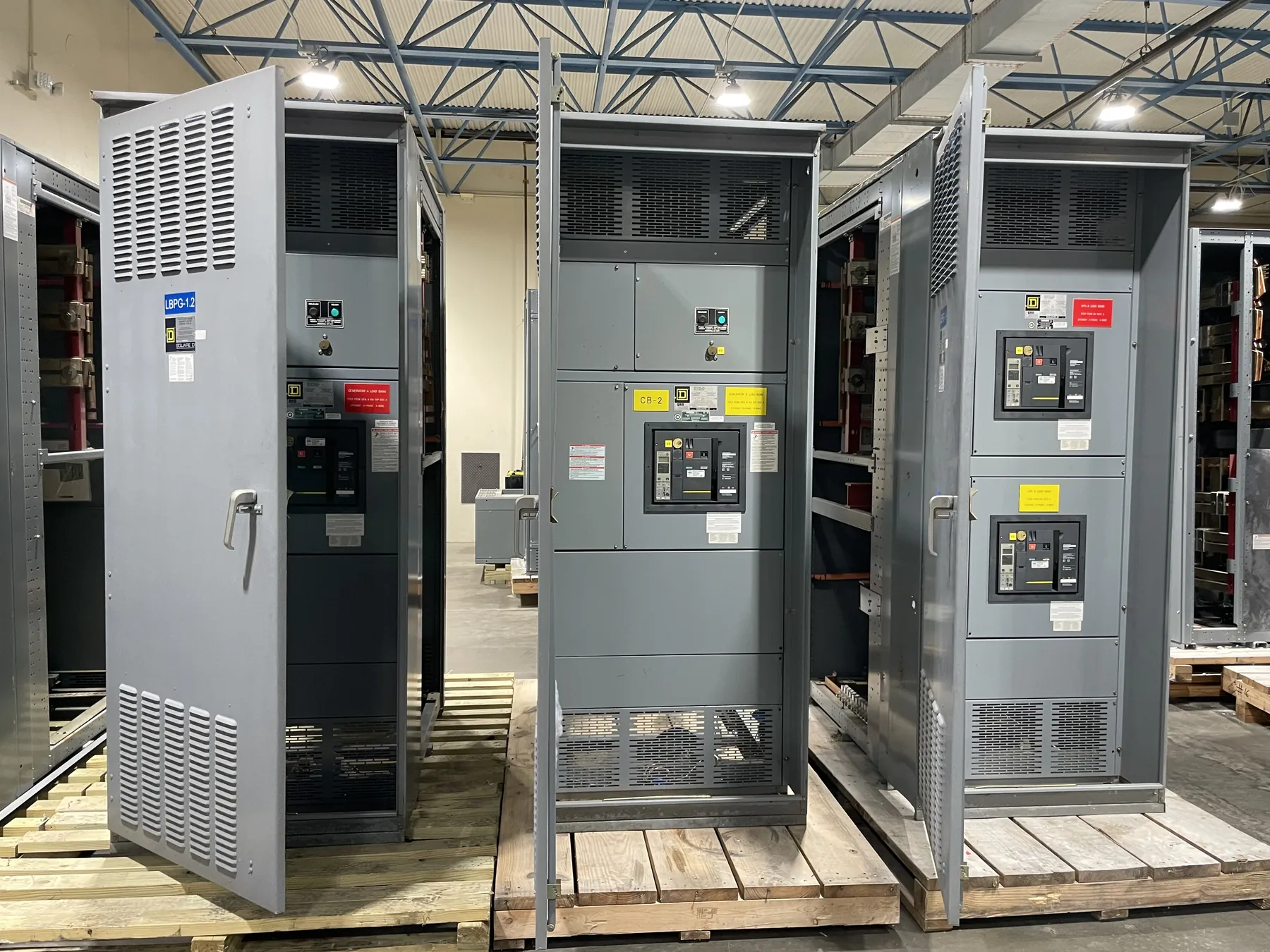
Metal-Clad Switchgear for Ely, Nevada Projects
Planning metal-clad switchgear for an Ely facility starts with the electrical system it must serve, the environment where it will be installed, and the operating practices the owner requires. This equipment is generally arranged in grounded metal compartments that separate major circuit elements, such as breakers, buses, and instrument transformers. Compartmentalization helps define barriers within the assembly, but it does not remove the need for a project-specific design, appropriate protective devices, or qualified installation and maintenance.
We manufacture new custom power-distribution equipment in the United States using all-American components, and ship nationwide, including to Nevada. For an Ely quotation, useful starting information includes the one-line diagram, system voltage, available fault-current data, feeder and load requirements, desired lineup arrangement, and project schedule. Those inputs allow the equipment design to be evaluated against the actual application rather than assumed from a city name or a general product description.
Compartment Layout and Withdrawable Breakers
Metal-clad construction uses grounded metal barriers to segregate functional compartments. The arrangement and barriers must match the specified equipment design and applicable requirements; “metal-clad” should not be treated as a substitute for reviewing the assembly drawings, ratings, or construction details. A project team should consider how incoming and outgoing connections, bus sections, control wiring, and voltage-sensing components are assigned to compartments, and how those interfaces affect access, cable routing, and future maintenance planning.
Withdrawable breakers can be moved between defined positions within compatible switchgear, allowing the breaker to be disconnected from its primary circuit without removing it from the lineup. The selected breaker and cell arrangement must be designed as a matched system. Confirm the required continuous-current and interrupting ratings, control voltage, protective functions, interlocks, and any auxiliary contacts. A withdrawal feature does not establish that a particular operating action is safe in every condition; operating practices belong in the equipment documentation and the facility’s qualified electrical safety program.
Grounding, Protection, and Relay Coordination — Metal-Clad Switchgear in Ely, NV
Grounding is a system-level design issue, not merely a feature of the enclosure. The project engineer should define the grounding method and review how the switchgear’s ground bus, incoming source, connected equipment, and protective devices work together. Ground-fault protection, where applicable, must be selected and coordinated for the actual system. Connection details and grounding provisions should be shown and reviewed in the project documents.
Relay coordination determines how protective devices respond to faults and other abnormal conditions across the electrical system. The responsible engineer needs reliable source and load data, protective-device information, and the intended operating configurations to evaluate settings and coordination. Settings should not be inferred from a switchgear rating or selected independently of the broader system study. Changes in sources, transformers, feeder lengths, or operating modes can affect the analysis, so design assumptions should be documented and revisited when project information changes.
IEEE C37.20.2 and Applicable Project Requirements
IEEE C37.20.2 addresses metal-clad switchgear. Its applicability and the required edition should be confirmed in the project specification, along with the equipment’s intended service, construction, and electrical ratings. Referencing the standard alone does not establish that a proposed lineup meets every project requirement, nor does it establish a listing or certification. The equipment designer should identify the applicable standard requirements and verify them against the selected configuration and documentation.
Keep system voltage distinct from equipment ratings. The voltage class, insulation requirements, continuous-current rating, short-circuit or interrupting capability, and other specified characteristics each need review for the application. A rating is not a blanket statement that the assembly suits any system at that voltage. Confirm ratings, applicable listings, and project-specific details with the equipment designer and the project’s qualified electrical engineers before release.
Ely Site Conditions and Equipment Derating — Metal-Clad Switchgear in Ely, NV
For an Ely installation, provide the actual site elevation and expected ambient conditions rather than relying on regional assumptions. Verify site altitude, temperature range, indoor or outdoor installation, enclosure requirements, ventilation, dust exposure, and any other conditions that could affect equipment selection. The equipment designer should determine whether altitude or ambient conditions require derating or other design adjustments. Do not assume a standard rating remains unchanged under every site condition.
Logistics also depend on the destination and installation plan. Confirm access to the equipment room or pad, receiving arrangements, unloading responsibility, lineup dimensions, and any restrictions on delivery route or staging. These details can influence shipping coordination and the way the lineup is divided for transport; they should be reviewed early rather than treated as a last-minute field issue.
Information to Prepare for a Metal-Clad Switchgear Quote
A focused request helps clarify the design and avoid unsupported assumptions. Provide the latest one-line diagram, system voltage and grounding method, available fault-current information, source and transformer data, feeder schedule, control and relay requirements, preferred lineup arrangement, site conditions, and applicable specification sections. Note any required interface with existing equipment, communications or monitoring systems, and the project’s submittal and delivery milestones.
Our team can use these inputs to develop a custom equipment proposal for review. Final selection depends on engineering evaluation, confirmed ratings, the project’s applicable IEEE C37.20.2 requirements, and site-specific conditions. Early coordination among the owner, electrical engineer, equipment designer, and installation team gives each party a clearer basis for drawings, interfaces, and procurement planning.