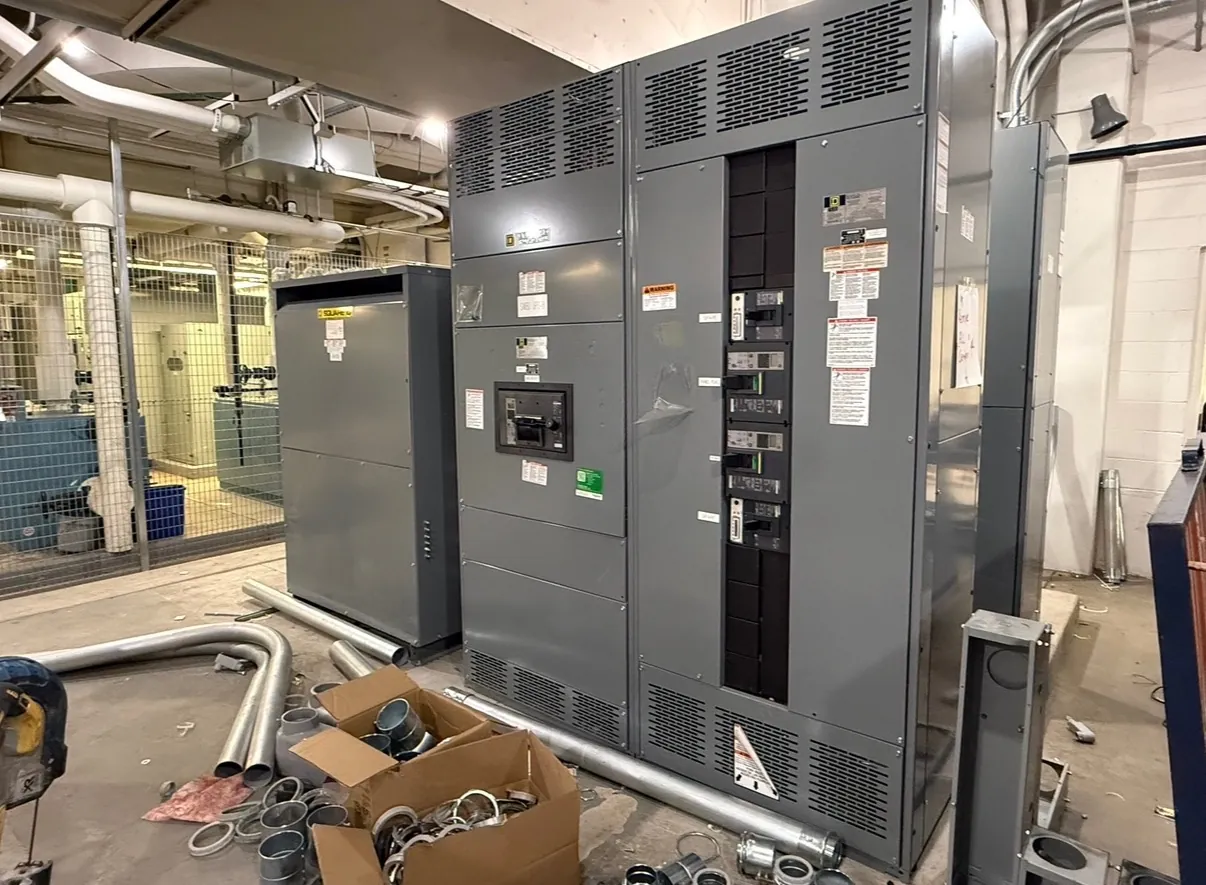
Motor Control Centers for Ely, NV Projects
Motor control centers (MCCs) bring motor starters, feeder protection, control components and related distribution functions together in an engineered assembly. For facilities in Ely, the right arrangement depends on the connected motors and loads, the electrical system, the operating environment and how personnel need to access equipment for inspection and maintenance. We manufacture new custom power-distribution equipment in the United States using all-American components, and ship nationwide, including to Nevada.
An MCC should be developed around the project’s actual load schedule and interface requirements rather than selected by enclosure appearance alone. Early coordination can clarify which motors need across-the-line starting, which require variable-speed operation, and what control signals must connect to the facility’s automation or process systems. Those choices influence section layout, wiring, heat management, protection and the space reserved for future changes.
Starter Selection, VFDs and Control Interfaces
Motor starters provide switching and overload protection appropriate to their intended motor and application. The design team should confirm motor nameplate information, starting method, duty, control voltage and operating sequence. A direct-on-line starter may suit one load, while another process may call for reduced-voltage starting or a variable frequency drive (VFD). Starting current, acceleration needs, process behavior and the available electrical supply all affect that decision.
VFD integration can support adjustable motor speed, but it adds design questions beyond selecting a drive. Confirm the motor’s compatibility, required speed range, control method, signal interfaces and any project requirements for bypass or isolation. Drive heat, electrical noise, cable routing and installation environment may affect MCC arrangement and coordination with other equipment. The equipment designer and project engineers should resolve these interfaces before drawings are finalized.
For Ely facilities, the specification should describe local ambient conditions and the proposed equipment location, including whether the MCC will be indoors or exposed to site conditions. Site altitude, ambient temperature and ventilation can affect equipment performance or require derating; the equipment designer must review these conditions against the selected components and assembly design.
Short-Circuit Ratings and Feeder Protection — Motor Control Centers in Ely, NV
The MCC’s short-circuit rating is not the same thing as the system’s nominal voltage, and neither can be chosen independently of the installation. The project’s available fault current, protective-device characteristics, equipment configuration and applicable design requirements inform the rating and coordination review. Provide the system information established by the qualified electrical engineer so the proposed equipment can be evaluated for the intended location and connection.
Feeder protection must also be coordinated with the downstream loads and upstream devices. Motor branch-circuit protection, overload protection and feeder devices serve related but distinct functions. Their selection should reflect motor data, conductor and equipment requirements, expected operating conditions and the project’s protection strategy. Avoid relying on an assumed rating or a generic MCC schedule when site-specific fault-current and coordination information is available.
Ratings and any required product listings depend on the actual assembly, components and project specification. UL 845 may be required for an MCC, but that requirement should be confirmed with the engineer, owner and applicable project criteria. A reference to a standard is not by itself confirmation that a proposed configuration is listed or suitable for a particular installation.
Maintenance Access and Section Arrangement
Plan the MCC location and lineup with maintenance access in mind. Allow the project team to evaluate working space, door and withdrawal clearances where applicable, cable entry and exit routes, and access to control wiring and components. The room layout, adjacent equipment, structural constraints and planned pathways may determine whether sections should be grouped by process area, voltage or operational priority.
Consider how personnel will identify feeders and starters during routine facility work. Consistent unit naming, device labels, terminal references and clear drawing packages can make interfaces easier to understand. The owner’s maintenance practices may also influence spare space, provisions for future loads and whether selected units need to be replaceable or configured for particular service needs. These provisions should be specified rather than presumed.
Information to Develop an Ely MCC Quotation
A useful quotation request includes the one-line diagram, load and motor schedule, system voltage, available fault-current information, protection requirements and any applicable listing or specification language. Include control schematics or a description of required signals, VFD schedules, enclosure requirements, cable-entry preferences and the intended equipment location. Project drawings, room dimensions and access constraints help identify layout issues early.
For an Ely project, also provide known site altitude and ambient conditions, along with any environmental or operating constraints that may affect the equipment. The project engineer should identify required derating or other design considerations after review. Missing information can affect both equipment configuration and the ability to verify that the proposed MCC aligns with the project documents.
Engineering Review and Nationwide Shipment
Our manufacturing process starts with the project requirements and proceeds through equipment configuration and drawing coordination before fabrication. The final design, ratings, interfaces and any listing requirements must be confirmed for the specific application by qualified engineering review and site coordination; they should not be inferred from a city or product category alone. We build new equipment in the USA with all-American components and support short lead times, with shipment available nationwide. Delivery planning for Ely should account for the receiving site, unloading arrangements, access route and installation sequence established by the project team.