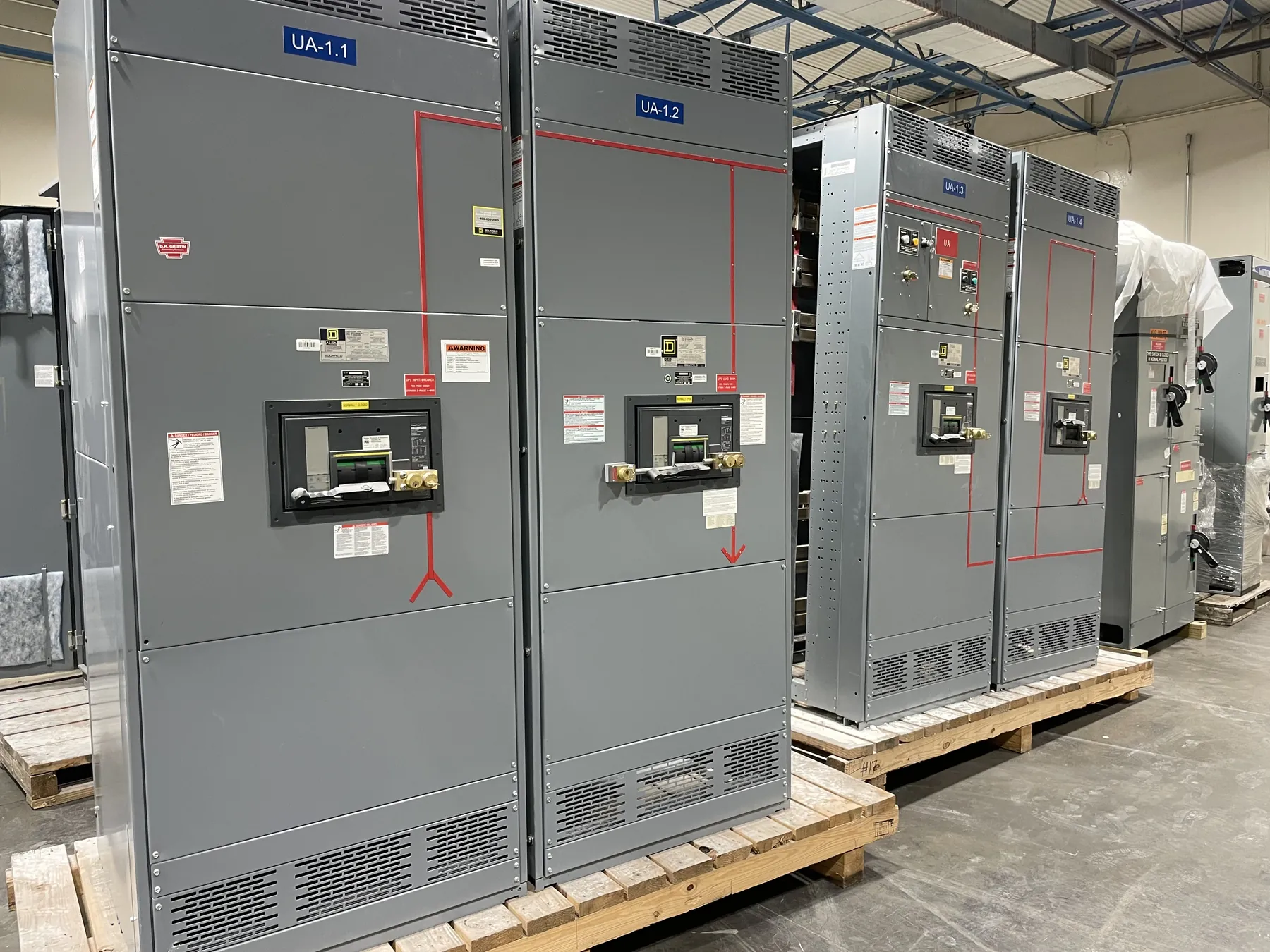
Service Entrance Switchboards for Elko, Nevada Projects
A service entrance switchboard is the point where utility service enters a facility’s distribution system, so its design depends on more than the switchboard lineup alone. Elko project teams should establish the utility metering arrangement, service characteristics, required main disconnect, service grounding and bonding details, and the available fault current before finalizing the service section. These decisions affect the equipment configuration and its relationship to the utility connection and downstream distribution.
New custom service entrance switchboards can be manufactured for project requirements and shipped to Elko. The design should reflect the actual site and the requirements of the serving utility and applicable authorities, rather than relying on a generic arrangement or assumptions about local practice. The project’s electrical engineer and utility contacts should confirm requirements before equipment details are released for manufacture.
Confirm Metering, Main Disconnect and Service Grounding
Utility metering can influence compartment layout, access, barriers and the placement of service conductors. Before requesting a quotation, provide the utility’s metering requirements and identify any restrictions on meter location, enclosure arrangement or access. Metering provisions should not be inferred from another facility or a previous project; the serving utility must confirm the arrangement for the specific service.
The main disconnect configuration also needs to match the approved service design and the intended distribution arrangement. Clarify whether the project specifies a particular disconnect type, number of service sections, or a defined connection to downstream equipment. Service grounding and bonding are likewise project-specific. Drawings should identify the intended grounding and bonding provisions for review by the responsible electrical engineer and authority having jurisdiction.
Available Fault Current and Equipment Ratings
Available fault current at the service point is a key input for selecting and coordinating equipment ratings. Provide the utility’s fault-current information at the relevant point, along with the project one-line diagram and any known upstream protective-device details. If this information is not yet available, identify it as pending rather than treating an estimated value as final. The engineer must determine the required ratings and verify that the proposed equipment is suitable for the system and its protective-device coordination.
A voltage designation and an equipment rating are not interchangeable. A switchboard’s voltage, current and short-circuit-related ratings must be specified and confirmed against the project documents and conditions. Ratings, applicable listings and the final configuration require review for the particular assembly; they should not be assumed based on a product category or a nominal system voltage.
Elko Site Conditions, Enclosure and Maintenance Access
Document the actual installation environment, including specified ambient conditions, indoor or outdoor placement, exposure to dust or moisture, and any enclosure requirements. Elko-area conditions can vary by facility and location, so the equipment should be selected from documented site requirements rather than broad assumptions about the region. The project team should also communicate the intended mounting surface, available room dimensions, conductor entry direction and any constraints on moving the equipment into its final position.
Maintenance access is a design input, not an afterthought. Show working space and access routes on the equipment layout, and identify nearby walls, doors, piping or other obstructions that could affect installation, inspection or future service. The electrical engineer and site team should verify that the proposed arrangement fits the actual room or outdoor pad and complies with project and authority requirements.
Utility and Authority Coordination Before Release
Utility acceptance and authority approvals are separate project considerations that should be resolved before the switchboard design is treated as final. Submit the proposed service arrangement, metering provisions and relevant equipment information through the project’s established review process. Confirm who is responsible for utility coordination, permit submissions and design responses, and allow time to incorporate any required changes before manufacture.
For a useful quotation, provide the current one-line diagram, equipment schedule, service and fault-current information, metering requirements, enclosure and ambient specifications, site layout, conductor-entry details, and applicable utility or authority comments. Note open items clearly. A complete package helps identify design decisions early, but it does not replace review by qualified engineers or approval by the responsible utility and authorities.
Custom Manufacturing and Delivery to Elko
The manufacturer builds new custom switchgear and power-distribution equipment in the United States using all-American components and ships nationwide, including to Nevada. After receiving project information, the equipment configuration can be developed against the specified service arrangement, ratings, enclosure needs and interface details. Design documentation should be reviewed with the project team before manufacturing begins so that utility requirements, site constraints and approved drawings remain aligned.
When planning delivery to an Elko facility, coordinate the receiving location, unloading responsibility, access route and any restrictions on delivery vehicles or staging. These logistics depend on the site and should be confirmed by the project team rather than assumed. Clear communication about the installation environment, approvals and open engineering items gives the service entrance switchboard a better-defined path from quotation through delivery and installation.