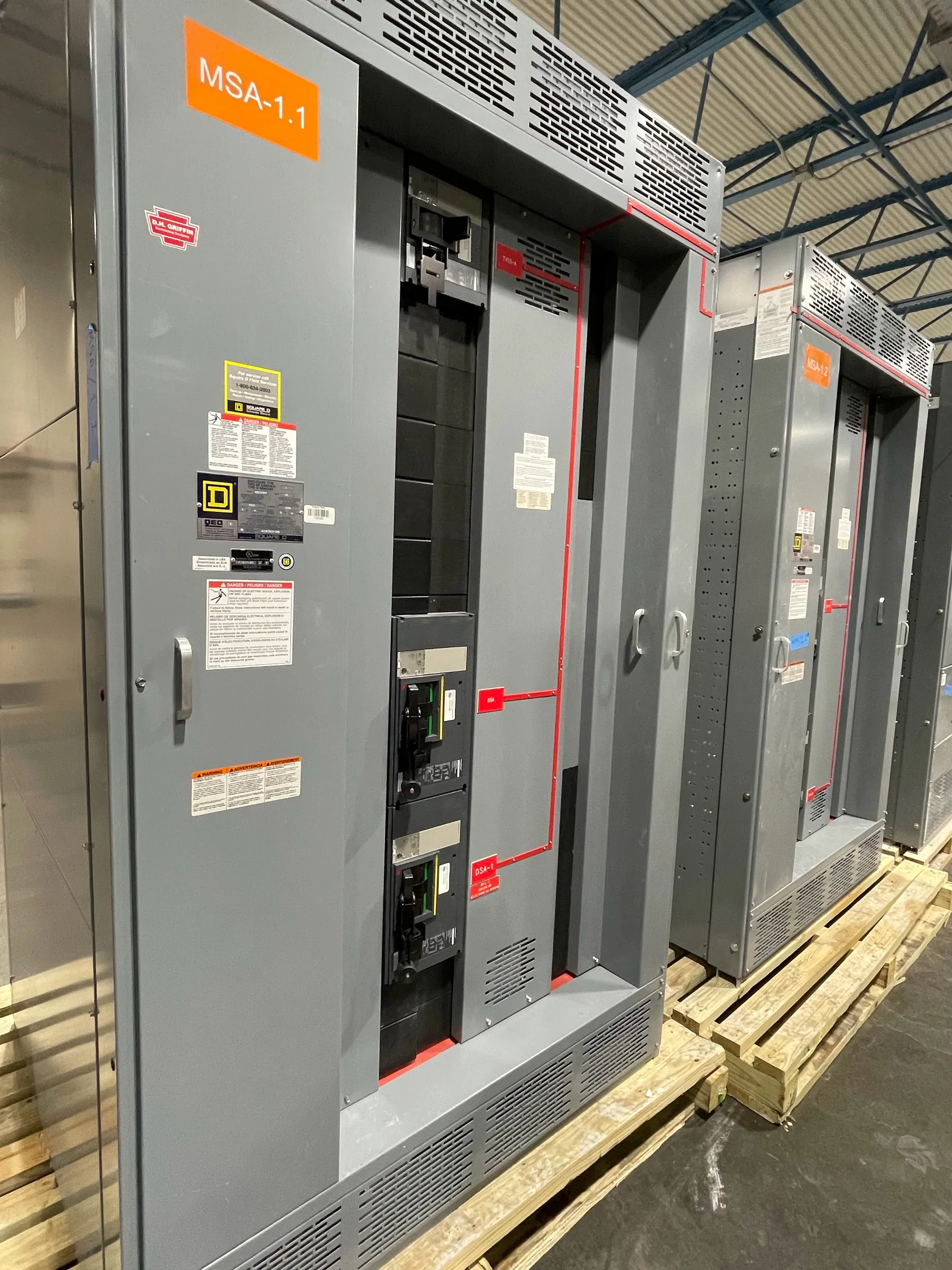
Planning Switchgear for an Elko, Nevada Project
Projects in Elko can involve different building types, site layouts and electrical conditions, so distribution equipment should be specified for the actual installation rather than selected by location alone. A useful starting point is a one-line diagram showing the source, service arrangement, distribution sections and major loads. Include the project’s electrical requirements, applicable drawings and the intended equipment location. These details help engineers determine a suitable configuration and identify decisions that need resolution before a quotation or approved submittal.
Equipment for an Elko project can be manufactured in the United States and shipped to Nevada. This manufacturer builds new custom switchgear and power-distribution equipment using all-American components, with short lead times as a goal and nationwide shipping. The project schedule, design maturity, component requirements and shipping arrangements affect planning; an exact production or delivery date should be confirmed for the specific order.
Document Elko Site Conditions Before Selecting an Enclosure
Record the ambient conditions where the equipment will be installed, including the expected temperature range and whether the space is indoors, outdoors, conditioned or exposed to changing conditions. Note dust, moisture, washdown, corrosive substances, vibration or other environmental factors that apply to the actual site. Do not assume that a general description such as “industrial” or “outdoor” is enough to establish enclosure suitability. The project team should document the exposure and have the enclosure requirements reviewed against the equipment design and installation location.
Also describe how the equipment will be positioned: inside a dedicated electrical room, in a service area, or in another defined setting. Enclosure construction and configuration can affect access, ventilation, cable entry and the space needed around the assembly. A custom design should reflect those constraints rather than relying on an assumed standard room layout. If the site conditions or building plans are still changing, identify that uncertainty during specification so it can be addressed before fabrication.
Match Ratings to the Electrical System — Switchgear for Elko, NV
Provide the system voltage, available fault-current information, source details and required equipment ratings as established by the project’s qualified electrical professionals. A rating is not the same thing as system voltage, and neither should be inferred from a city, building type or a similar installation. The appropriate interrupting and withstand capabilities, bus arrangement and other design details depend on the actual electrical system and must be confirmed through engineering review.
Clarify whether the scope calls for low-voltage switchboards, switchgear or other distribution equipment, and identify the required functions and section arrangement. UL 891 applies to applicable low-voltage switchboards; it should not be treated as a blanket standard for every switchgear assembly or for medium- or high-voltage equipment. Any requested listing, standard, rating or project-specific compliance requirement needs confirmation for the particular product and design. Do not assume a product is listed or approved for a project unless that status has been verified.
Coordinate Connections, Layout and Maintenance Access
Good specification includes the interfaces around the equipment, not only the equipment itself. Identify incoming and outgoing cable or bus connections, conductor entry direction, termination space, metering or control requirements, and any connections to generators, transformers, transfer equipment or building systems. Provide the latest drawings and note which party is responsible for each interface. This can reveal conflicts between the electrical design and the available room before equipment dimensions and section arrangements are finalized.
Document clear working and maintenance access based on the installation plan and applicable project requirements. Show doors, walls, structural elements, adjacent equipment, cable routes and any planned barriers or obstructions. The design team should review service access and installation clearances for the specific equipment and site; these cannot be settled by a general webpage description. Coordinate delivery paths as well, including door openings, turns, floor transitions and the intended route from receiving to the final location.
Prepare a Clear Quotation Package for Elko Delivery
A complete request for quotation can include the one-line diagram, load and circuit schedules, system data, enclosure conditions, room or site layout, connection preferences, control and metering needs, required documentation and target project milestones. State which requirements are fixed and which remain under review. If the project has a preferred shipment window or receiving restrictions, share them early so manufacturing and transportation planning can be discussed without implying an unconfirmed delivery commitment.
Before release, coordinate the final equipment arrangement with the electrical engineer, contractor, facility team and other parties responsible for foundations, conduits, feeders and controls. Confirm shipping destination and site receiving arrangements for Elko, including unloading responsibility and any access limitations. Ratings, listings, dimensions, interfaces and project compliance remain subject to review of the actual design and site information.
From Custom Build to Nevada Shipment
Once the project requirements are sufficiently defined, the manufacturer can develop a configuration for review, resolve open interface questions and proceed through the agreed manufacturing documentation and production stages. Changes to system data, room conditions or connection requirements may affect the design and schedule, so revisions should be communicated and reviewed rather than assumed to fit an earlier configuration.
The result is a new, custom-built distribution assembly planned around the documented project—not a claim of a local Elko facility or a previously completed local installation. With site conditions, ratings, access and shipping needs addressed early, project teams can make informed decisions about equipment scope and coordinate delivery to Nevada with fewer avoidable uncertainties.