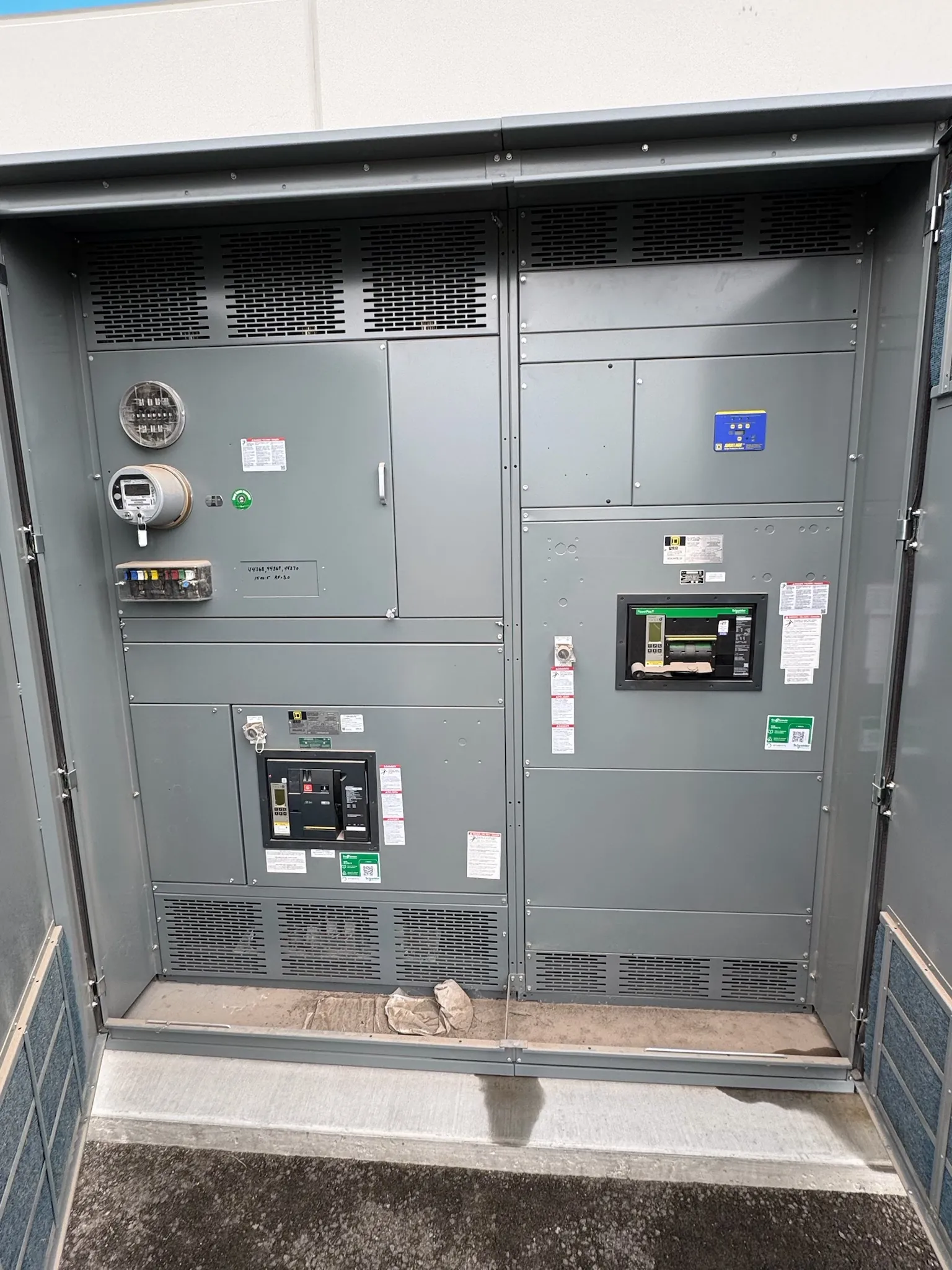
Data Center Switchgear Planning for Elko, Nevada
Data center electrical distribution in Elko starts with the facility’s load plan, utility service characteristics, and required response to a power interruption. A switchgear or switchboard lineup is not a stand-alone redundancy solution: its configuration must work with the UPS system, generators, transfer equipment, protective devices, and downstream distribution. For an Elko project, establish those interfaces early so the equipment can be designed around the actual one-line diagram and operating intent rather than assumptions about a typical data center.
Our U.S. manufacturing team builds new custom power-distribution equipment using all-American components and ships nationwide, including to Nevada. The design and quotation process depends on project documents and confirmed requirements; equipment ratings, applicable listings, and final details must be reviewed for the specific application.
Define Redundant Power Paths and Their Boundaries
Redundancy needs to be described as an electrical arrangement, not just a target number of feeds. Identify normal and alternate sources, the loads each path serves, and where paths are permitted to connect. The one-line should show the intended relationship among service equipment, main and tie devices, UPS input and output, generator connections, and downstream distribution. This lets the equipment designer evaluate lineup sections, bus arrangements, and connection points in context.
Designers should also clarify whether a tie is normally open or normally closed, what conditions permit transfer, and how unintended paralleling is prevented. Separate paths may still share components or spaces that affect availability and maintenance. The owner’s sequence of operation and the electrical engineer’s design determine those boundaries; a switchgear configuration should not imply redundancy that the complete system does not provide.
Coordinate UPS and Generator Interfaces — Data Center Switchgear in Elko, NV
UPS topology influences the distribution equipment around it. Provide the UPS manufacturer’s interface requirements, input and output arrangement, bypass configuration, and any relevant fault-current or protective-device data available during design. Confirm whether external maintenance bypass equipment is required and how it connects to the UPS and load. These details affect device selection, physical arrangement, and the intended means of isolating equipment for service.
Generator interfaces need equally clear definition. Document generator source arrangements, transfer equipment responsibility, control and interlock boundaries, and the loads intended to operate on standby power. The electrical engineer should assess source behavior and protection for both utility and generator conditions. Device ratings and coordination cannot be selected from facility load alone; available fault current, equipment characteristics, and the project’s operating modes all matter.
Plan Selective Coordination and a Maintainable Bypass Sequence
Selective coordination is a system-level study, not a product feature that can be guaranteed by choosing a particular lineup. Provide the protective-device schedule, upstream and downstream device information, source data, and applicable study criteria. The project engineer can evaluate coordination across normal, generator, and other defined operating conditions, then specify settings and device characteristics. Changes to protective devices or source arrangements may require that analysis to be revisited.
A maintainable bypass sequence should be documented before equipment layout is finalized. State which equipment must remain energized, which sections may be isolated, and what interlocks or operating constraints the design requires. The approved sequence should be developed by qualified project personnel and reflected in the one-line, control scheme, and equipment documentation. Physical space for bypass devices and cable access must support the intended arrangement, not obstruct adjacent compartments or planned service access.
Account for Elko Site Conditions and Access
For an Elko installation, specify the actual electrical-room and site conditions rather than relying on a generic regional assumption. Include the project’s ambient temperature range, indoor or outdoor location, enclosure requirements, altitude or other environmental criteria where applicable, and any exposure to dust or moisture identified by the site team. These inputs help determine appropriate equipment construction and confirm whether the proposed arrangement fits the installation environment.
Room dimensions, door openings, equipment access routes, working clearances, cable entry direction, and maintenance space should be documented alongside the electrical requirements. Nevada shipping logistics can be planned from the project schedule and receiving constraints, but delivery timing depends on confirmed scope and manufacturing details. No local factory or Elko project history is implied.
Prepare a Complete Switchgear Quotation Package — Data Center Switchgear in Elko, NV
A useful quotation package includes the latest one-line diagram, project specifications, load and source information, required bus and device ratings, protective-device preferences, enclosure and environmental requirements, and any specified applicable listing. Identify the governing project documents and note unresolved items, such as final fault-current data or generator interface details. Ratings are not the same as system voltage, and neither a rating nor a requested listing should be assumed to settle suitability for the complete installation.
Applicable low-voltage switchboards may be specified to UL 891, but that standard does not apply to every type of switchgear or to medium- or high-voltage equipment. Confirm the exact product category, required listing, and project acceptance criteria with the responsible engineer. With clear inputs, the manufacturer can develop a configuration for review and identify decisions that still require engineering confirmation before release.