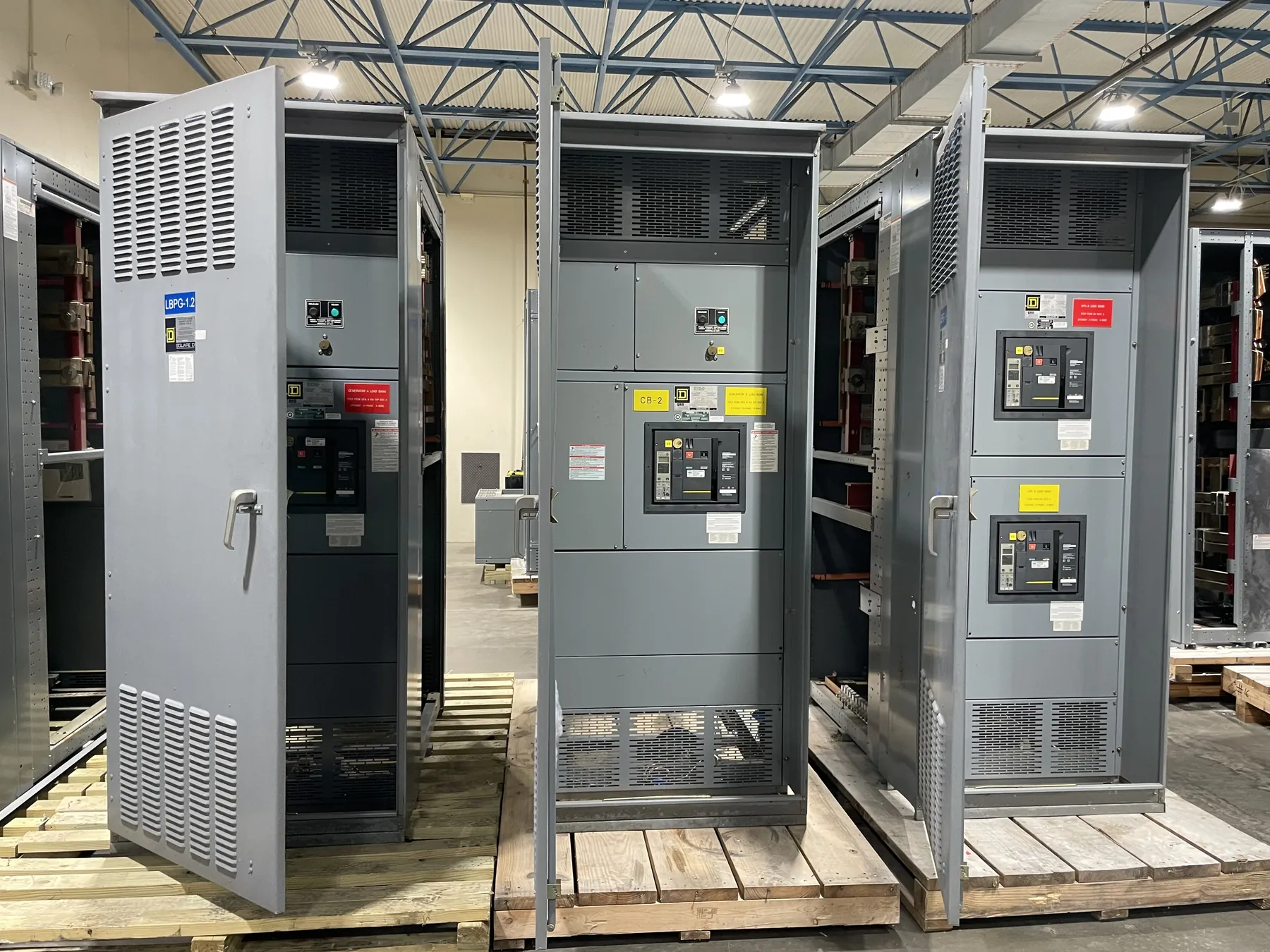
Casino Electrical Distribution for Elko Facilities
Casino electrical distribution must account for more than the gaming floor. A property may include restaurants, kitchens, lodging, entertainment spaces, offices, back-of-house operations, security systems, and building services, each with different operating priorities. For an Elko project, custom switchgear and power-distribution equipment should be developed around the facility’s documented load schedule, one-line diagram, operating plan, and applicable engineering requirements—not a generic casino layout.
A useful early design task is to identify which loads are critical, which are life-safety loads, and which are general loads. These categories are not interchangeable, and the project engineer must define them for the actual facility and applicable codes. Clear load separation can support planned responses to a utility interruption or equipment outage, but it also affects switchboard sections, feeder arrangements, transfer equipment interfaces, and available space. The electrical engineer and project team should resolve those relationships before equipment configuration is finalized.
Coordinate Critical, Life-Safety, and General Loads
Critical loads may include selected functions that the owner needs to maintain during an interruption, while life-safety loads are determined by applicable code requirements and the approved project design. General loads serve other building functions. The exact assignment depends on the property, jurisdiction, adopted codes, and engineering analysis. A gaming area’s operational importance alone does not establish its code classification or emergency-power requirements.
Switchgear planning should reflect how these groups connect to normal and alternate sources. The design team should identify the source and destination of each feeder, the intended transfer arrangement, any required separation, and the control or monitoring interfaces. Confirm whether equipment must accommodate future circuits or planned operational changes; spare space and future provisions require deliberate design and should not be assumed from an equipment description. Final ratings, protective-device selections, and coordination require qualified engineering review.
Emergency Power Interfaces and Operating Intent
Emergency-power coordination begins with the project’s source arrangement and operating sequence. The generator or other alternate source, transfer equipment, distribution sections, and downstream panels must be considered as an integrated system. Equipment specifications should identify which assemblies connect to each source and clarify whether transfer equipment is furnished separately or included within the project scope. The responsible electrical engineer should define switching logic, interlocking, protection, and any monitoring needs.
For casino operations, the owner may need distinct expectations for a utility disturbance, generator operation, maintenance outage, and return to normal service. Documenting those scenarios helps the design team evaluate which functions are intended to remain available and what dependencies exist. It also helps avoid treating an emergency-power connection as proof that every connected load can operate simultaneously. Source capacity, demand, starting requirements, and system behavior must be evaluated for the specific installation.
Phased Maintenance and Access Planning
Casinos often have operating schedules that make a broad shutdown difficult to plan. Phased maintenance requirements should therefore be discussed while the distribution layout is being developed. The owner and engineer can identify sections that may need to be isolated independently, circuits that cannot be interrupted together, and areas where temporary operating arrangements may be considered. These are design and planning questions, not a substitute for site-specific procedures established by qualified personnel.
Physical access matters as much as electrical segmentation. Provide the equipment manufacturer with room dimensions, door and corridor constraints, equipment delivery route, working clearances, cable-entry preferences, and any restrictions created by adjacent building systems. Maintenance access should be reviewed against the actual room layout and project requirements. A compact lineup may conserve floor area but can complicate access or future work; a larger arrangement may support separation and serviceability while demanding more space. The tradeoff should be resolved with the project team.
Elko Site Conditions and Enclosure Requirements
For an Elko installation, document the actual equipment-room conditions rather than relying on the city name as a design specification. Relevant inputs may include the specified ambient conditions, indoor or outdoor placement, exposure to dust or moisture, ventilation, elevation where required by the design, and nearby heat sources. The project engineer and manufacturer can use these details to review enclosure construction and equipment requirements. Enclosure type and environmental suitability should be confirmed for the specific location and installation.
Include the room’s access points, available floor space, cable routing, and maintenance clearances in the quotation package. If the equipment will be installed in a constrained renovation area, note existing distribution interfaces and any confirmed limits on shutdown windows. These details help identify configuration questions early; they do not replace field verification or the engineer’s review of the complete electrical system.
Information for a Casino Switchgear Quotation
A useful request for quotation includes the current one-line diagram, load and feeder schedules, system voltage, required equipment ratings, available fault-current information when established, protective-device requirements, source and transfer arrangement, and the project’s applicable specifications. Also identify the intended distinction among critical, life-safety, and general loads, along with phased-maintenance objectives, enclosure needs, room dimensions, cable-entry requirements, and desired monitoring interfaces. Missing or preliminary information should be clearly identified so assumptions can be reviewed rather than mistaken for confirmed design criteria.
The manufacturer builds new custom switchgear and power-distribution equipment in the United States using all-American components, with nationwide shipping that can serve Nevada projects. Lead time depends on the final scope, approved submittals, component requirements, and production scheduling; confirm timing for the specific project. Applicable ratings and any product listing must be verified for the exact assembly and specification. UL 891 applies to relevant low-voltage switchboards, not every switchgear product or system. Final equipment selection and system compatibility require qualified engineering review and site-specific confirmation.