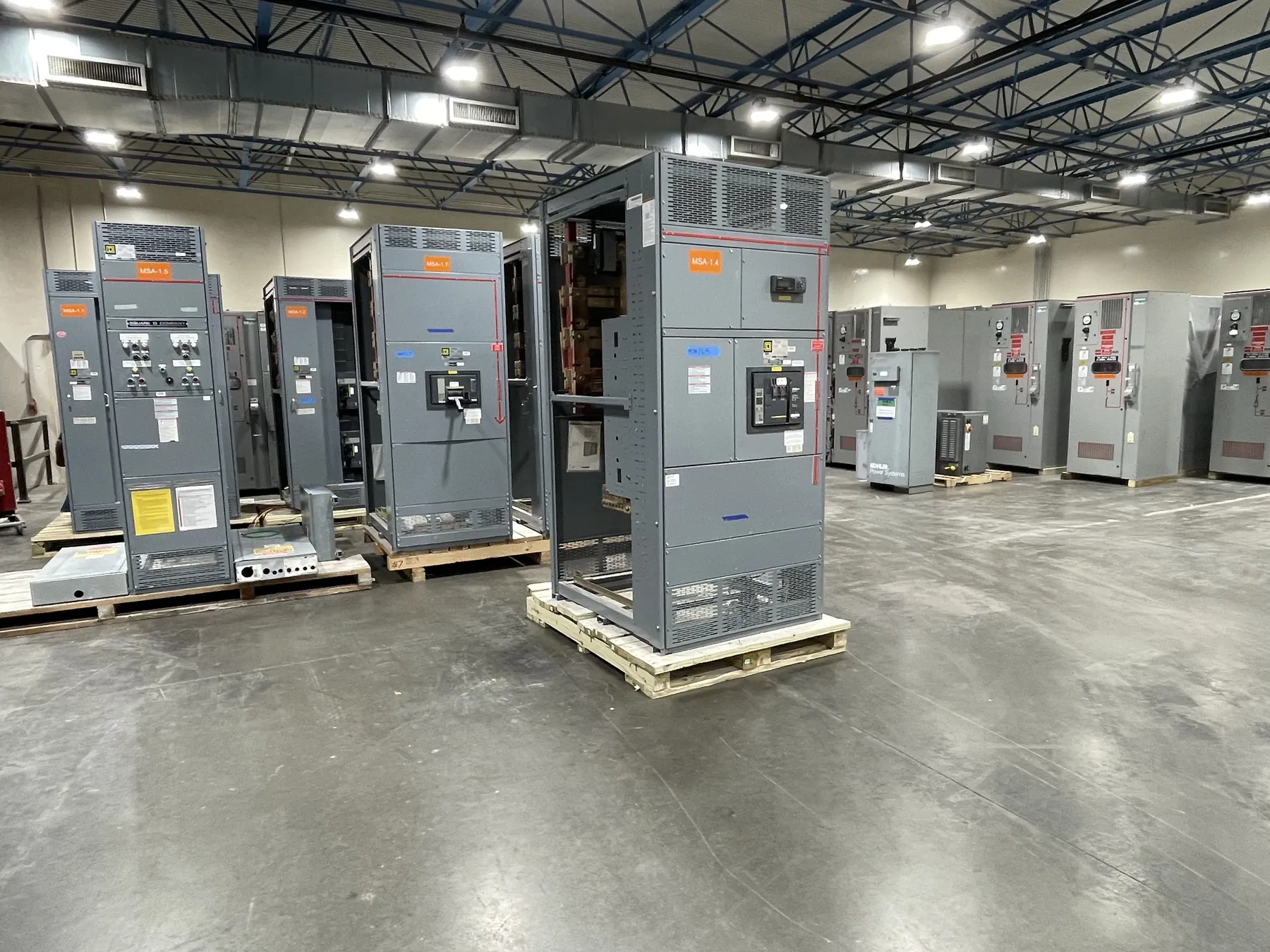
Metal-Enclosed Switchgear for Dayton, Nevada Projects
Metal-enclosed switchgear can provide a coordinated arrangement of switching and protective devices in a metal enclosure, but the right configuration depends on the system and the installation—not simply on the enclosure label. For a Dayton project, begin with the electrical one-line diagram, service or distribution function, system voltage, available fault current, grounding method, and the equipment’s intended operating role. These inputs help determine whether the assembly should use switches with fuses, circuit breakers, or a combination suited to the design. They also establish which ratings and construction details must be reviewed before a quotation can be finalized.
We manufacture new custom power-distribution equipment in the United States using all-American components, with short lead times as a manufacturing objective and shipping available nationwide. Project-specific engineering, ratings, and delivery timing still require confirmation. A qualified electrical engineer should review the application and site conditions; equipment selection should not be based on a general product description alone.
Switch-and-Fuse or Circuit-Breaker Configurations — Metal-Enclosed Switchgear in Dayton, NV
A switch-and-fuse arrangement may be considered where the design calls for a switching function paired with fuse-based overcurrent protection. The fuse type and rating, switch rating, interrupting capability, and coordination with upstream and downstream devices all matter. Fuse replacement access and the facility’s maintenance plan are practical considerations, too. A fuse configuration should not be assumed to provide the same protection, adjustment options, or operating characteristics as a breaker scheme.
Circuit breakers may be appropriate when the project requires breaker-based protection and the associated ratings and coordination options. The design review should identify the breaker’s applicable voltage and current ratings, interrupting duty, trip characteristics, and any requested operating or control features. Neither choice is inherently right for every Dayton facility. Protection studies, equipment duties, continuity needs, and the larger distribution system guide the decision.
Metal-Enclosed Is Not the Same as Metal-Clad — Metal-Enclosed Switchgear in Dayton, NV
“Metal-enclosed” describes equipment housed in a metal enclosure; it does not, by itself, establish a particular internal compartment arrangement or construction standard. Metal-clad construction is a distinct term associated with specific separation and compartmentalization features. The terms should not be used interchangeably when reviewing drawings or specifications. Ask the design team to state the required construction type and internal barriers explicitly, then confirm that the proposed assembly matches the project documents.
Barriers can affect access, separation between functional sections, maintenance planning, and the arrangement of devices and conductors. Their presence and form should be specified rather than inferred from a product name. The engineer and manufacturer should also confirm how doors, partitions, cable compartments, and device access relate to the requested construction and operating duties.
Fault Duty, Grounding, and Equipment Ratings
Fault duty is a central selection constraint. Available fault current at the equipment location must be established from the system study and compared with the applicable short-circuit and interrupting ratings of the proposed components and assembly. A rating is not the same thing as system voltage: each value serves a different purpose, and the complete equipment rating must suit the actual application. Ratings, listings, and project details require confirmation against the design and product configuration.
Grounding details also need to be clear. Review the system grounding arrangement, equipment grounding provisions, neutral requirements where applicable, and the intended connection to the facility grounding system. These choices influence the equipment layout and interfaces. UL 891 applies to applicable low-voltage switchboards; it should not be treated as a blanket standard for all switchgear or as confirmation that a particular assembly is listed. Any required standard, listing, and scope should be stated and verified for the specific product.
Dayton Site Conditions and Installation Interfaces
For a Dayton installation, site review should account for the actual building and delivery route rather than assume a standard room or access path. Confirm the planned cable entry direction and conductor routing, floor capacity and loading requirements, equipment footprint, and the working space required by the project design and applicable codes. Doorways, overhead clearance, turning areas, and the sequence for moving sections into place can influence shipping configuration and installation planning.
Coordinate the equipment’s entry points and arrangement with cable tray, conduit, transformers, upstream and downstream gear, and any existing distribution infrastructure. The facility team should identify environmental conditions and access constraints that affect enclosure selection or placement. Site measurements and installation requirements belong in the design package; a manufacturer cannot determine them from the city name alone.
Information to Include in a Dayton Quotation Request
A useful request includes the one-line diagram, system voltage, available fault-current information, grounding method, load and feeder requirements, requested switch or breaker arrangement, and applicable construction or listing requirements. Add cable-entry preferences, site layout, floor-loading criteria, working-space constraints, control or monitoring interfaces, and the desired installation sequence. If drawings or studies are preliminary, identify them as such so open engineering questions are visible early.
With those inputs, the proposed configuration can be reviewed for device selection, barriers, ratings, enclosure arrangement, and site interfaces. Final equipment suitability depends on qualified engineering review and confirmation of the project documents. Manufacturing timing and shipment to Dayton are also confirmed against the completed scope and order requirements.