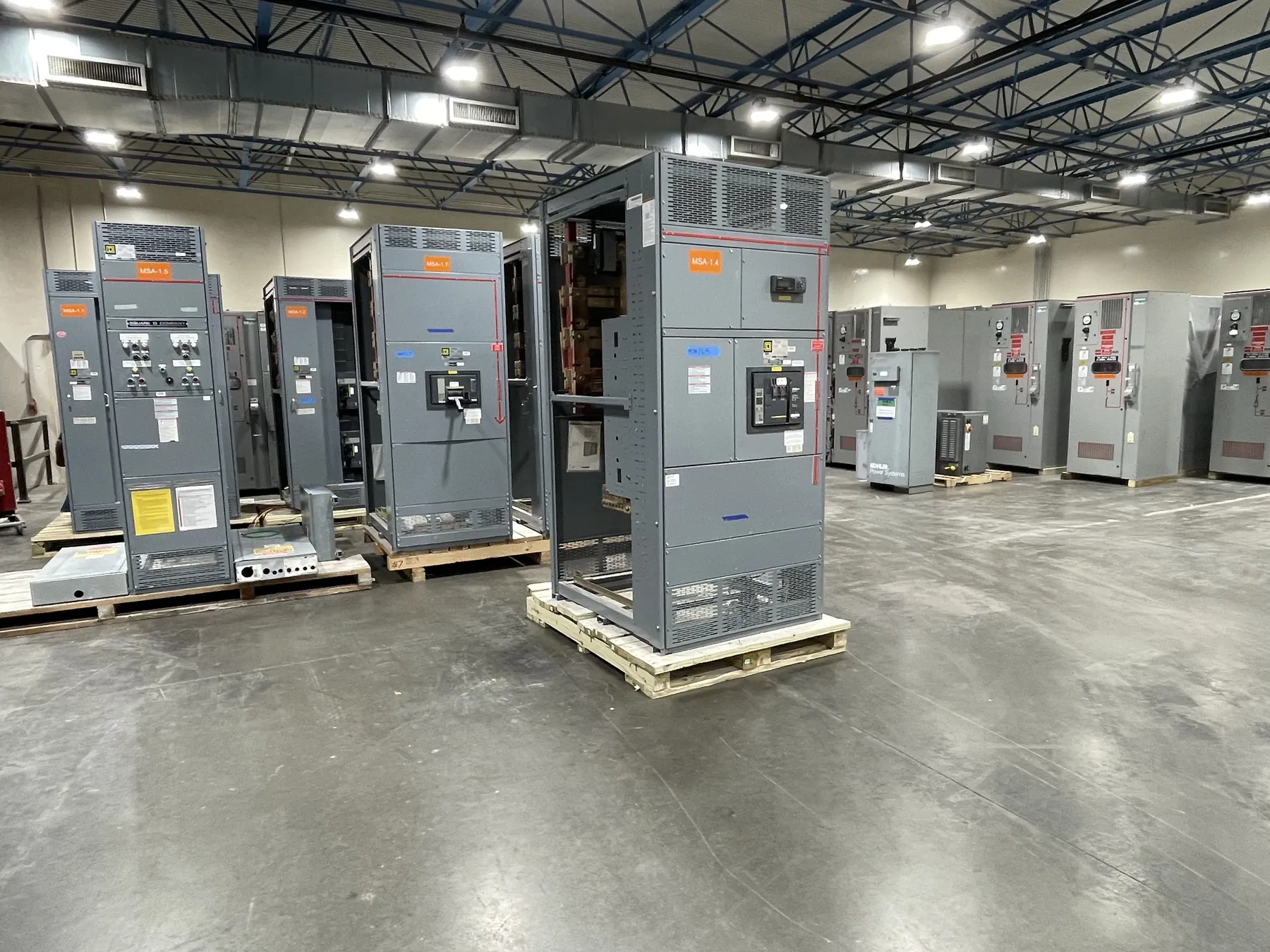
Manufacturing Switchgear for Dayton, Nevada Facilities
Manufacturing plants depend on electrical distribution that fits both the production process and the building that houses it. For a Dayton project, switchgear planning should start with how power reaches production areas, which loads must operate together, and what interruption the facility can accommodate during installation. A custom assembly can be developed around the project’s electrical requirements and site conditions; its suitability cannot be established from a location or industry description alone.
Production equipment may include motors, process machinery, HVAC, compressors, material-handling systems, and control loads, each with different operating patterns. Identifying these loads early helps the project team assess distribution sections, feeder arrangements, motor-control interfaces, and space for planned additions. Equipment selection and electrical design should be reviewed by qualified engineers against the facility’s system information and applicable requirements.
Plan Distribution Around Production Loads and Expansion
A useful starting point is a current load schedule showing equipment names, electrical data, operating modes, and any known future production changes. The schedule can help engineers evaluate feeder needs and the relationship between production loads and building services. If equipment starts or operates in coordinated sequences, describe those requirements so the distribution design can be reviewed alongside the controls and process design.
Future feeder space can preserve options for later changes, but spare space is not a substitute for confirming electrical capacity, bus ratings, protection requirements, or the physical route for new conductors. Discuss likely expansions, reserved sections, and intended uses with the project engineer. A proposed spare feeder position must still be checked against the complete system design and the final equipment configuration.
Coordinate Motor Controls, Interfaces, and Protection
Motor-control requirements depend on the connected equipment and the project’s operating philosophy. The scope may involve motor starters or interfaces to separately specified controls, but the exact arrangement must be coordinated among the switchgear manufacturer, electrical engineer, controls contractor, and equipment suppliers. Provide available motor schedules and clarify which party supplies each control component, enclosure, field connection, and interface signal.
Protection and ratings require equal care. Equipment ratings are not the same thing as system voltage, and the appropriate values depend on the electrical system and fault information provided for the project. The engineer must confirm the required ratings and protective-device coordination. Where a low-voltage switchboard is specified, UL 891 may be relevant to that product category; it should not be treated as a blanket standard for every type of switchgear or other distribution equipment. Applicable listings and product details must be confirmed for the actual scope.
Build a Workable Shutdown and Installation Sequence
In a production facility, the installation plan may be shaped by process schedules, maintenance windows, temporary power needs, and the consequences of taking a distribution section out of service. Provide the desired sequence and identify loads that cannot be interrupted at the same time. The project team can use that information to evaluate equipment division, transition points, and installation interfaces. No equipment arrangement by itself establishes that a particular shutdown plan is safe or feasible; qualified personnel must assess the site and work plan.
Clarify whether the new assembly replaces existing distribution, serves a new area, or ties into an expansion. Confirm who is responsible for field verification, conductor terminations, control wiring, testing, and commissioning. These responsibilities affect schedule and scope, so they belong in early coordination rather than being left implicit in a quotation request.
Check Dayton Site Conditions Before Finalizing the Layout
Room dimensions and access can influence section configuration, cable entry, enclosure details, and the sequence for bringing equipment into the building. For Dayton facilities, verify the actual delivery route, doors, corridors, turning areas, and the planned equipment set-down location instead of relying on general assumptions about the area. Confirm the specified cable-entry direction and the space needed for incoming and outgoing conductors.
Floor loading and supporting structure should be reviewed for the proposed equipment, with site-specific information supplied by the project team. Working space, access for inspection and maintenance, and any building constraints should also be assessed by qualified professionals under applicable project requirements. These checks can reveal a layout conflict before fabrication and help align the equipment arrangement with the electrical room and installation plan.
Prepare a Clear Manufacturing Switchgear Quotation Request
A complete request helps the manufacturer evaluate scope without guessing at critical details. Include the available one-line diagram, system voltage, load and motor schedules, fault-current information, required ratings, preferred lineup arrangement, cable-entry needs, room or equipment access constraints, and the desired installation sequence. Note future feeder provisions and identify applicable project specifications, listing requirements, and control interfaces. Engineering review is needed to confirm that the proposed equipment matches the project.
We manufacture new custom switchgear and power-distribution equipment using all-American components, build in the USA, and support short lead times, with shipments available nationwide, including to Nevada. Schedule and final configuration depend on the confirmed scope and project coordination. Share the facility requirements and site conditions with the project team so the proposed assembly can be evaluated for the Dayton manufacturing application.