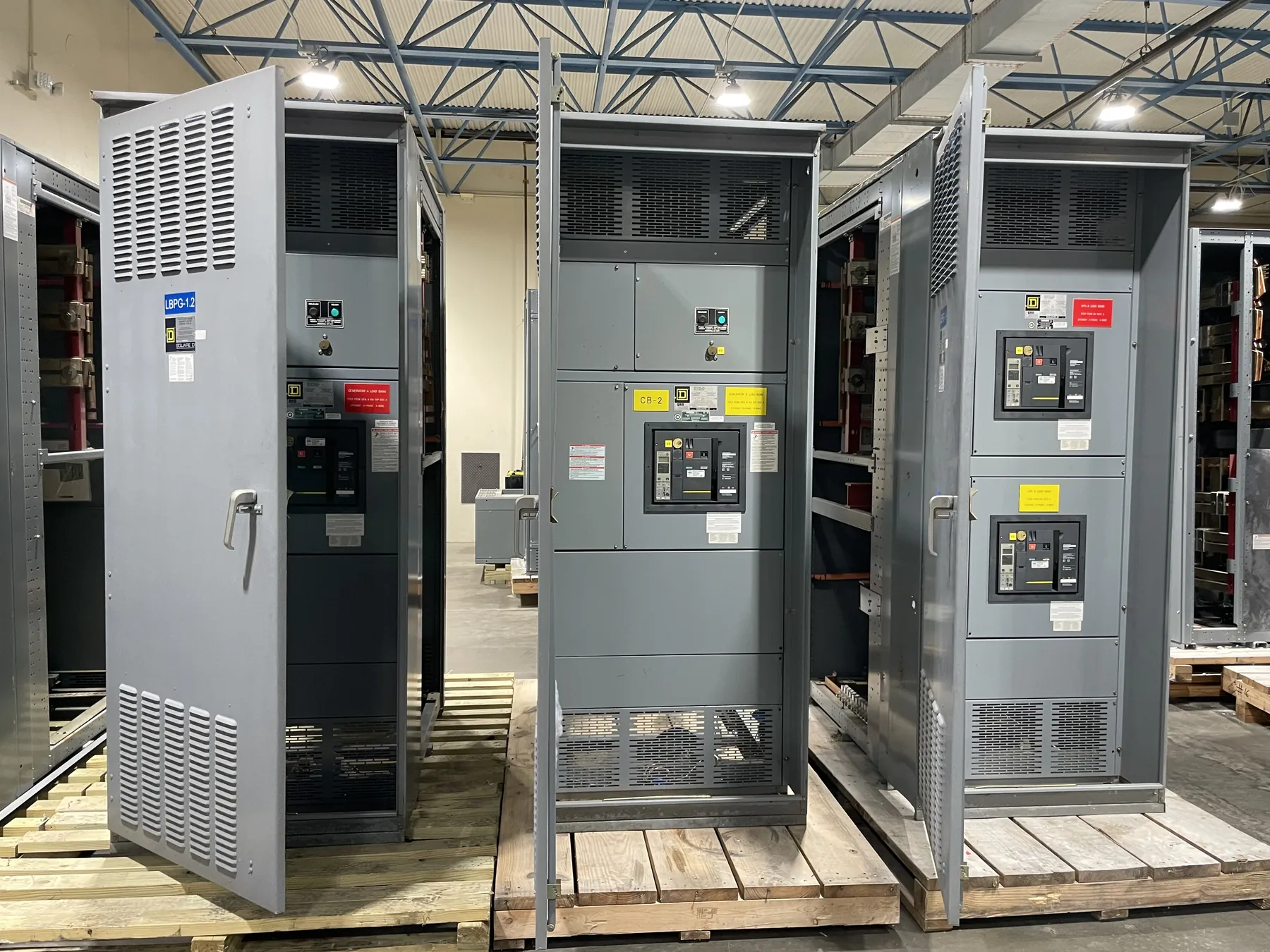
Automatic Transfer Switches for Carson City Facilities
An automatic transfer switch (ATS) moves selected electrical loads between a normal source and an alternate source when its controls detect a qualifying change in the normal supply. In a common arrangement, the normal source is utility power and the alternate source is a generator, but the equipment and control scheme must match the actual project. Carson City facilities may have different priorities for emergency, standby, or optional loads; an ATS should be selected around those priorities, the connected sources, and the electrical design rather than treated as a one-size-fits-all enclosure.
We manufacture new custom power-distribution equipment in the United States using all-American components, with assemblies available for projects in Carson City and shipment nationwide. A quotation can begin with the intended transfer function and project documents. Final equipment selection, ratings, code compliance, and installation requirements need confirmation by qualified engineers and the authorities and utilities involved.
Transfer Transition and Source-Sensing Choices — Automatic Transfer Switches in Carson City, NV
Transfer behavior affects both the connected loads and the sources. With open-transition transfer, the switch disconnects one source before connecting the other, creating a brief interruption. That may suit loads that can tolerate a momentary loss of power. Closed-transition transfer briefly overlaps the sources during transfer only when the sources, controls, and applicable requirements support that approach. It requires careful coordination and should not be specified merely to avoid an interruption.
Source-sensing settings determine when the ATS recognizes an unacceptable condition and when it permits transfer or retransfer. Relevant considerations can include voltage and frequency limits, time delays, phase conditions, and how the generator responds to starting and loading. Settings that are too sensitive can cause unnecessary transfers; settings that are too permissive may not serve the intended load protection. The project engineer should establish the control sequence based on the source characteristics, generator controls, and load requirements.
Load, Withstand, and System Ratings — Automatic Transfer Switches in Carson City, NV
ATS selection involves more than matching a number on a nameplate to the building service. The switch’s load rating, permitted application, and ability to withstand and close on available fault current must be evaluated for the actual system. The available fault current, upstream protective devices, conductor arrangement, and equipment configuration all affect coordination. The equipment’s ratings are not the same thing as the system voltage, and a rating suitable in one installation cannot be assumed suitable in another.
For a Carson City project, useful quotation information includes the one-line diagram, source and system-voltage details, calculated fault-current information, upstream overcurrent-device data, intended loads, and the desired transfer sequence. If those details are still being developed, identify what is known and what remains subject to engineering review. Ratings, listings, and compatibility must be confirmed against the final design before release and installation.
Neutral Switching and Grounding Coordination — Automatic Transfer Switches in Carson City, NV
Whether the ATS switches the neutral is a design decision tied to the source and grounding arrangement, not a default feature to choose without review. A switched-neutral configuration may be appropriate for some separately derived generator systems; other arrangements may call for a solid neutral. The choice affects grounding and bonding relationships, protective-device operation, and the overall system design.
Provide the engineer with generator grounding details, the service and distribution configuration, and the intended bonding points. The ATS neutral arrangement must coordinate with those elements and the applicable electrical requirements. Changing neutral treatment late in a project can affect equipment configuration and drawings, so it is useful to address this question early in design.
UL 1008 and Equipment Documentation — Automatic Transfer Switches in Carson City, NV
UL 1008 applies to transfer-switch equipment when the relevant product and project requirements call for it. It should not be treated as a blanket certification for an entire electrical system or for unrelated switchgear and distribution assemblies. Confirm the required standard, listing scope, configuration, and documentation for the specific ATS being specified; do not assume a product listing from a general description.
Submittal review should align the proposed transfer equipment with the project drawings and specifications, including source configuration, ratings, transition type, control functions, and neutral arrangement. Any deviations or unresolved interfaces should be identified for engineer review before approval.
Carson City Permits, Inspections, and Utility Review — Automatic Transfer Switches in Carson City, NV
Permit and inspection steps depend on the installation, facility, and scope of work. Before construction, the project team should determine which Carson City or other applicable authority having jurisdiction reviews the electrical work, what permit application and plans are required, and what inspections must occur. The responsible contractor and design professional can confirm the current process and sequence for the specific site.
Utility review may also be needed when the work affects a service, utility connection, metering arrangement, or other utility-controlled interface. Confirm requirements directly with the serving utility and coordinate them with the project schedule. Utility acceptance, permit approval, and inspection outcomes are specific to the installation and cannot be inferred from an equipment quotation.
Information for a Project-Specific Quote — Automatic Transfer Switches in Carson City, NV
To develop a useful proposal, provide the one-line diagram and specifications when available, source types and characteristics, load description, transfer and retransfer preferences, grounding and neutral details, fault-current and protective-device information, enclosure and environmental requirements, and known permit or utility constraints. Include site access or delivery limitations that may affect shipment to the Carson City location. We can review the requested equipment configuration and identify items that need engineering or project-team confirmation. Lead time depends on the final scope and should be confirmed with the quotation; no project schedule should be assumed before those details are reviewed.