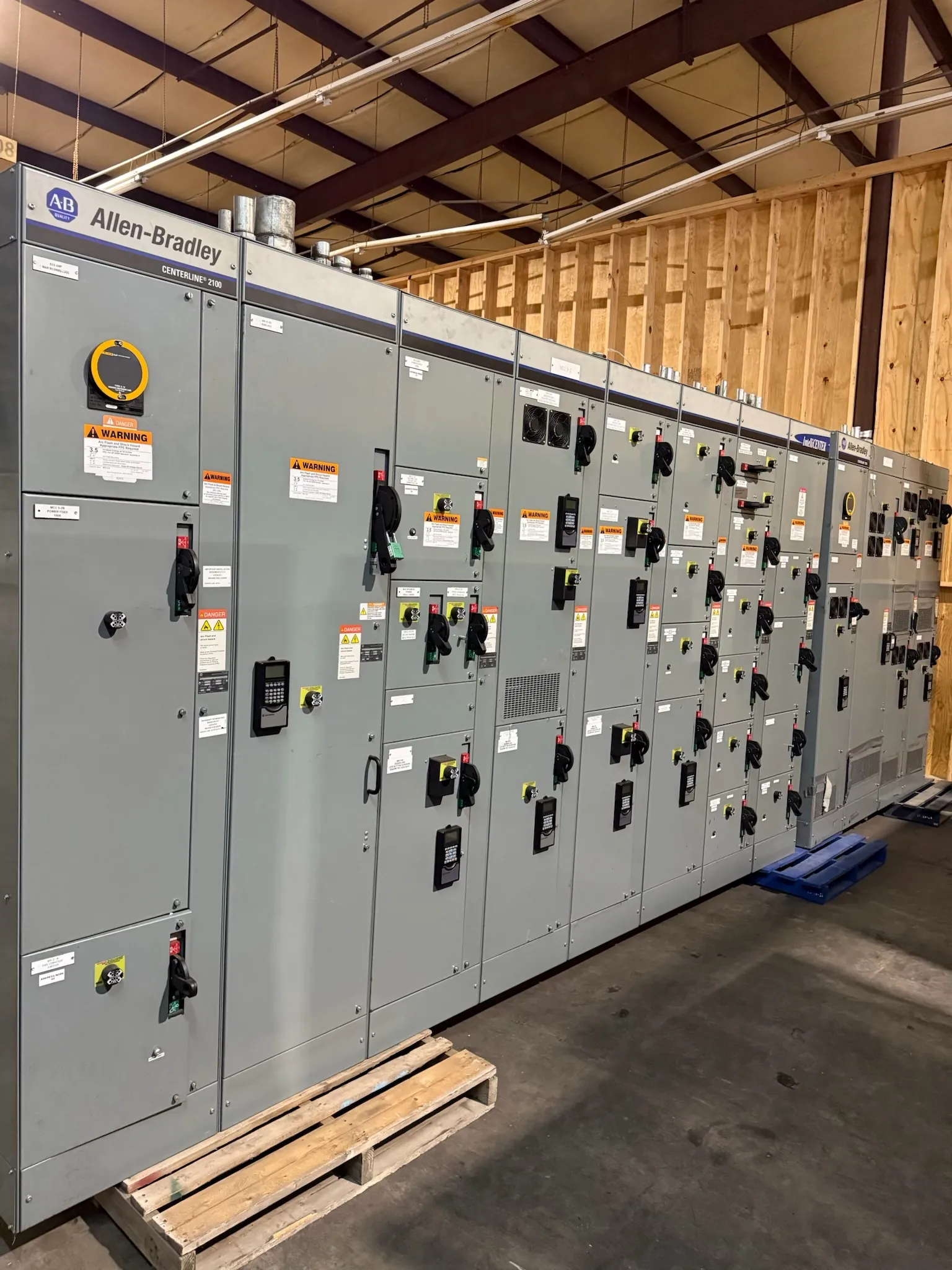
Power Plant Switchgear for Carson City Projects
Power plant distribution has to reflect how a facility generates, transforms, and uses electricity—not just the nameplate of a generator. For a Carson City project, switchgear planning begins with the one-line diagram and the intended operating modes: utility-parallel operation, isolated generation, standby service, or a combination. Each mode can change which sources may feed a bus, how protective devices coordinate, and what equipment must remain available during an outage or transition.
We manufacture new custom switchgear and power-distribution equipment for project-specific requirements. Our assemblies use all-American components, are built in the USA, support short lead times, and ship nationwide, including to Nevada. Final configuration, ratings, listing applicability, schedule, and shipping details require project review and confirmation.
Generator Connections, Bus Arrangement, and Ratings
The generator interface affects the lineup’s bus arrangement, incoming connections, protective devices, and provisions for future expansion. Engineers need to establish generator output characteristics and the connection point, along with transformer details where transformation occurs. A single source arrangement may call for different isolation and operating provisions than multiple generators sharing a bus or feeding separate sections.
Equipment ratings must be selected for the actual system conditions. A switchboard’s voltage rating is not the same thing as the generator’s output, and a current rating alone does not establish that equipment is suitable for available fault current. The design team should confirm system voltage, continuous load, fault-current information, withstand requirements, conductor and termination details, and any applicable enclosure conditions. UL 891 applies to applicable low-voltage switchboards; it should not be treated as a blanket standard for every switchgear product or voltage class. The project’s specified equipment and listing requirements need confirmation.
Protection, Synchronization, and Backfeed
Generator protection and system protection must be considered together. The engineer of record determines which protective functions are needed, their settings and coordination, and how they relate to generator controls, transformers, utility protection, and downstream devices. Switchgear can provide specified breaker and control interfaces, but it cannot establish appropriate protection settings without the system study and engineering direction.
Where sources operate in parallel, synchronization and permissive or interlocking logic are important design interfaces. The project must define which device controls synchronization, which conditions allow closing, and how the equipment responds to abnormal conditions. Backfeed deserves explicit attention: a generator may energize conductors or equipment that would otherwise be assumed de-energized, including utility-side equipment under certain configurations. Utility requirements, protection schemes, and switching arrangements must address possible source paths. These decisions belong to qualified electrical engineers in coordination with the relevant utility and authorities.
Auxiliary Loads and Operating Modes
Plant auxiliary loads—such as pumps, fans, controls, lighting, and other balance-of-plant systems—can affect the distribution layout and source priorities. The design should distinguish essential loads from loads that may be shed or restored in stages. Motor starting, variable operating demand, standby requirements, and continuity expectations can influence feeder grouping, breaker selection, and control interfaces.
Describe each intended operating mode, including normal source, alternate source, planned maintenance conditions, and transitions between grid-connected and islanded operation if applicable. A mode table can reveal conflicts that are easy to miss in a single-line drawing: for example, a bus section that must be isolated before another source is connected, or an auxiliary feeder expected to remain supplied through a transfer. The project team should define the required functionality; equipment configuration follows from those documented requirements.
Carson City Permits, Inspections, and Utility Coordination
Permit, inspection, and utility review steps depend on the installation, the serving utility, the authorities having jurisdiction, and the current requirements applicable to the site. Carson City location alone does not establish the approval path. Before design is finalized, the owner and engineer should identify the permitting authority, electrical inspection requirements, interconnection or parallel-generation review, and any utility submittals or witness requirements that apply.
Facility conditions also matter to equipment selection and delivery planning. Confirm indoor or outdoor placement, available access and clearances, environmental exposure, installation route, and the site’s construction sequence. For a Carson City facility, coordinate the delivery point and unloading responsibilities with the site team rather than assuming a particular local access arrangement. Utility and inspection reviews should be scheduled around project milestones, with drawings and equipment documentation prepared to the reviewers’ stated requirements.
Information for a Project-Specific Quotation — Power Plant Switchgear in Carson City, NV
A useful quotation package includes the latest one-line diagram, equipment schedule, system voltage and frequency, source and transformer data, available fault-current information, load and feeder requirements, and specified ratings. Include the required bus arrangement, breaker and metering scope, control and communications interfaces, enclosure conditions, applicable standards or listing expectations, and any identified utility or inspector requirements. Note future provisions and operating modes as well as the current installation.
Incomplete or changing design inputs can affect scope, configuration, and schedule. We review the available project information, identify items that need clarification, and confirm proposed equipment details before manufacture. The engineer of record and relevant utility or authority retain responsibility for system design, protection, code interpretation, and approval. This coordinated process helps align custom-built distribution equipment with the actual power plant application in Carson City.