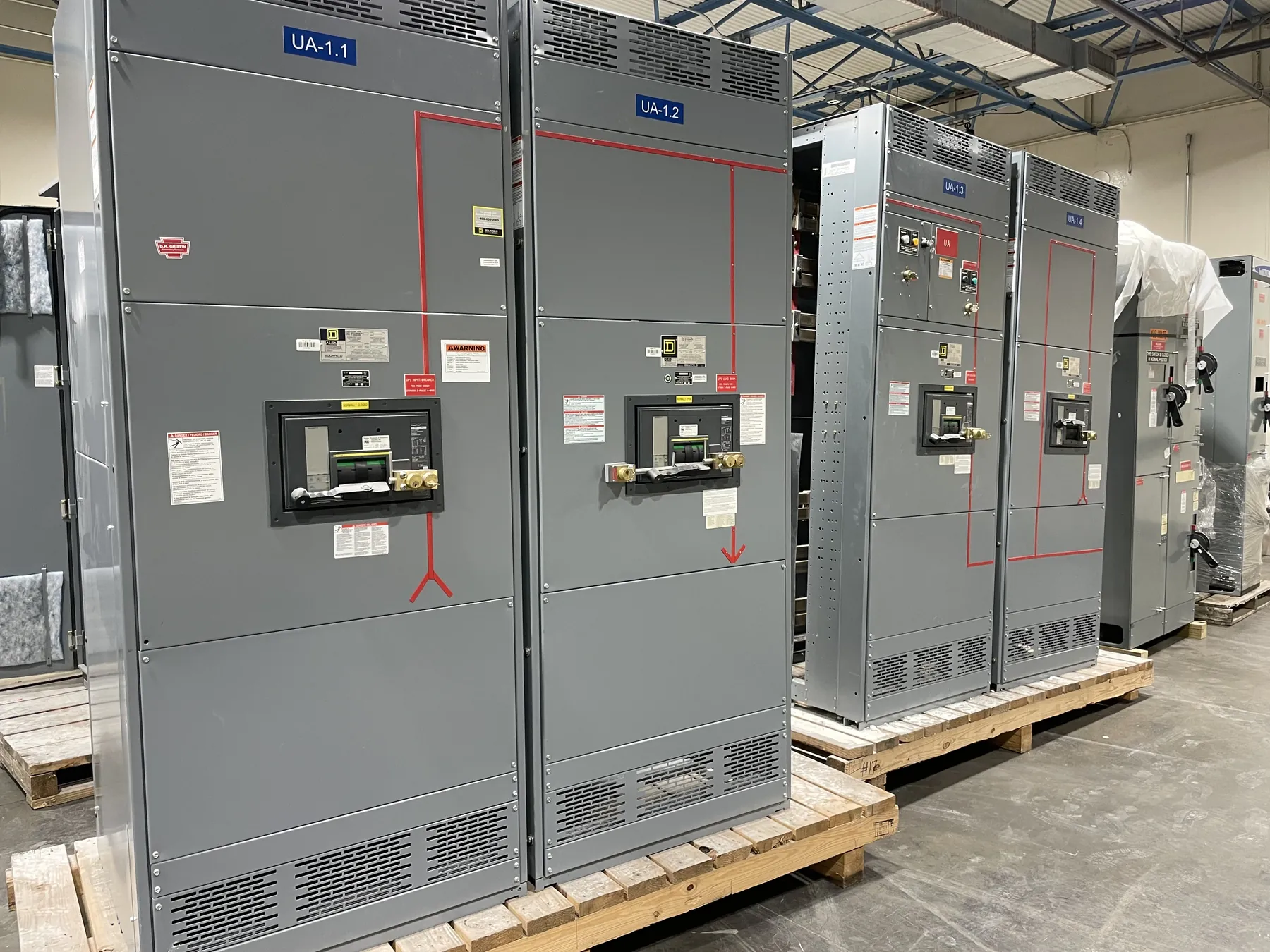
Planning Switchgear for a Carson City, Nevada Project
For a new or upgraded electrical installation in Carson City, the right distribution equipment starts with the project’s actual loads, service arrangement and operating needs—not a generic equipment label. Our U.S.-built, custom-manufactured switchgear and power-distribution assemblies are sold new to customers and can be shipped to Nevada. A project-specific review helps establish what equipment is appropriate, what interfaces must be accommodated and which details still require confirmation before release for manufacture.
Carson City projects may involve municipal, commercial, industrial, institutional or other facilities, each with distinct service conditions and review requirements. Site access, the electrical room or outdoor installation area, environmental exposure, available working space and the route from the delivery point to the final location can all affect equipment configuration. These conditions should be documented early rather than assumed from the city or building type.
Define the Service, Loads and Equipment Ratings
Begin with the one-line diagram and the project’s electrical design basis. Useful inputs include the system voltage, phase and wire arrangement, service source, expected load, feeder count, connected equipment, future expansion expectations and the available fault-current information supplied or confirmed by the project’s qualified electrical professionals. Also identify whether the scope is a switchboard, switchgear assembly or another distribution arrangement; those terms are not interchangeable in every application.
Ratings must be considered in context. A voltage rating is not the same as system voltage, and interrupting, withstand, continuous-current and enclosure ratings each address different requirements. The appropriate ratings depend on the system, protective devices, fault conditions and installation. Engineers must verify the design against the site and applicable project criteria. Do not select ratings solely by matching a nameplate value or an existing piece of equipment.
For low-voltage switchboards, UL 891 may be a relevant standard when applicable to the specified product and construction. It does not apply universally to every type of switchgear or distribution equipment. Any requested listing, standard, rating or construction detail must be confirmed for the particular assembly and project; no listing or approval should be presumed from a general product description.
Coordinate Carson City Permits, Inspections and Utility Review
Permit and inspection steps depend on the installation’s scope, location, ownership, and the authorities and service providers responsible for it. Before equipment details are finalized, the project team should identify the applicable Carson City or other jurisdictional building and electrical permit process, determine who will submit the plans, and ask the authority having jurisdiction what documents and inspections are required. The responsible electrical engineer and contractor should confirm the code basis and resolve project-specific interpretations with that authority.
Utility review is separate from equipment manufacturing. If the work affects a utility service, service entrance, metering arrangement, transformer interface, available fault-current assumption or other utility-controlled condition, the customer’s project team should obtain the applicable utility requirements and review them with the engineer. Utility approval, service availability and acceptance of a particular configuration cannot be assumed. Permit issuance, inspection acceptance and utility review are distinct project steps, so their responsibilities and timing should be coordinated rather than treated as one approval.
Prepare a Quote Package That Supports Accurate Configuration
A complete request helps align the equipment scope with the design and reduces avoidable clarification. Provide the latest one-line diagram, load and feeder schedules, equipment specifications, system information, site and room drawings, and any applicable utility or authority requirements. Include the intended installation environment, enclosure needs, cable entry and exit preferences, access and clearance constraints, and the planned connection to upstream and downstream equipment.
Identify project milestones, delivery destination, receiving hours, unloading capabilities and any restrictions on truck access or staging. Carson City facilities vary, so the delivery route and equipment handling plan should be checked for the actual site. If drawings or requirements are preliminary, label them as such and identify open decisions. A quotation can only reflect the information provided; ratings, interfaces, listings, scope and schedule require confirmation as the design develops.
Resolve Interfaces and Operational Requirements Before Release
Switchgear does not operate in isolation. Confirm coordination with upstream protection, downstream feeders, transformers, generators or other sources where present. The engineering team should review protective-device selection and coordination, grounding and bonding, metering and control requirements, communications interfaces, and any desired provisions for maintainability or future circuits. These choices affect the assembly layout and connections, so late changes can require design and schedule revisions.
Operating and maintenance plans also influence configuration. Discuss who will use the equipment, what access is needed for inspection and maintenance, and how the facility intends to manage outages and equipment changes. Arc-flash assessments, protective settings, labels and operating procedures are project-specific responsibilities that require qualified engineering review and site information. They should not be inferred from a product description or settled without the necessary study and field context.
Manufacturing, Shipment and Project Handoff
Once the scope and approved design inputs are sufficiently defined, the manufacturing process can proceed against the confirmed requirements. Our assemblies use all-American components, are built in the USA, support short lead times and ship nationwide, including to Nevada. The actual production schedule and shipping arrangement depend on the finalized configuration, project documents and order coordination; no specific delivery date should be assumed before confirmation.
Before shipment, the customer’s team should coordinate receiving, unloading, storage and movement into the installation area. On arrival, the contractor and engineer should compare delivered equipment and documentation with the approved submittals and project requirements. Installation, inspection, energization and acceptance remain subject to qualified personnel, the applicable authority and any required utility review. Keeping those responsibilities clear helps a Carson City project move from equipment selection to a well-coordinated installation.