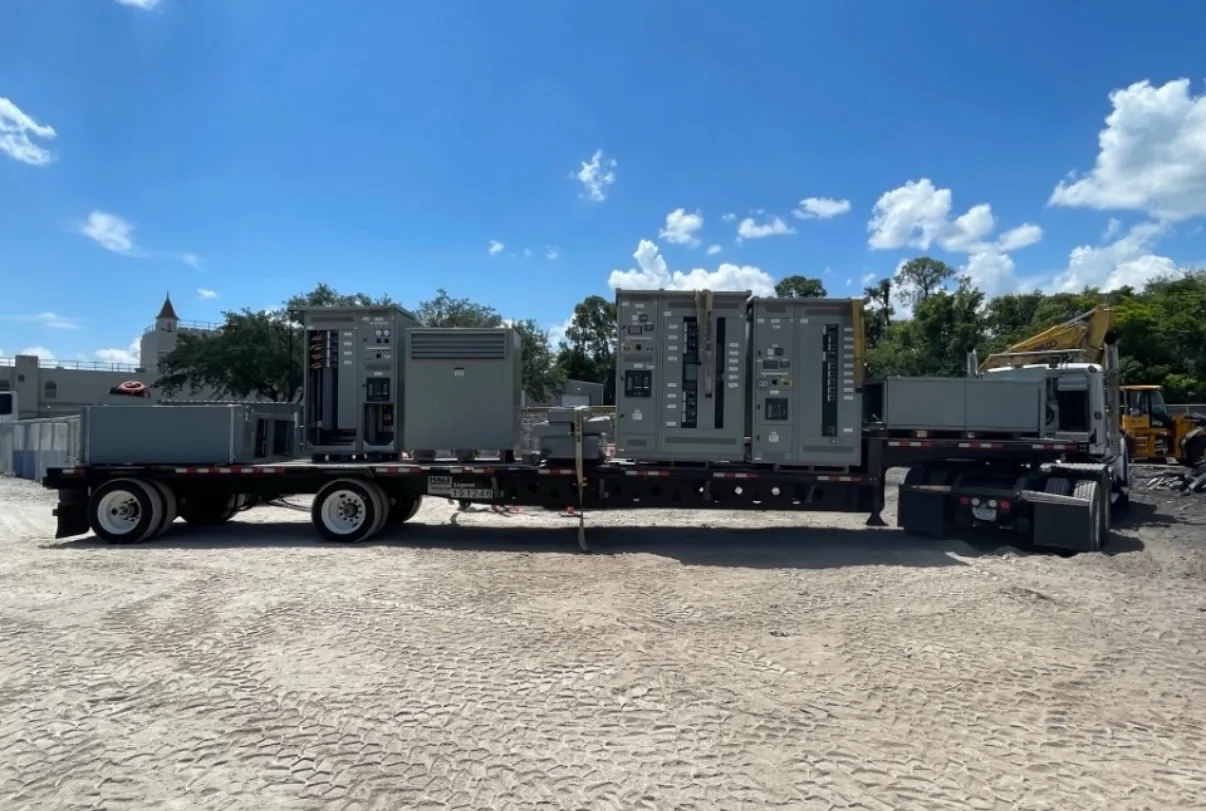
Low-Voltage Switchboards for Carson City Projects
Carson City facilities can have very different distribution needs, from a commercial tenant improvement to a municipal, industrial, or institutional building. A low-voltage switchboard is selected around the service and feeder functions it must perform, the electrical system it will connect to, and the conditions at its installation location. We manufacture new custom switchboards in the United States using all-American components and ship nationwide, including to Nevada. Final equipment configuration depends on project documents and review by qualified electrical professionals; a city name alone does not determine a suitable design.
For a quotation, useful starting information includes the one-line diagram, project specifications, service characteristics, load and feeder schedules, available fault-current information, equipment location, and required documentation. If design documents are still developing, identify open items rather than treating assumptions as confirmed requirements. This helps distinguish a preliminary equipment discussion from a final design and rating determination.
Service and Feeder Arrangements — Low-Voltage Switchboards in Carson City, NV
The service section and outgoing feeder sections should be considered together. The service arrangement may need to accommodate the specified incoming conductors, main overcurrent device, metering provisions, and the utility or project interface shown in the approved design. Feeder sections then distribute power to downstream panels, equipment, or other loads. Their number, protection, conductor terminations, and physical layout depend on the drawings and equipment schedule—not simply on the building’s general use.
Coordination questions include where service conductors enter, how feeder conductors leave, whether top or bottom access is needed, and how the switchboard relates to adjacent equipment. Room dimensions, door clearances, cable routing, working space, and the installation sequence can affect practical section layout. For a Carson City site, confirm these conditions with the project team and installer; access, weather exposure, and building constraints vary by location. Do not assume that a standard arrangement will fit a particular electrical room.
Bus Sizing and Fault-Current Information
Bus selection is not a stand-alone choice based only on a desired ampere rating. The engineer’s design and project specifications establish the required current rating and inform decisions about configuration, temperature conditions, enclosure, and connection points. A bus rating describes equipment capability under specified conditions; it is not the same as system voltage. The specified voltage, phase and wire arrangement, frequency, and grounding details must also match the intended application.
Available fault current at the switchboard is essential to evaluating the required short-circuit rating and the suitability of protective devices. That value must come from an appropriate project source, such as the electrical design or a utility-related study, and should correspond to the installation point and relevant system configuration. A breaker interrupting rating and a switchboard assembly rating are related but distinct considerations. Changes to transformers, upstream protection, conductors, or the service arrangement may affect the fault-current basis, so assumptions should be resolved by the engineer before equipment details are finalized.
UL 891 and Project-Specific Documentation — Low-Voltage Switchboards in Carson City, NV
UL 891 applies to low-voltage switchboards within its scope; it should not be treated as a blanket standard for every type of switchgear or distribution equipment. Whether a particular switchboard must be listed to UL 891, and what documentation the project requires, depends on the specified product, application, and authority having jurisdiction. Do not infer a listing from a general product description or from a rating alone.
Before release, the project team should confirm the applicable listing requirements and request documentation for the exact proposed assembly and configuration. Main-device choices, section combinations, protective-device coordination, and project-specific modifications can matter. Any required listing evidence should be reviewed against the project specification and installation conditions. We can discuss manufacturing requirements for a new custom assembly, but qualified engineers and the responsible reviewing authorities must resolve design suitability, code questions, and acceptance requirements.
Carson City Permits, Inspection, and Utility Review — Low-Voltage Switchboards in Carson City, NV
Permitting and inspection requirements depend on the project scope, building, installation, and applicable Nevada and local requirements. The project electrical professional should identify the responsible permitting authority for the specific Carson City site, determine which permit applications and supporting electrical documents are required, and establish inspection milestones with the applicable authority. The authority having jurisdiction determines its review process; requirements should be checked for the actual address and work being performed rather than assumed from a general description.
Utility review is a separate project interface when the installation involves utility service or changes to the service arrangement. The electrical contractor or design team should confirm with the serving utility whether service drawings, equipment details, metering provisions, or other submissions are needed, and when utility review must occur relative to procurement and installation. Permit approval, utility review, inspection, and equipment listing address different matters. Their sequence and responsibilities should be coordinated on the project schedule.
Quotation Inputs and Manufacturing Coordination — Low-Voltage Switchboards in Carson City, NV
A complete quotation package helps align the manufactured switchboard with the intended installation. Provide current drawings and specifications, system voltage and configuration, required service and feeder arrangement, bus rating, available fault-current basis, protective-device requirements, enclosure and access conditions, connection details, and any project-required listing documentation. Identify the governing project revisions and note unresolved items. Changes after quotation can affect section arrangement, interfaces, and documentation, so engineering review should precede release for manufacture.
Our role is to manufacture new custom power-distribution equipment to confirmed project requirements. We support short lead times, but timing depends on the approved scope and project coordination; a specific schedule should be confirmed for the order. With design, utility, permitting, and installation teams working from consistent information, a Carson City project can address equipment fit and review requirements early without treating unverified assumptions as final.