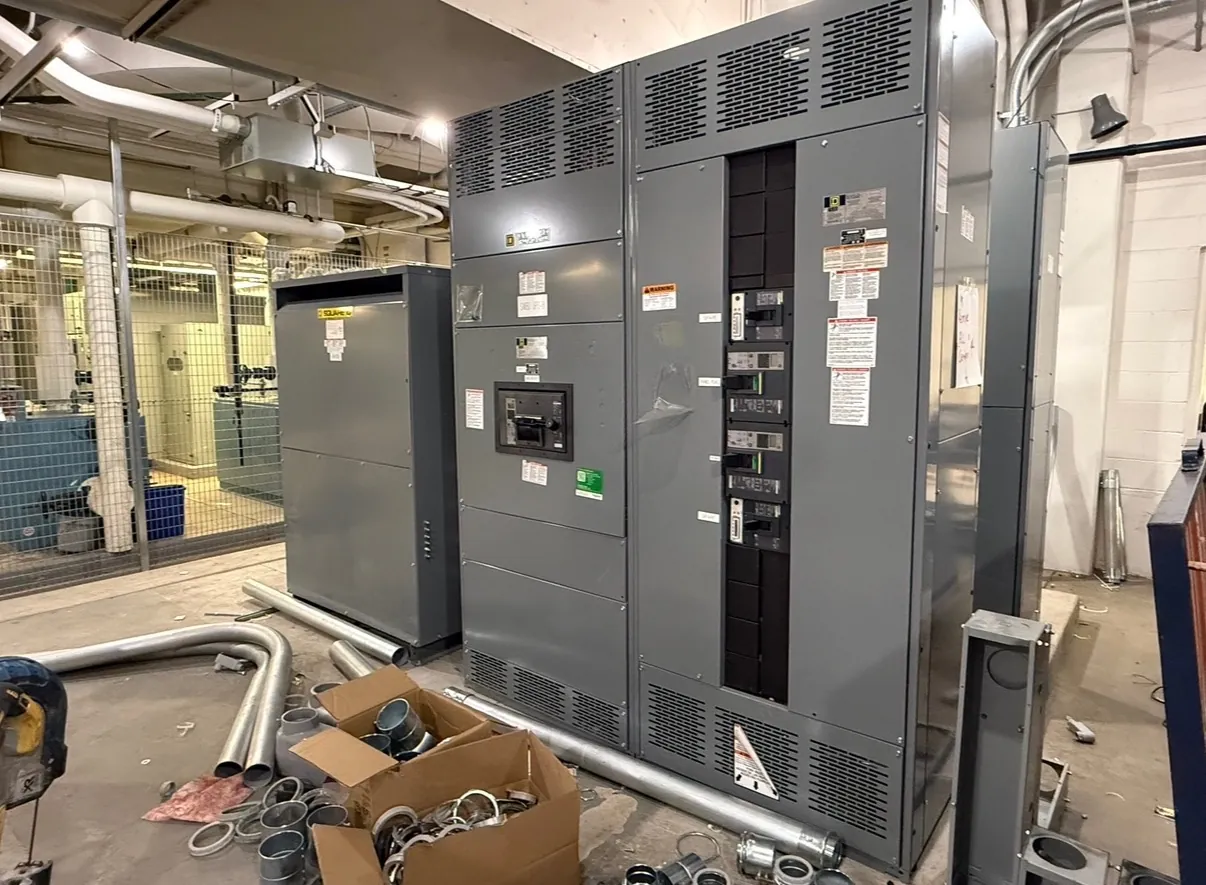
Service Entrance Switchboards for Boulder City, NV Projects
A service entrance switchboard establishes the boundary between a utility service and a facility’s electrical distribution. For a Boulder City project, the service section should be defined around the utility interface, metering arrangement, grounding scheme, and the requirements of the reviewing authorities before the design is released for manufacture. Those decisions affect the equipment layout, service conductors, protective devices, enclosure configuration, and coordination with downstream distribution.
We manufacture new custom switchboards in the United States using all-American components and ship nationwide, including to Nevada. A project-specific quotation and design review can address the planned service arrangement, but utility requirements and site conditions must be confirmed by the project team rather than assumed from the city name alone.
Define the Utility Interface and Metering Arrangement
Start by identifying the serving utility and obtaining its current service requirements for the project location. Confirm where the utility’s conductors terminate, how the service point is defined, and whether metering is furnished by the utility, incorporated into a designated section, or arranged in another approved configuration. Meter type, compartment access, sealing provisions, and the relationship between metering and the main disconnect can all influence switchboard construction.
Metering requirements can vary with the service configuration and utility policy. Provide the utility’s applicable drawings or written criteria when requesting a quotation, and resolve any open items with the utility and electrical engineer before approving the service-section layout. A switchboard arrangement that fits one service is not automatically acceptable for another.
Coordinate the Main Disconnect and Distribution Plan
The main disconnect arrangement should reflect the project’s one-line diagram, service configuration, downstream distribution plan, and applicable review requirements. Relevant choices may include the main protective device, the number and type of outgoing sections, provision for future circuits, and how feeders connect to downstream panels or other distribution equipment. These choices influence the switchboard’s physical arrangement and should be evaluated alongside the building’s electrical room and conductor-entry plan.
Switchboard ratings are not interchangeable with system voltage. The engineer should specify the intended system and required equipment ratings, including applicable voltage and interrupting or withstand requirements, based on the project design. The equipment manufacturer can review those requirements and the proposed configuration; final selection depends on qualified engineering, available system information, and the authorities having jurisdiction.
Grounding, Bonding, and Available Fault Current
The service grounding and bonding scheme needs to be established as part of the service design, not left to a layout assumption. The project documents should identify the service configuration and the intended treatment of grounded and bonding conductors at the service equipment. The electrical engineer must determine the applicable arrangement for the installation and coordinate it with utility requirements and the adopted code.
Available fault current at the service is another essential design input. The engineer should obtain or verify the value and relevant system information at the equipment location, then determine the required ratings and protective-device coordination. Do not infer fault current from the service voltage, building size, or a neighboring installation. If the utility’s data or the project one-line is incomplete, that uncertainty should be resolved before final equipment ratings and the service section are approved.
Boulder City Site Conditions and Authority Review
For a Boulder City installation, confirm practical site details early: the receiving route from the delivery point, access to the electrical room, available floor space, equipment orientation, and the location of service conductors and metering. Heat exposure, dust, outdoor placement, and room ventilation may also affect enclosure and installation choices. These conditions should be documented by the project team; they are not determined solely by the project’s location in Nevada.
Utility approval and authority review are separate project considerations. Identify the applicable utility requirements and the authorities responsible for reviewing the installation, then coordinate drawings and submittal timing with the project schedule. A requested feature or preliminary layout should not be treated as approved until the appropriate parties have reviewed it.
Information to Prepare for a Switchboard Quotation
A useful quotation package gives the manufacturer enough information to evaluate the service arrangement without guessing. Include the one-line diagram, utility metering criteria, service and system details, available fault-current information, required equipment ratings, main-device requirements, and the planned feeder or section arrangement. Also provide enclosure and mounting preferences, conductor-entry direction, room constraints, and any project submittal requirements. Note unresolved utility or authority questions clearly so they can be tracked during design review.
After the inputs are reviewed, the proposed service section can be developed for the defined project rather than selected from a generic arrangement. Our U.S.-built custom equipment supports short lead times and ships nationwide, but schedule depends on the finalized scope, engineering review, and project requirements. Confirm the applicable ratings, listing needs, and all utility and authority details before releasing the design for manufacture.