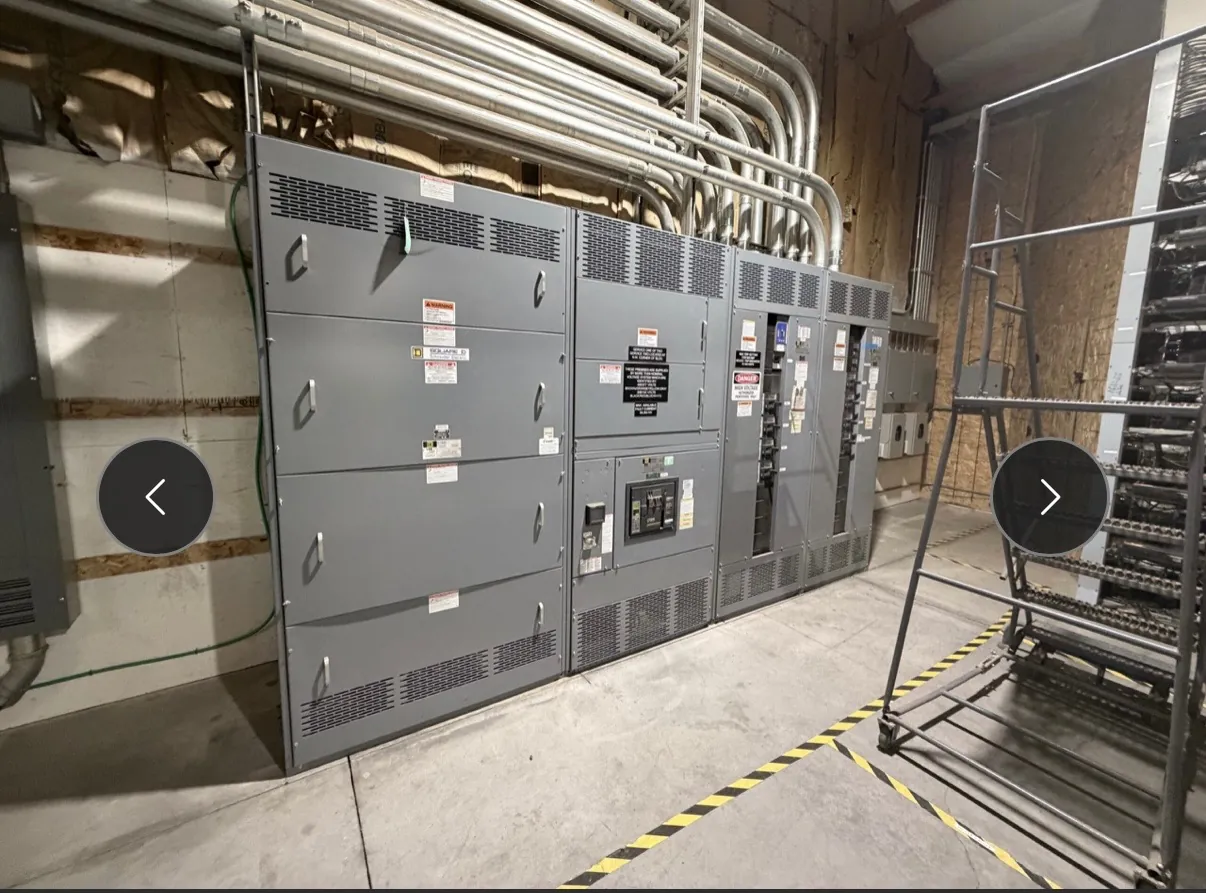
University Switchgear Planning for Boulder City Campuses
University electrical distribution has to serve more than classrooms. A campus project may involve laboratory equipment, research spaces, residence or administrative buildings, and shared services, each with different load patterns and operating priorities. For a Boulder City project, start by documenting the existing distribution arrangement, planned building changes, and the facilities that must remain in service during construction. This information helps establish whether a new assembly should serve one building, a campus distribution point, or a defined portion of a phased renovation. A manufacturer can build new custom switchgear and power-distribution equipment to project requirements; final selection depends on engineering review of the site and system.
Set the Utility Interface Before Releasing the Service Design
Define the utility connection, ownership boundary, service characteristics, and metering requirements early. Confirm who supplies and maintains service-side equipment, where the point of connection is, and what metering arrangement the project requires. The utility’s requirements and the campus engineer’s design must be reconciled before the service design is released; neither equipment ratings nor a proposed configuration establish utility acceptance. Document available service information, fault-current data when provided, and any project-specific interface requirements for review by the responsible electrical engineer. This prevents a quotation from relying on assumptions about service voltage, protective-device coordination, metering compartments, or the division of responsibilities.
Coordinate Campus Feeders, Laboratory Loads, and Metering
Feeder planning should reflect the actual loads and how the university expects to operate them. Laboratories may have specialized equipment, changing research needs, or loads that are sensitive to interruptions; identify relevant equipment and operating constraints rather than treating all laboratory space as a single generic load. Confirm feeder destinations, conductor and termination requirements, spare or future provisions, and how individual buildings or departments are to be metered. The metering scheme affects compartment arrangements, instrument requirements, and interfaces with campus monitoring systems, so define it with the electrical designer before fabrication details are finalized. Load schedules and single-line diagrams are useful quotation inputs, but they do not replace engineering validation.
Choose Ratings and Grounding for the Documented System
Equipment ratings must match the specific system and application. Voltage rating is not the same as system voltage, and interrupting, withstand, or continuous-current requirements cannot be selected from a building name or location alone. Provide the available fault-current information, protection scheme, system grounding method, and applicable design documents for qualified review. Confirm whether the project calls for low-voltage switchboards, another form of switchgear, or multiple coordinated assemblies. UL 891 applies to applicable low-voltage switchboards; it should not be read as covering every switchgear product or every voltage class. Any required listing, rating, construction details, and project compliance must be confirmed for the particular equipment and specification.
Plan Renovation Phases Around Campus Operations
Universities often need construction to proceed while teaching, research, and facility services continue. The project team should identify outage windows, temporary distribution plans, restricted work areas, sequencing dependencies, and the facilities that cannot be interrupted. These are planning inputs for the campus engineer and contractor, not instructions for working on energized equipment. A staged project may call for separate equipment sections or defined future connections, but those choices affect layout, feeder coordination, and the final design. In Boulder City, site access, delivery routes, receiving capacity, and the available space for setting equipment should also be checked with the facility team before shipment is scheduled.
Prepare a Complete Quote Package for New Equipment
A useful request for quotation includes the single-line diagram, equipment schedule, service and utility-interface requirements, metering and grounding criteria, feeder list, available fault-current data, physical constraints, and applicable project specifications. Include the construction sequence and any requirements for future sections or campus monitoring interfaces. The manufacturer uses these documents to assess the requested configuration and identify open questions; ratings, listings, and final details remain subject to project confirmation by qualified professionals. Our company manufactures new custom equipment in the United States using all-American components, supports short lead times, and ships nationwide, including to Nevada. Actual schedule and shipping arrangements depend on the approved design, scope, and project requirements.