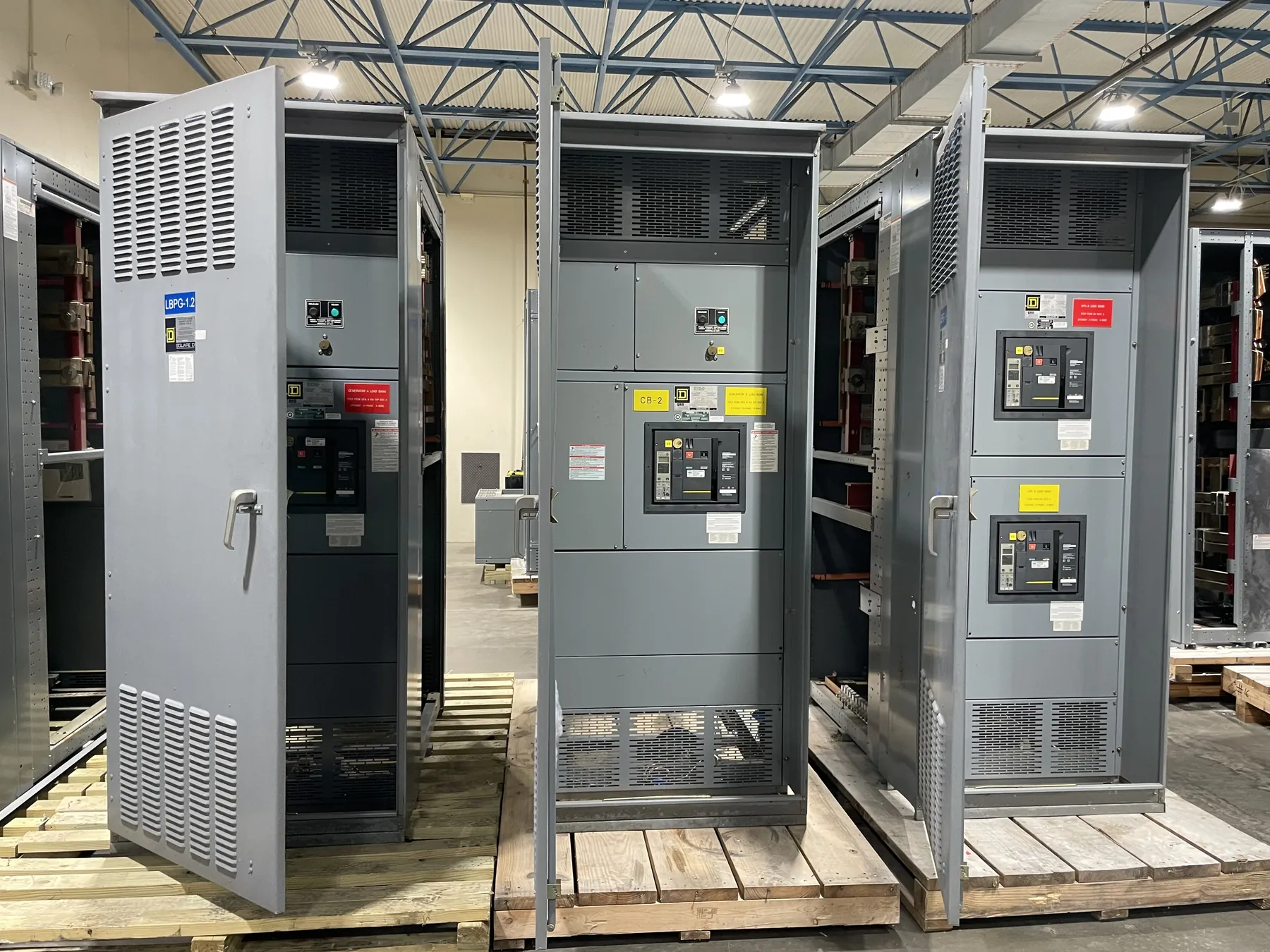
University Switchgear for Interconnected Campus Systems
A university’s electrical distribution often serves buildings with different schedules, equipment, and consequences of interruption. Classrooms may be quiet overnight, while research laboratories, data rooms, animal-care areas, residence halls, and central utilities can require continuous service or carefully managed shutdowns. Custom switchgear should be planned as part of the campus distribution system—not as an isolated cabinet—so feeder arrangements, protection, metering, interfaces, and future work reflect the actual site.
For a new installation or renewal, the starting point is a clear understanding of the equipment’s role: where it receives power, what it supplies, and how it relates to upstream and downstream devices. Campus one-lines, load information, operating constraints, and applicable project specifications help establish that context. Our U.S.-manufactured assemblies use all-American components and ship nationwide, including to Nevada. Project suitability, ratings, listings, and schedule depend on the specified equipment and engineering review.
Campus Feeder Layout and Distribution Boundaries — University Switchgear
Feeder organization affects both daily operation and future maintenance. A university may need to distinguish circuits serving teaching spaces from those supplying laboratory support, life-safety systems, building services, or other designated loads. Whether these loads belong in the same assembly or in separate distribution sections depends on the electrical design, required separation, available space, operating practices, and project specifications. The equipment layout should make those boundaries clear to facilities staff and align with the campus’s documented distribution scheme.
When replacing or adding equipment, confirm the incoming source, feeder destinations, conductor entry and exit directions, termination requirements, and physical route to the installation location. Existing electrical rooms can impose constraints such as limited access, fixed conduit locations, overhead services, or restricted equipment-moving paths. These conditions affect enclosure arrangement and field coordination; they should be reviewed before the equipment configuration is finalized.
Laboratory Loads, Growth, and Power Quality Interfaces
Research spaces can combine general building loads with specialized instruments, environmental controls, pumps, exhaust systems, and equipment supplied through separate power-conditioning devices. Their operating patterns may change as labs are reassigned or new research equipment is introduced. During planning, identify known loads, starting characteristics where relevant, critical dependencies, and any project-defined requirements for spare feeder provisions. Spare capacity or future spaces should be specified deliberately rather than assumed from a panel schedule or a general request for “room to grow.”
Some laboratory systems include UPS equipment, generators, local transformers, or other power-quality components. Switchgear interfaces must match the actual system arrangement and the division of responsibility among electrical equipment, controls, and connected loads. A design professional should determine whether isolation, transfer, protective-device coordination, or other project-specific provisions are needed. Equipment ratings are not the same as nominal system voltage; the appropriate ratings and configuration require confirmation against the design documents and site conditions.
Metering That Supports Campus Operations
Metering needs vary by institution. A campus may want visibility into building consumption, a major laboratory feeder, or selected loads used for energy management or internal allocation. Define what the meters are expected to measure, where readings need to be available, and how the data will connect to the campus monitoring system. Confirm instrument requirements, communications interfaces, naming conventions, and responsibility for integrating the electrical equipment with building or energy-management controls.
Metering provisions should be coordinated early with the switchgear layout and specifications. Retrofitting or changing interfaces later can affect space, wiring, and commissioning scope. Metering does not by itself establish a particular accuracy, protocol, or reporting capability; those details need to be stated and verified for the selected equipment and project.
Staged Renovation and Continuity Planning
Universities often renovate while buildings remain in use, making outage windows and work boundaries central planning inputs. Identify which facilities or functions cannot tolerate interruption, when the owner can authorize outages, and whether temporary arrangements are part of the project design. The engineer and campus team should assess the sequence of work, existing source configuration, protection coordination, and interfaces with standby power or transfer equipment. A manufacturer can build to an approved design, but cannot determine an acceptable outage plan or safe work method without qualified engineering and site review.
Staging can also affect physical design. Confirm whether equipment will be installed in phases, whether future sections need defined connection points, and how the final arrangement will relate to existing gear. Access clearances, room conditions, construction logistics, and the division between contractor and owner work should be resolved with the project team. Nevada delivery planning should likewise account for the receiving location, unloading arrangements, access restrictions, and the site’s installation sequence.
Information for a University Switchgear Quotation — University Switchgear
A useful quotation package helps connect the requested equipment to the campus design. Provide the latest one-line diagram and specifications, intended application, system information, feeder schedule, available fault-current and coordination data when established by the engineer, metering requirements, enclosure and termination details, and any required controls or communications interfaces. Include applicable room dimensions, access constraints, project phasing, requested submittal needs, and the planned procurement schedule. If information is preliminary, identify it as such so assumptions are visible.
UL 891 may be relevant to applicable low-voltage switchboards, but it does not apply universally to all switchgear or to medium- or high-voltage equipment. Confirm the required product type, ratings, listings, and project details with the responsible electrical engineer and the applicable specification. This review helps ensure the quoted assembly is evaluated for the university’s actual feeder scheme, laboratory needs, metering interfaces, and renovation conditions.