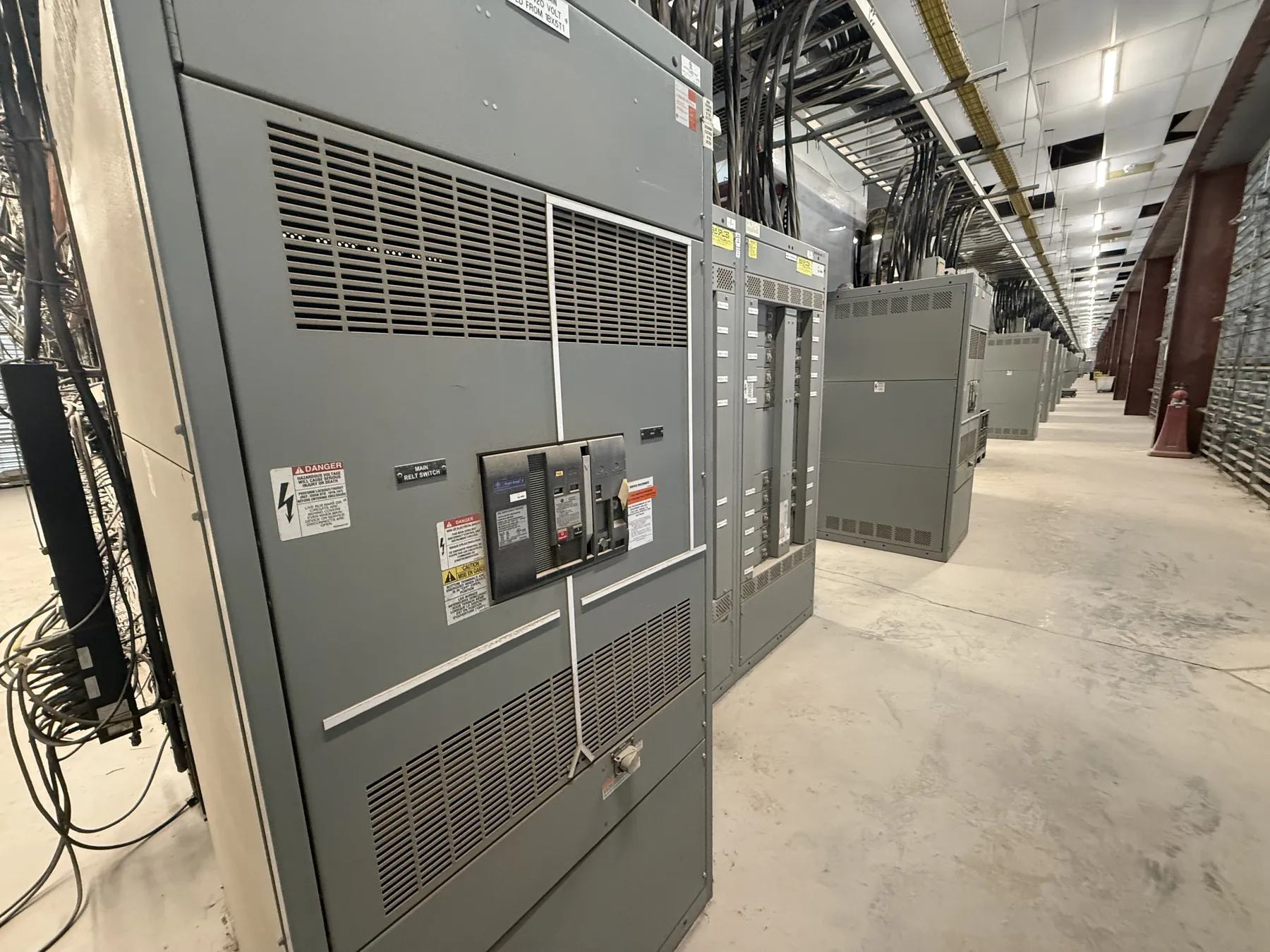
Switchgear vs. switchboard: the practical distinction
In low-voltage power distribution, “switchgear” and “switchboard” are related terms, but they do not describe interchangeable equipment in every project. A switchboard is generally an assembly used to distribute power and provide overcurrent protection, often with circuit breakers or other protective devices. Switchgear is a broader term for assemblies that control, protect, isolate, or distribute electrical power. In common industry usage, low-voltage switchgear may be designed with construction and compartmentalization that support more selective access and maintenance than a typical switchboard. The name alone, however, does not establish how a particular assembly is built or what it can do.
For a Nevada facility, the useful question is not simply which label sounds more robust. It is which construction, ratings, protective functions, and service interfaces suit the electrical design and the conditions at the installation. Equipment terminology and applicable standards should be confirmed from the actual specifications and design documents.
Breaker arrangement and protective functions
Both switchboards and switchgear can include circuit breakers, but the breaker type and arrangement depend on the design. A project may call for molded-case breakers, insulated-case breakers, or other devices selected for the application. Breaker selection affects the assembly layout, available fault-current rating, protective functions, coordination options, and the way circuits are connected and accessed. The term “switchgear” does not, by itself, guarantee a particular breaker type or protection scheme.
Coordination is also a system-level consideration. Engineers evaluate how upstream and downstream protective devices respond to faults, along with available fault current, load characteristics, and the consequences of an interruption. The assembly must fit the study assumptions and the broader distribution system. Changing a breaker or rating late in the design can affect enclosure space, bus arrangement, connections, and coordination; it should not be treated as a simple component substitution.
Construction and maintainability are design choices
Many switchgear designs use separated compartments or barriers to organize buses, switching devices, and cable terminations. Depending on the specified construction, this can help limit exposure between functional sections and support maintenance planning. Switchboards commonly use a more integrated arrangement, though their construction varies by manufacturer and configuration. Neither description alone establishes a safe work method, accessibility, or the extent to which one section can remain in service while another is maintained.
When maintainability is important, specify the required access, isolation points, compartmentation, and expected maintenance approach with the project engineer. Consider equipment-room clearances, cable entry and bending space, ventilation, environmental conditions, and the path for moving the assembly into the building. Nevada locations may have different site and logistics constraints, from indoor electrical rooms to facilities with heat, dust, or limited access; these conditions should be documented rather than assumed from the state or city name.
Which standard applies depends on the actual assembly
Standards are tied to equipment type and construction, not merely to a product-family label. UL 891 applies to applicable low-voltage switchboards; it should not be read as covering all switchgear or other equipment categories. Conversely, calling an assembly switchgear does not establish its listing or compliance. Voltage class, product configuration, intended use, and the governing project requirements all matter when determining the applicable standard.
Ratings also need careful interpretation. A voltage rating is not a statement of the system’s available fault current, and a current or withstand rating is not a substitute for confirming the system voltage and protection requirements. Required ratings, listings, and standards must be verified for the specified equipment and installation. Qualified electrical engineers and the authority having jurisdiction determine the project requirements through design review; a product description cannot settle those decisions.
Information to provide for a useful quotation — What Is the Difference Between Switchgear and a Switchboard?
For a custom assembly, the distinction between switchgear and switchboard becomes clearer when the request includes the electrical and physical requirements. Useful inputs include the one-line diagram, system voltage and frequency, service and feeder arrangement, load information, available fault-current data, required protective-device functions, and any coordination or study criteria. Identify the requested equipment type and applicable standard when the design team has established them, but flag open questions rather than guessing.
Include enclosure and installation details as well: indoor or outdoor location, environmental conditions, cable or bus connections, entry direction, space limits, and any access or maintenance constraints. These details affect layout and interfaces, not just the equipment label. A complete review can identify mismatches between the request, site conditions, and the intended electrical design before manufacturing begins.
Choosing the right term for the project
Use “switchboard” or “switchgear” as the project documents define the required equipment, then verify the construction and ratings against the actual design. A manufacturer can build new custom power-distribution equipment to specified requirements; terminology alone is not enough to select it. A U.S.-built assembly using American components can be shipped to Nevada, with lead time dependent on the approved design and project details. Final equipment selection, protection, applicable standards, and site suitability require qualified engineering review.