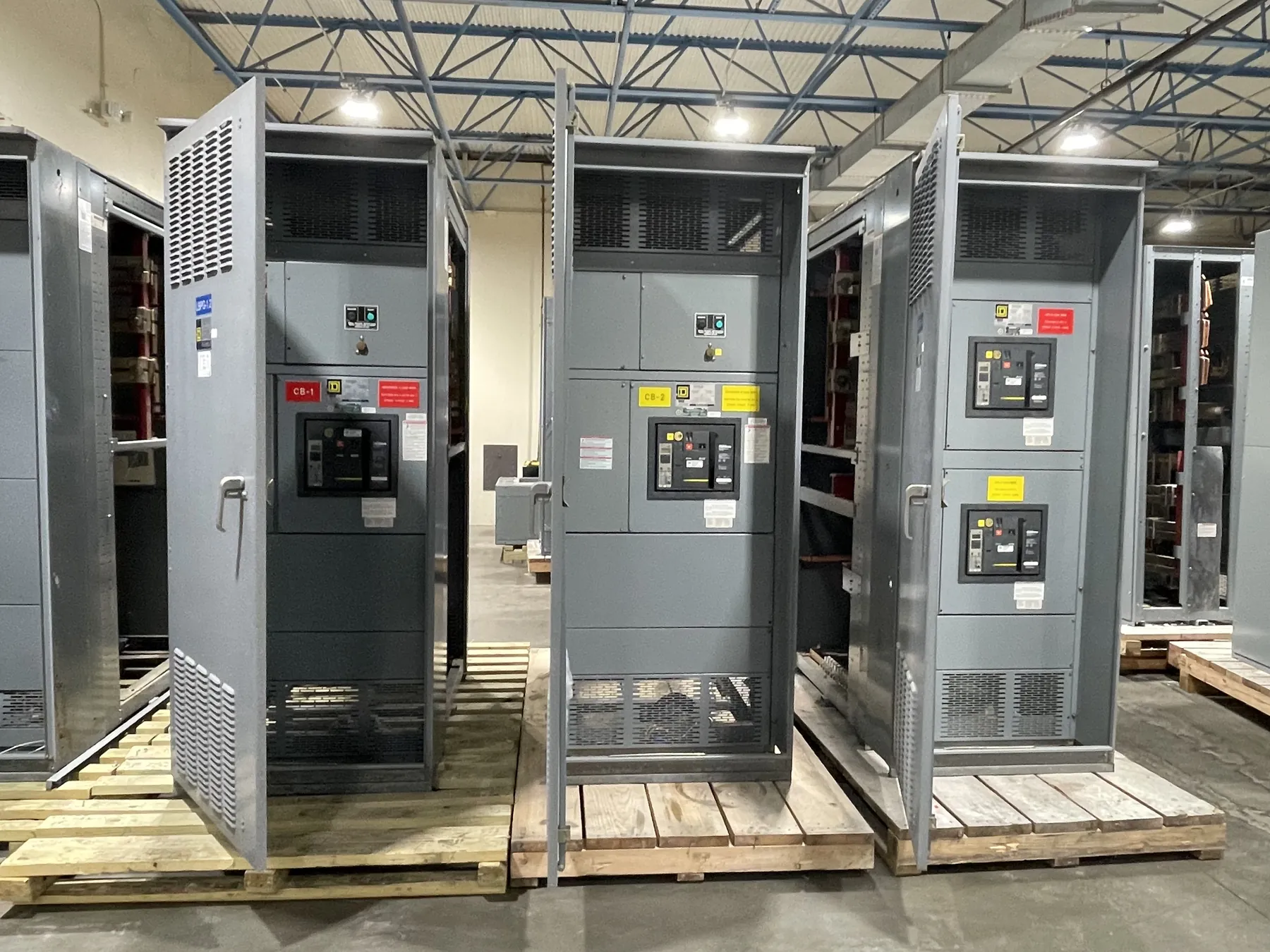
How Do Switchboards and Switchgear Differ?
Both distribute electrical power, but their construction and device arrangements can differ. A low-voltage switchboard may use molded-case or other suitable protective devices in a distribution assembly, while low-voltage switchgear may use power circuit breakers and a different construction. Medium-voltage switchgear operates in another equipment class and calls for its own insulation, protection and termination considerations.
The right choice depends on the one-line diagram, voltage, fault duty, operational needs and applicable specifications. Ask the design team to identify the intended equipment and required documentation rather than treating the names as interchangeable. Our U.S. manufacturing scope concerns new equipment for Nevada projects, using all-American components in the specified configuration.
Which Ratings Must Be Supplied?
Provide nominal voltage, phase, wire configuration and grounding arrangement, together with the required main bus and feeder current ratings. The engineering team should calculate loads and verify whether the system needs a neutral, spare circuits or future capacity. Site ambient temperature and installation conditions may influence the suitability of published equipment ratings.
Available short-circuit current is separate from normal operating current. Protective devices need appropriate interrupting ratings, and the assembly needs a suitable short-circuit rating for its documented configuration. The utility and project engineer can help establish available fault current; the engineer should review protective-device settings and coordination for the relevant operating modes.
What Information Supports a Quotation?
A current one-line diagram and equipment schedule provide a practical starting point. Include equipment type and quantity, system voltage, bus ampacity, required fault duty, incoming and outgoing feeders, enclosure conditions and any metering or control interfaces. Identify requested standards or listing evidence, special testing, room dimensions and cable entry requirements if known.
Provide the Nevada delivery location, desired schedule and any constraints on receiving or unloading. Clearly label preliminary values and open design decisions. A quotation can then identify assumptions and exclusions for review; it does not replace the approved electrical design, utility coordination or an agreed manufacturing scope.
What Testing and Listing Documentation Should Be Requested?
Ask which routine factory inspections and tests are included, what results will be recorded and whether a witness or special acceptance test is part of the scope. Routine checks of an individual assembly differ from design or type tests used to evaluate a construction. A project should state its required tests before the manufacturing scope is finalized.
A standard reference is not proof that an individual assembly is listed. For an applicable low-voltage switchboard, UL 891 may be relevant; request evidence for the exact proposed configuration when a listing is required. Medium-voltage equipment uses other applicable standards. The project team must verify product documentation and the requirements of the authority having jurisdiction. Ask how proposed options and modifications affect the documented scope, and resolve any differences with the project specification before approval.
Can New Equipment Serve an Existing System?
New distribution equipment can be planned for an existing facility, but compatibility cannot be determined from the old nameplate alone. Document actual dimensions, existing source and feeder connections, cable routing, fault duty and operating constraints. Field information should be verified by qualified personnel and incorporated into an updated one-line and equipment layout.
Compare a new replacement with other possible modernization approaches using the facility’s condition, maintenance requirements and outage plan. Existing equipment alterations require their own compatibility and rating review. If a new assembly is selected, coordinate any shutdown, temporary supply and reconnection work with the owner, installer and utility as applicable.
Who Handles Installation and Energization?
The agreed scope should distinguish equipment engineering, fabrication, assembly and factory checks from transport, unloading, field installation and commissioning. The manufacturer’s drawings and instructions support the field team, but do not automatically include site work. Confirm who supplies conduits, cables, foundations, interconnections and protective-device settings.
Qualified installers and commissioning personnel should inspect shipping condition, assemble any shipping splits and perform project-required field tests before energization. The engineer, utility and authority having jurisdiction participate as required. No particular approval, delivery date or test outcome should be assumed until it has been confirmed for the specific project.