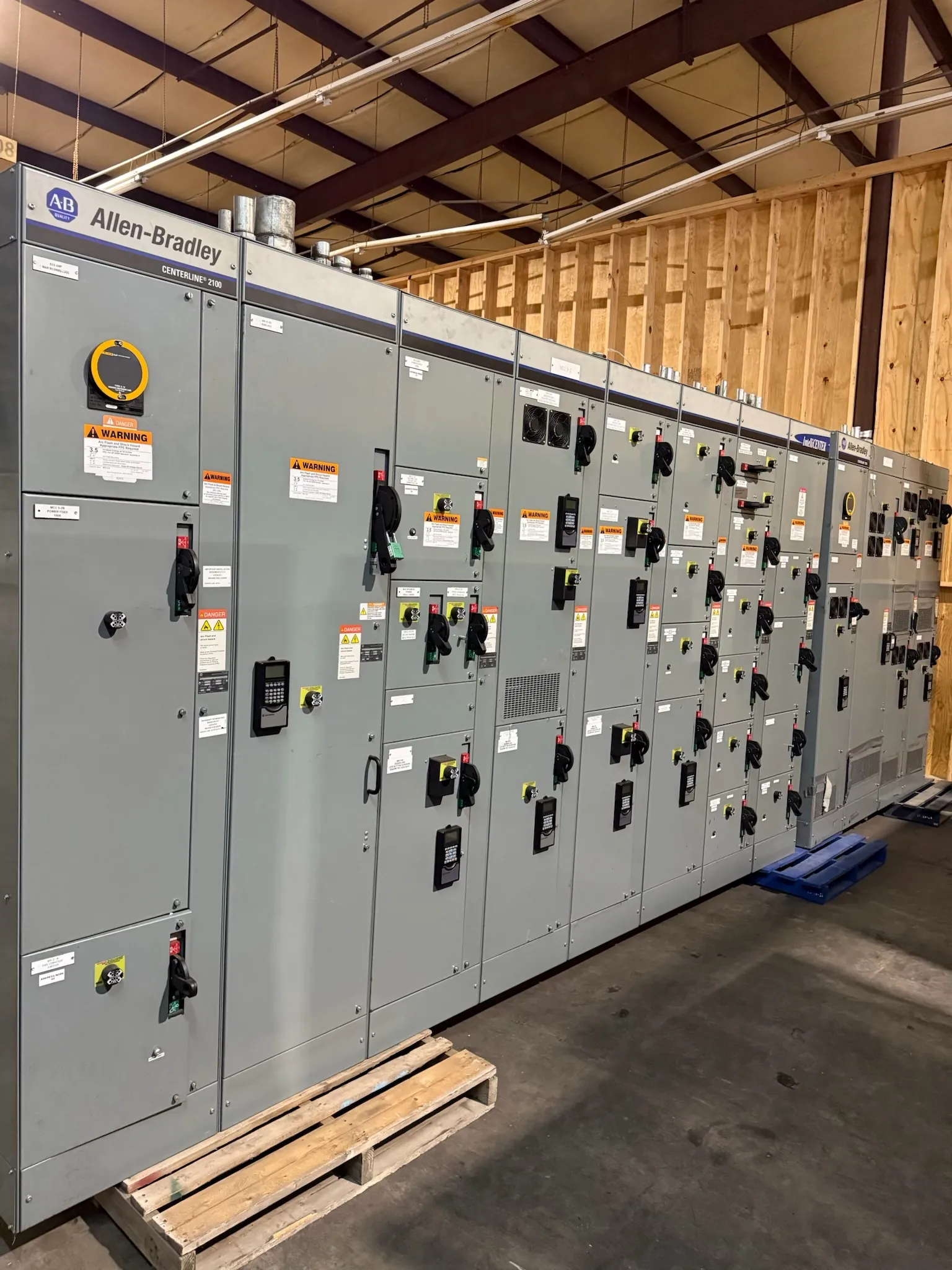
What switchgear means in a power-distribution system
Switchgear is an assembly of electrical devices used to control, protect, and isolate parts of a power system. It is not one universal product or a synonym for every electrical panel. The term covers equipment whose construction and capabilities depend on the system voltage, the fault conditions it must address, the way circuits are arranged, and the requirements of the facility.
For a facility owner, the practical question is not simply whether switchgear is needed. It is which equipment arrangement fits the source, loads, operating needs, and available space. A low-voltage switchboard, a motor-control assembly, and medium-voltage metal-enclosed switchgear serve different roles and cannot be treated as interchangeable. The project’s electrical engineer and equipment manufacturer must confirm the appropriate type and ratings from the actual design information.
Switching, protection, and isolation are related but distinct
Switching means making or interrupting a circuit through a device intended for that duty. A circuit breaker, switch, or other switching device may be used to control a feeder or equipment connection. The device’s permitted operating duties depend on its design and rating; the word “switching” alone does not establish that a device can interrupt every kind of fault.
Protection is the function of detecting an abnormal electrical condition and causing the appropriate device to respond. Depending on the application, protection may involve circuit breakers, fuses, protective relays, or combinations of these. Settings and device characteristics need to be coordinated with the source and downstream equipment so faults can be addressed appropriately. Choosing protection is an engineering task, not a decision based only on a panel name or nominal voltage.
Isolation means separating equipment or a circuit from an electrical source for a defined purpose. The isolation method and any indication or interlocking features depend on equipment design and project requirements. Isolation should not be assumed from an open control switch or from the appearance of a device. Work involving electrical equipment requires site-specific planning by qualified personnel; this overview is not an operating procedure.
Why voltage class changes equipment construction
Low-voltage and medium-voltage equipment differ in more than the numbers on a nameplate. Their insulation systems, clearances, switching devices, protective schemes, enclosures, and installation interfaces are designed for their respective voltage classes and duties. High-voltage applications introduce further specialized requirements. A product suitable for one class does not become suitable for another through a simple component substitution.
Construction also varies within a voltage class. A low-voltage switchboard may be arranged with incoming service equipment, distribution sections, feeder devices, metering, or provisions for future circuits. A medium-voltage assembly may use a different switching and protection arrangement suited to the source and the connected loads. Environmental conditions, access requirements, and the facility’s maintenance approach can influence enclosure and compartment choices. The design must account for applicable codes and standards, project specifications, and the actual installation.
Ratings are not the same as system voltage — What Is Switchgear?
Equipment ratings describe specific capabilities; they are not simply another way to state the facility’s system voltage. Depending on the product and application, relevant information may include voltage, continuous current, short-circuit or interrupting capability, frequency, and enclosure characteristics. The correct ratings must be evaluated against the available fault current, source configuration, protection scheme, and connected system. A rating or listing cannot be assumed from a general product description.
UL 891 applies to certain low-voltage switchboards. It should not be read as covering all switchgear, medium- or high-voltage assemblies, busway, or every possible product configuration. Whether a particular assembly is listed, and which requirements apply, must be confirmed for that equipment and project. Ratings, listings, and compliance details require review of the proposed design and documentation.
Interfaces and coordination shape the design
Switchgear connects to more than the electrical source and feeders. Design inputs can include the upstream transformer or utility connection, grounding arrangement, conductors or bus connections, downstream distribution, metering needs, control wiring, and communications interfaces. Physical constraints matter too: available room, access paths, working clearances, cable entry direction, conduit locations, ventilation, and environmental exposure can affect the section layout and enclosure. Nevada facilities may have site-specific heat, dust, elevation, or indoor and outdoor conditions to assess; these should be documented rather than assumed.
Protection coordination is another key interface. Engineers consider protective-device characteristics across the system so that the response to a fault aligns with the design intent. Changes to transformers, conductors, loads, or utility conditions may alter that analysis. A replacement or expansion project therefore needs more than a visual match to existing equipment; drawings, nameplate information, and verified system data help establish what can be specified.
Information that helps define a switchgear quotation
A useful quotation request identifies the application and provides available one-line diagrams, system voltage, source and transformer information, load or feeder schedules, known fault-current data, and project specifications. Include desired device functions, metering or control interfaces, indoor or outdoor location, cable-entry preferences, space constraints, and any applicable listing or documentation requirements. If some information is not yet established, identify it as pending instead of treating an estimate as a final design.
As a U.S. manufacturer of new custom switchgear and power-distribution equipment, we use project information to develop an assembly suited to the stated requirements. Our assemblies use all-American components, are built in the USA, support short lead times, and ship nationwide, including to Nevada. Final construction, ratings, listing status, interfaces, and schedule depend on engineering review and confirmation of the project details.