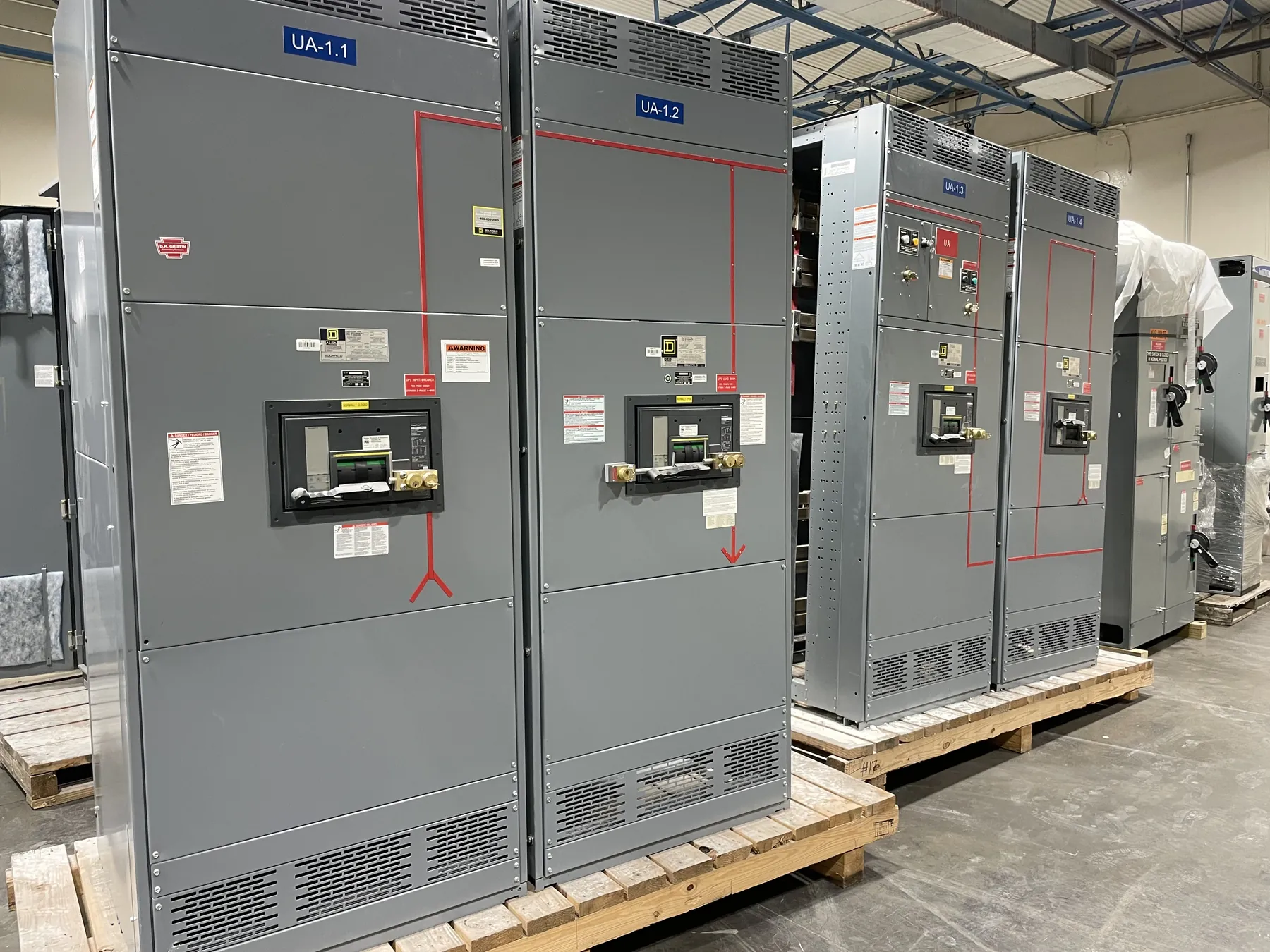
How Engineers Select Switchgear Bus Ampacity
Switchgear bus ampacity is the current-carrying rating specified for the bus assembly under defined conditions. Selecting it begins with the electrical loads the equipment must serve, but it is not simply the sum of the numbers on connected devices. Engineers review the load calculation, how loads operate together, whether demand is continuous, and how the switchgear interfaces with incoming and outgoing circuits. The result is a project-specific specification—not a universal bus size that can be chosen from a short description.
A useful distinction is that bus ampacity is a current rating, while system voltage describes the electrical potential of the system. One does not determine the other. Likewise, the bus rating is not the same as the rating of an individual breaker, feeder, or transformer. Those components must be evaluated as part of the complete distribution design, with their functions and applicable requirements confirmed by qualified electrical professionals.
Start With the Load Calculation and Operating Profile
Engineers use the project’s load calculation to understand the expected demand at the switchgear, including which loads may operate simultaneously and how the facility is expected to use them. The calculation should distinguish ordinary operating demand from connected load and account for applicable design requirements. A panel schedule or equipment list can help, but it may not show actual operating patterns, planned changes, or how loads are distributed across sections.
Continuous loading deserves particular attention. If a significant portion of the demand runs for extended periods, the design team must account for the applicable continuous-load rules and the equipment’s stated conditions of use. Motor starting, cycling loads, nonlinear loads, and other operating characteristics may also affect the broader design review. They do not automatically dictate a larger bus, but they can prompt questions about loading, protection, temperature rise, or the suitability of the proposed arrangement.
Account for Ambient Conditions and Installation — How Is Switchgear Bus Ampacity Selected?
A bus rating is meaningful only in the context of the conditions under which it applies. Ambient temperature, enclosure and ventilation characteristics, equipment layout, and installation conditions may affect how a manufacturer evaluates the assembly. Engineers and the equipment manufacturer need enough information about the intended environment to confirm that the specified rating is appropriate; a rating should not be assumed to carry over unchanged to every room, enclosure, or operating condition.
Facility conditions can also shape the practical design. The switchgear’s location, available space, access for installation and maintenance, and connection points all influence the arrangement. In Nevada, the project team should communicate the actual indoor or outdoor location and relevant environmental conditions rather than relying on the state name alone. Shipping equipment to a Nevada site is a logistics matter; the site’s electrical and environmental requirements remain specific to the facility.
Balance Present Needs With Future Expansion
Planning for future loads can help avoid a design that is difficult to adapt, but adding capacity without a defined basis may increase equipment scope and affect the overall distribution design. The team should identify credible expansion plans: for example, anticipated new feeders, facility additions, or known changes in major electrical loads. It should also clarify whether the future plan affects bus ampacity, the number and arrangement of sections, outgoing-device provisions, or some combination of these.
Physical space and electrical capacity are related but different considerations. A switchgear lineup may have room for future sections while the existing bus rating remains unchanged, or the project may require a different configuration to support a documented expansion. Engineers should review both the planned loads and the intended interfaces before specifying a rating. Any reserve capacity should be deliberate and consistent with the project’s load study, rather than a substitute for one.
Coordinate Bus, Devices, and System Interfaces
The specified bus must fit the complete equipment design. Engineers coordinate it with the incoming source, overcurrent protective devices, feeder requirements, available fault information, and the intended system configuration. They also consider how sections connect and whether the lineup’s physical arrangement supports the project’s distribution plan. A bus ampacity number by itself does not establish that the assembly is suitable for a particular system or that every component has a matching rating.
Ratings, applicable listings, and design details require confirmation for the actual product and project. UL 891 applies to applicable low-voltage switchboards; it should not be treated as a blanket listing for all switchgear or as coverage for medium- or high-voltage equipment. The project’s voltage class, construction, and documentation determine which requirements apply. Qualified engineers and the manufacturer should resolve those details through the project review.
Information to Provide When Requesting a Quote
A clear inquiry helps a manufacturer review the intended bus rating and identify open questions. Useful inputs include the load calculation or load schedule, system voltage and configuration, source information, feeder and protective-device requirements, operating profile, environmental conditions, and any documented expansion plans. Provide available drawings and note constraints such as lineup space, cable entry, and connection interfaces. If a value is preliminary, label it as such rather than presenting it as a confirmed requirement.
For custom equipment, these details support a design and quotation review; they do not replace engineering approval or site-specific verification. A U.S. manufacturer using American components can build new custom power-distribution equipment and ship nationwide, including to Nevada. Final bus ampacity and related ratings depend on confirmed project information, product configuration, and applicable requirements—not a general rule or an assumed value.