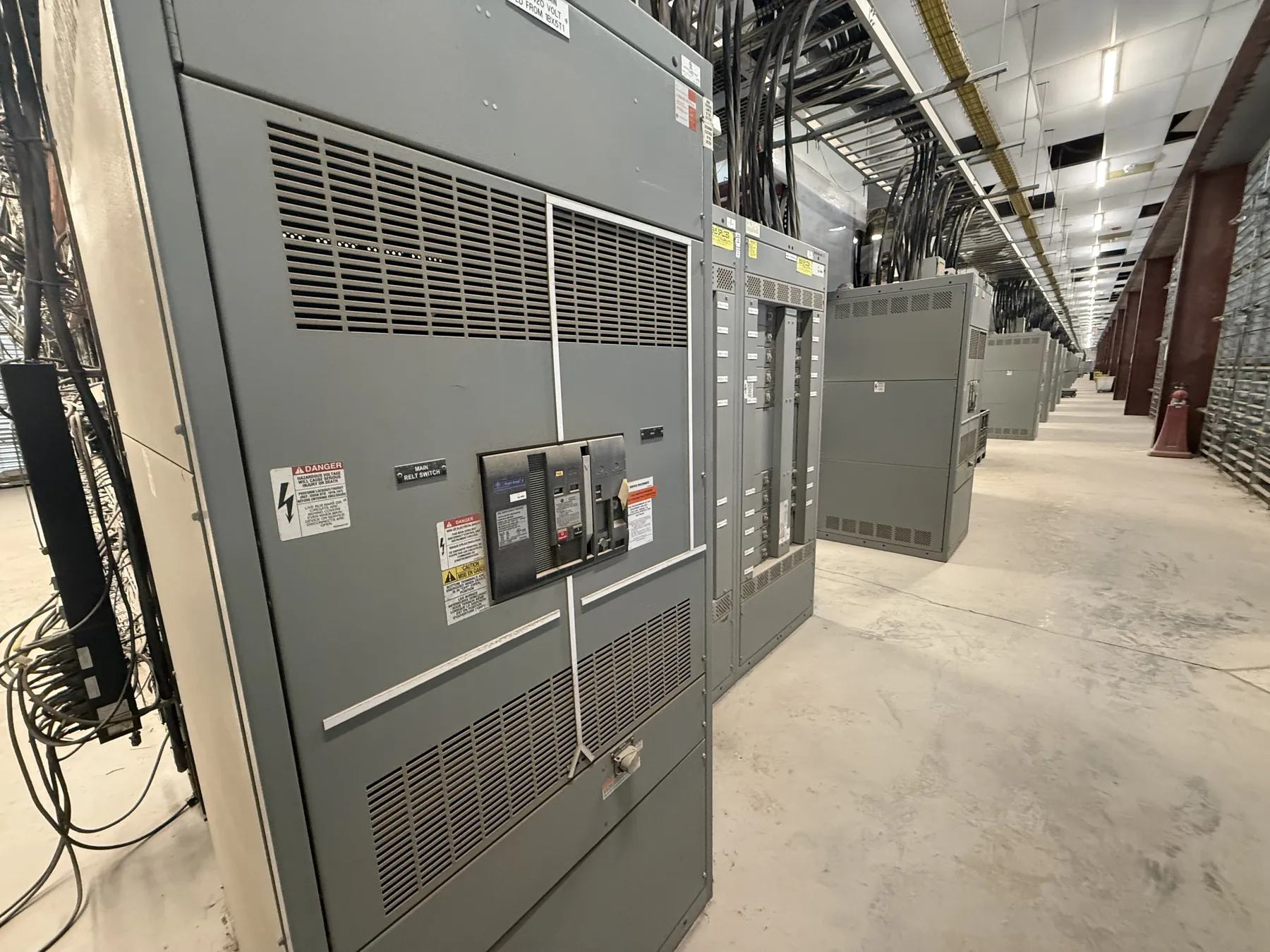
Choosing Whether to Replace or Modernize Existing Switchgear
For a Nevada facility, the choice between replacing switchgear and modernizing it depends on more than age or appearance. The equipment’s condition, available parts, electrical duty, connection to the rest of the distribution system, and the facility’s outage limits all matter. Modernization may preserve serviceable portions of an assembly while updating selected components; replacement may be the more practical path when the existing equipment is deteriorated, unsupported, or no longer fits the system’s requirements. Neither option should be selected from a photograph or equipment label alone. A qualified engineer should inspect the installation and assess the proposed work against current site conditions and project requirements.
Start with Physical Condition and Maintenance History
An assessment should examine the enclosure, bus and insulating materials, barriers, cable and bus connections, grounding provisions, and operating mechanisms, as applicable to the equipment. Signs of corrosion, heat damage, contamination, moisture exposure, mechanical wear, or prior modifications can affect whether existing sections are suitable to retain. Maintenance and inspection records, past faults, changing loads, and any known repairs help establish context, but do not replace an on-site review.
Condition is not the only question. Equipment that appears intact may still have limitations related to its original design, protective devices, or system configuration. Conversely, a concern with one component does not automatically mean every connected section must be replaced. The engineer needs to determine which parts are reusable, which require corrective work, and whether the proposed boundary between retained and new equipment can be engineered and documented.
Check Parts Support and Equipment Interfaces
Modernization depends on whether replacement components are available and can be applied to the existing assembly without compromising its intended function. The review should identify the manufacturer, model, ratings, drawings, installed devices, and any field changes. Parts compatibility includes more than matching physical dimensions: mounting, control wiring, interlocks, protection functions, bus connections, and coordination with adjacent sections may all be relevant.
When existing equipment is obsolete or documentation is incomplete, recreating an interface can require substantial engineering and verification. A replacement assembly may provide a clearer basis for future maintenance, but it also has to connect appropriately to existing feeders, conductors, protective devices, and building distribution. For a Nevada project, site access, transportation to the facility, receiving capacity, and the route from unloading point to the electrical room can affect planning. These logistics should be evaluated with facility conditions rather than assumed from the project location.
Compare Fault Duty, Ratings, and Protection
Any modernization or replacement must be evaluated against the electrical system in which the equipment will operate. The engineer should confirm system voltage, available fault current, equipment ratings, protective-device characteristics, and the way upstream and downstream devices coordinate. An equipment rating is not the same thing as system voltage, and a rating suitable for one installation may not be suitable for another. Changes to transformers, utility service, generators, motors, or other connected loads can alter the basis of an earlier design.
Retaining a section while changing another can affect protection and coordination across the distribution system. The assessment should establish whether the proposed combination of existing and new equipment is appropriate, and whether additional analysis or design revisions are needed. Applicable standards and listing requirements depend on the equipment type and configuration; for example, UL 891 applies to applicable low-voltage switchboards, not every form of switchgear. Ratings, listings, and project-specific requirements must be confirmed for the actual equipment and application.
Plan Around Outages and Facility Constraints
Modernization may reduce the amount of equipment that must be removed, but it does not inherently mean a shorter or simpler outage. The work may require access to retained sections, changes to connected conductors, testing, and coordination with facility operations. Full replacement can involve a broader cutover, including removal, installation, reconnection, and review of interfaces with the existing system. The sequence and outage duration depend on the design, site access, scope, and the facility’s operating constraints.
Critical loads, backup sources, limited shutdown windows, room dimensions, cable entry locations, and access for moving equipment should be discussed early. The facility team and qualified electrical professionals need to determine what can be isolated, what must remain in service, and how the work will be managed. No general description can establish a safe work plan for energized equipment or confirm that a particular outage approach is feasible.
Match the Decision to Lifecycle Requirements
Modernization can be appropriate when the retained assembly is in suitable condition, compatible parts and interfaces can be verified, and the resulting design meets the facility’s operating needs. Replacement may be favored when deterioration is extensive, parts support is uncertain, the equipment cannot meet required duty, or the facility wants a more comprehensive redesign. The comparison should include expected maintenance needs, documentation, future expansion, operating requirements, and the practical consequences of keeping or replacing each section—not simply the initial scope.
For a quotation, provide available nameplate information, equipment drawings and schedules, photographs, system data, known fault-current or coordination studies, maintenance history, proposed changes, site access details, and outage constraints. A manufacturer can use this information to scope new custom equipment, but final design choices require engineering review and confirmation of interfaces and ratings. A U.S. manufacturer can build new assemblies with all-American components and ship nationwide, including to Nevada; lead time and the suitable solution depend on the confirmed design and project details.