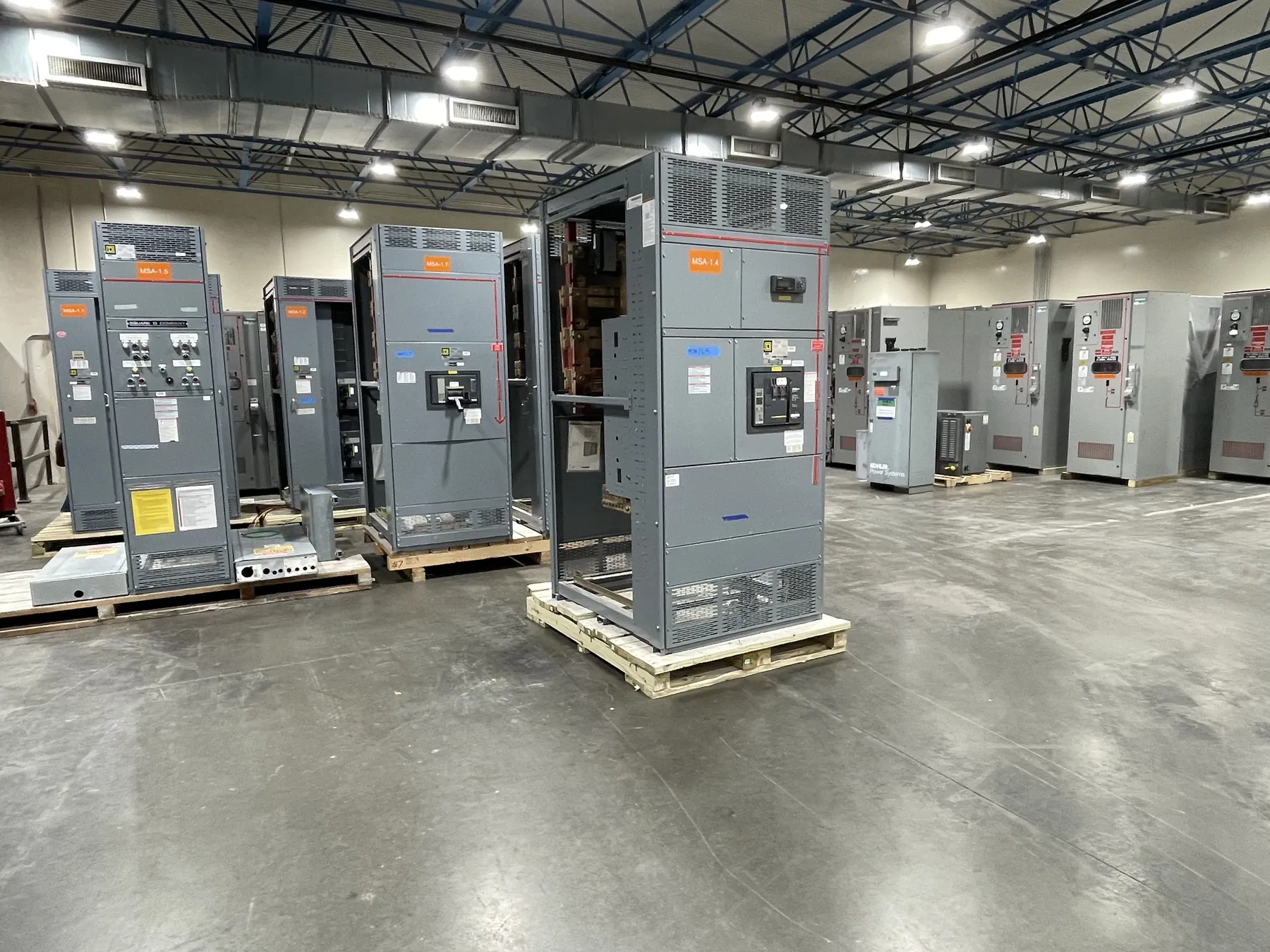
What a 4000 A Rating Means for Switchgear and Switchboards
A 4000 A designation identifies a current rating associated with a particular part of an assembly, such as a bus or main device. It does not, by itself, establish how much load a facility can serve or confirm that every component has the same rating. For a project in Nevada, the design team must define which component is intended to carry 4000 A, how the assembly connects to the electrical system, and what operating conditions apply. A custom equipment quotation should identify the requested rating and the equipment scope rather than treating “4000 A” as a complete specification.
Calculated demand, load characteristics and the applicable design requirements determine whether that rating is appropriate. The equipment rating must be evaluated against the actual system and planned operating conditions by qualified electrical professionals. A nominal rating is not a substitute for a load study or engineering review.
Relate Bus and Main Ratings to Calculated Load
The bus and main device serve different functions, so their ratings need separate attention. A bus rating describes the current-carrying capability assigned to the bus assembly under specified conditions. A main breaker or other main device has its own rating and protective function. Those ratings may be selected to coordinate within the design, but they should not be assumed to match simply because the requested equipment is described as 4000 A.
Engineering review should consider the calculated load, the expected load profile, the number and size of outgoing circuits, and how the load is distributed across the assembly. A facility with substantial motor loads, process equipment, large HVAC systems or variable operating schedules may need analysis beyond a single demand figure. The engineer should also account for applicable code requirements and the electrical characteristics of the source and connected loads.
Account for Continuous Duty and Ambient Conditions — 4000 A Switchgear and Switchboards
Whether equipment will carry a load continuously affects component selection and the overall design. The engineer must determine how the applicable rules and device instructions treat the intended load, then select ratings and protective devices accordingly. A 4000 A bus designation alone does not confirm that a particular continuous load is acceptable.
Ambient conditions matter as well. Room temperature, ventilation, equipment spacing, heat from neighboring gear and the arrangement of conductors can influence equipment performance. Nevada facilities may have site-specific conditions such as warm electrical rooms, rooftop or outdoor installations, dust exposure, or limited cooling. These factors should be documented for engineering review; they do not establish a universal derating or an automatic equipment limitation. Enclosure type, location and environmental provisions must be selected for the actual installation.
Plan for Expansion Without Oversizing by Assumption
Future expansion can affect the bus rating, main-device selection, section arrangement and available outgoing spaces. Useful planning inputs include anticipated new loads, their likely operating schedules, the expected connection points and whether the future work will be phased. A larger bus does not automatically provide usable capacity: the source, protective devices, feeder conductors, distribution sections and facility system must all support the intended future load.
There is a practical tradeoff between reserving capacity and building around a verified near-term requirement. Oversizing without a defined expansion plan may increase equipment dimensions or complicate integration, while a tightly constrained layout can make later modifications difficult. Discussing expansion scenarios during quotation helps identify which provisions can be included in the initial design and which would require a later engineering review.
Confirm Protection, Short-Circuit and Enclosure Ratings Separately
Current-carrying ampacity is only one part of the equipment specification. Protective-device ratings and settings must be selected for the system and coordinated with upstream and downstream devices. Short-circuit ratings must be evaluated against the available fault current at the installation point and the applicable assembly configuration. Neither value can be inferred from a 4000 A bus or main designation.
Enclosure details are separate decisions, too. Indoor or outdoor location, environmental exposure, access, cable entry, ventilation and room clearances can affect the arrangement. Where low-voltage switchboards are proposed, UL 891 may apply to the relevant switchboard design; it should not be taken as a blanket standard for all switchgear or other equipment types. Applicable listings, standards and ratings must be confirmed for the specific product and project. Qualified engineers should review system conditions and site requirements before design decisions are finalized.
Prepare a Useful 4000 A Equipment Quotation Request
For a custom quotation, provide the one-line diagram or available system information, the intended bus and main ratings, calculated load data, source characteristics, available fault-current information and protective-device requirements. Include the number and type of feeders, cable or bus connections, enclosure location, environmental conditions, space limitations and any planned expansion. Identify applicable project specifications and required documentation, while leaving design confirmation to the responsible engineering team.
We manufacture new custom switchgear and power-distribution equipment in the United States using all-American components, and can ship equipment nationwide, including to Nevada. Lead time depends on the confirmed design, components and project scope; timing should be established during quotation. Ratings, listings and interface details require project-specific confirmation before equipment is released for manufacture.