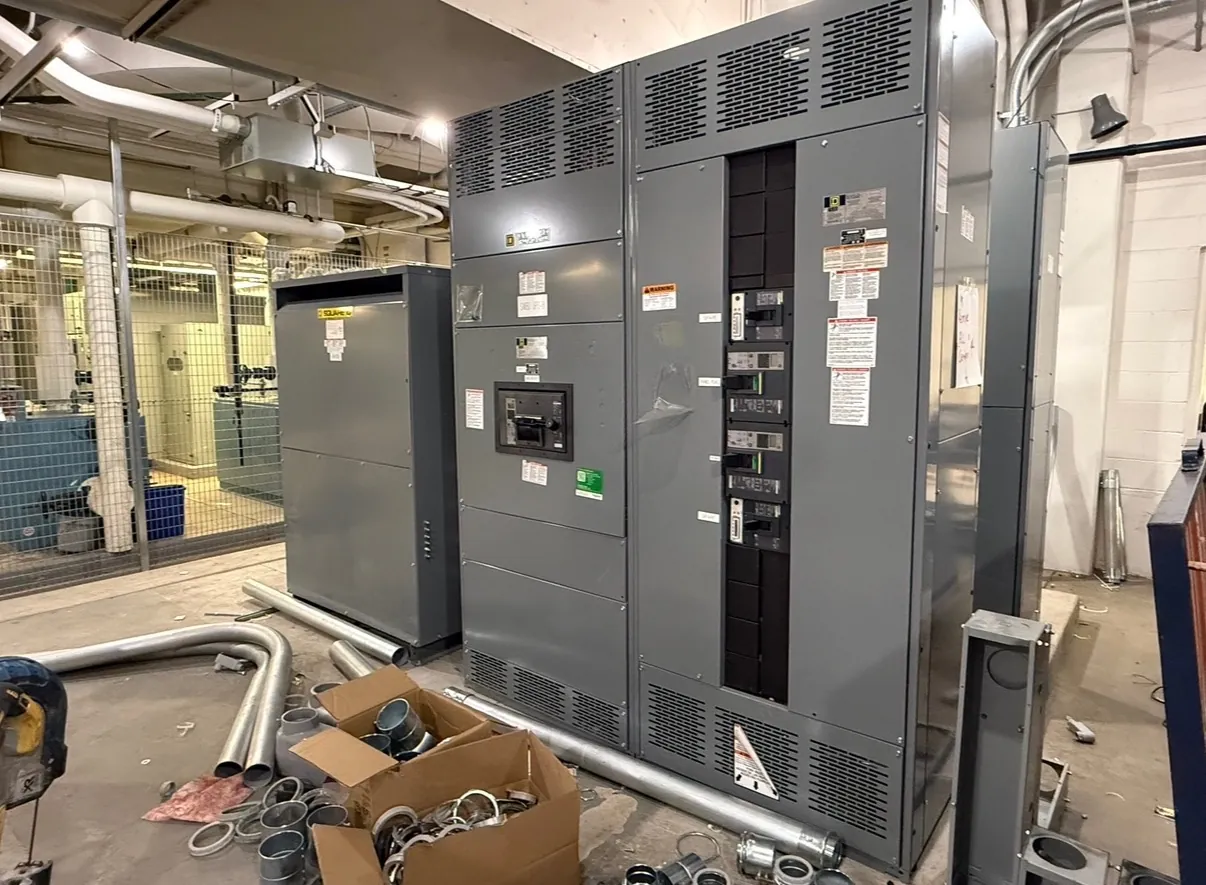
What a 2000 A Rating Means for Switchgear and Switchboards
A 2000 A rating identifies a current rating for a specified part of an assembly, such as its bus or main device. It is not a system-voltage designation, a complete equipment specification, or proof that the assembly is suitable for a particular facility. The exact meaning depends on which component carries the rating, how the assembly is configured, and the conditions stated for its application. A proposed 2000 A design must therefore be reviewed against the electrical system and project requirements before its suitability or availability can be confirmed.
For facility engineers, contractors, and project teams, the first useful question is not simply whether the equipment is “2000 A.” It is which rating is being specified, what load the equipment must serve, and what other limits apply to the complete assembly. A bus, main protective device, feeder, and enclosure each have distinct design considerations; one number does not establish the ratings of all the others.
Relate the Main and Bus Ratings to Calculated Load
Begin with the project’s documented load calculation and distribution plan. The calculated demand helps the design team assess whether a 2000 A bus or main rating is appropriate, but it does not independently determine the equipment rating. The connected loads, applicable design requirements, expected operating patterns, load growth, and the arrangement of feeder circuits all inform that decision. Qualified electrical engineers must review the calculation and site conditions rather than relying on a rule of thumb or equipment label alone.
Clarify whether 2000 A refers to the main device, the bus, or both. A main rated at 2000 A does not, by itself, establish that every section or outgoing feeder has the same rating. Conversely, a bus rating does not specify the trip settings or protective characteristics of the main. The one-line diagram and equipment schedule should identify each item separately so the quotation and engineering review address the intended configuration.
Evaluate Continuous Duty and Ambient Conditions
Expected duration of loading matters. A design intended to serve sustained demand should be evaluated for continuous-duty application under the applicable equipment ratings and installation conditions. Do not assume that a nominal 2000 A rating guarantees a particular usable current in every environment. Ambient temperature, enclosure arrangement, ventilation, conductor layout, heat from adjacent equipment, and the installation space can affect the engineering review. The manufacturer and project engineer need the intended conditions to confirm the proposed design.
Facility details are especially important where the equipment will be installed in a constrained electrical room or near other heat-producing gear. Include the planned location, indoor or outdoor exposure, room conditions, access limitations, and any known ventilation constraints in the project documents. These details help identify whether the requested enclosure and assembly arrangement require further evaluation. They are not substitutes for a site review where one is needed.
Plan Future Expansion Without Assuming Spare Capacity — 2000 A Switchgear and Switchboards
Future growth may influence the choice of bus rating, section arrangement, and feeder provisions, but an anticipated expansion should be described rather than treated as an automatic reason to select 2000 A. Identify the expected additions, their approximate load characteristics when known, and the intended phase of installation. The engineering team can then consider whether space, feeder positions, bus configuration, and the calculated load support the plan.
Physical room for future breakers does not necessarily mean the assembly has electrical capacity for additional load. Likewise, unused bus capacity does not guarantee that later equipment can be added without design changes, coordination review, or facility work. Record which provisions are desired now and which are only future possibilities, and have the complete system evaluated before finalizing those assumptions.
Confirm Protective, Short-Circuit, and Enclosure Ratings Separately
A 2000 A bus or main designation does not establish the protective-device rating, interrupting capability, short-circuit withstand rating, or enclosure suitability. These are separate selection and verification items. The project team should provide the available fault-current information and system details needed for qualified review, including relevant upstream protection and coordination requirements. Proposed devices and assembly ratings must be matched to the actual installation; they cannot be inferred from ampacity alone.
Specify the system voltage independently from the current rating, and identify the required configuration, incoming arrangement, feeder requirements, and environmental conditions. Applicable listings also depend on the specific product and construction. UL 891 applies to applicable low-voltage switchboards; it should not be treated as a blanket listing for every switchgear assembly or product type. Confirm the intended equipment category and any required listing or project documentation during engineering review.
Prepare a Clear Request for a 2000 A Design
For a useful quotation review, provide the one-line diagram, load information, specified voltage, requested main and bus ratings, feeder schedule, available fault-current data, and required protective-device details. Include enclosure and installation conditions, applicable project specifications, coordination requirements, and any planned expansion. Note which requirements are fixed and which may be considered during design. Missing information may require clarification before the assembly configuration can be confirmed.
We manufacture new custom switchgear and power-distribution equipment in the United States using all-American components, and we ship nationwide, including to Nevada. Short lead times are supported, but timing depends on the confirmed design, components, and project requirements; no specific schedule should be assumed before review. Ratings, listing scope, and final equipment details are confirmed for the proposed configuration with qualified engineering input and the applicable site conditions.