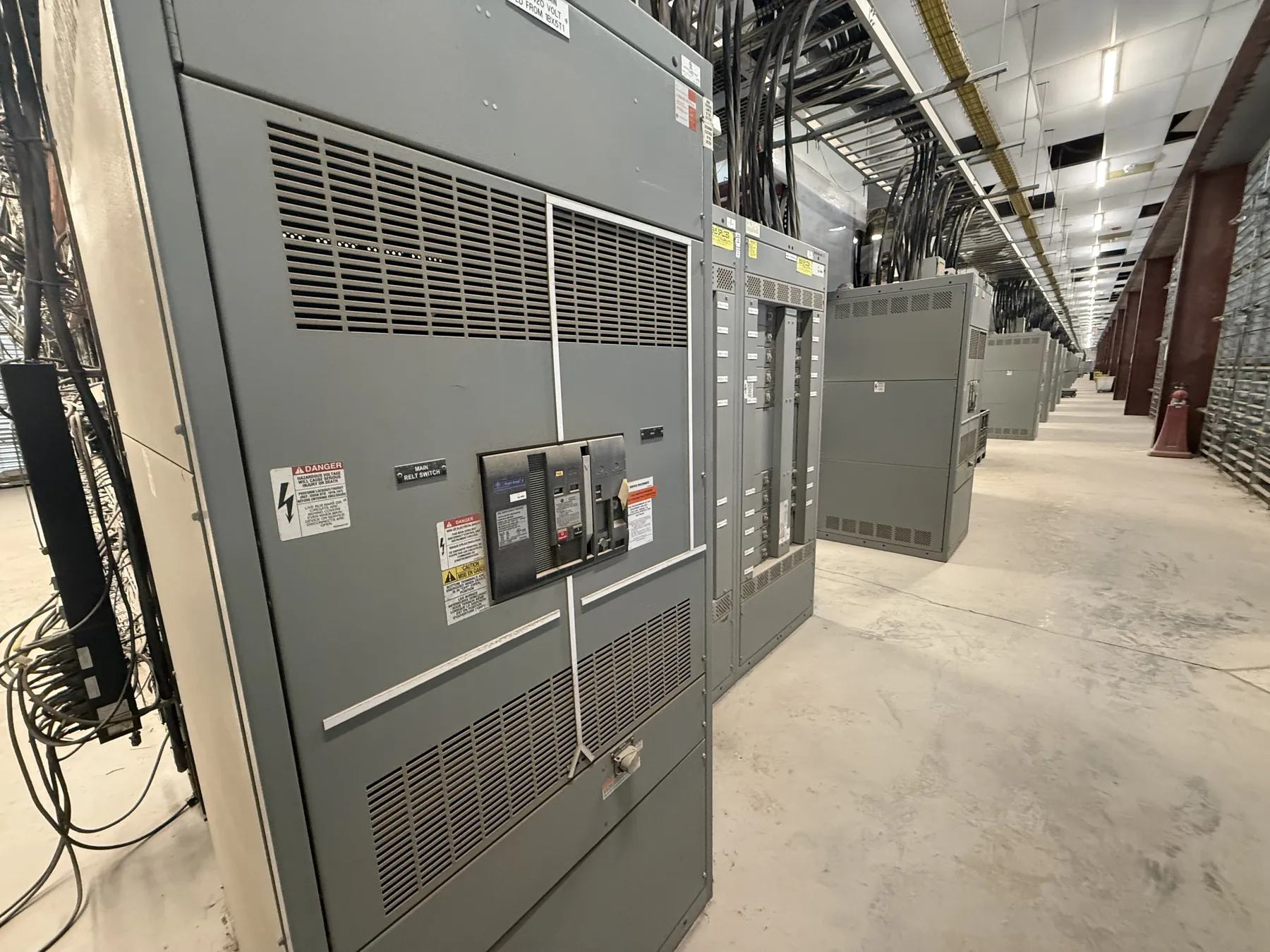
Understanding a 1200 A Main or Bus Rating
A 1200 A figure identifies a current rating assigned to a particular part of an electrical assembly, such as a main device or bus. It is not a complete description of the equipment and does not, by itself, establish the system voltage, available fault current, or amount of usable load. A 1200 A switchboard main and a 1200 A bus are related specifications, but they describe different components and may have different design implications. Confirm which component the project intends to rate at 1200 A, and specify the applicable voltage and system configuration separately.
For a new custom switchboard or switchgear assembly, the rating must fit the design and the application. It should not be selected simply because it appears to leave room for growth. The required configuration depends on the calculated load, how that load operates, the protective devices, the installation environment, and applicable project requirements. Ratings and product details must be confirmed during engineering review.
Relate the 1200 A Rating to the Calculated Load
Start with the electrical load calculation prepared for the facility, rather than treating the 1200 A figure as an assumed demand allowance. The calculation should reflect the equipment served, expected operating patterns, applicable demand factors, and relevant project requirements. A facility’s connected load and its calculated demand are not necessarily the same, and a nameplate total alone may not describe the current the distribution equipment must carry.
For a new installation, useful context includes the one-line diagram, service or feeder information, system voltage, phase and wire arrangement, and a load schedule identifying major equipment. For a replacement or expansion, document the existing arrangement and explain which loads will remain, change, or be added. A qualified electrical engineer should determine the governing load calculation and verify that the proposed assembly is suitable for the intended system.
Continuous Duty and Operating Conditions
Whether a load operates continuously matters when selecting a main and bus. The equipment design and protective-device selection must account for the nature of the load and the conditions under which it will operate; a 1200 A label alone does not show that any particular load may run continuously at that current. Confirm the applicable continuous-load treatment and device requirements with the project engineer and equipment manufacturer.
Ambient conditions also affect equipment application. Provide the expected room or enclosure environment, including relevant temperature, ventilation, installation orientation, and location details. Heat from nearby equipment or restricted airflow can influence design decisions. Where the assembly will be outdoors, in a confined electrical room, or exposed to unusual environmental conditions, identify that early so enclosure construction and equipment selection can be reviewed together.
Plan Future Expansion Without Assuming Spare Capacity — 1200 A Switchgear and Switchboards
A 1200 A bus or main rating does not guarantee a particular amount of spare capacity. Future expansion depends on the calculated demand, feeder and branch-device arrangement, available physical space, heat dissipation, fault-duty limits, and the intended operating profile. A project may need additional outgoing positions or space for future devices, but those provisions must be defined and reviewed; an empty position is not, by itself, proof that added load can be served.
Describe anticipated additions as specifically as possible: expected equipment types, approximate load information when available, likely connection points, and the intended timing or phasing of the work. The engineer can then assess whether a design provision is appropriate and what assumptions require later verification. Planning for expansion may affect the lineup layout, bus arrangement, device selection, enclosure dimensions, and coordination with upstream or downstream distribution.
Confirm Protective-Device, Fault and Enclosure Ratings Separately — 1200 A Switchgear and Switchboards
The 1200 A rating must not be confused with a circuit breaker’s trip setting, its interrupting capability, or the assembly’s short-circuit rating. These are separate characteristics. The available fault current at the installation point and the required protection scheme are essential inputs to equipment selection. Provide the engineer with available fault-current information and upstream protective-device details, or identify what information remains to be established. Protective-device coordination should be evaluated across the relevant system, not inferred from the main rating.
Enclosure type and construction are separate choices as well. Specify indoor or outdoor placement, exposure conditions, access and working-space constraints, cable entry preferences, and any project-specific requirements. Applicable standards depend on the equipment category and design. UL 891 applies to applicable low-voltage switchboards; it should not be taken as a blanket designation for every switchgear assembly or for medium- or high-voltage equipment. Any listing or certification requirement needs confirmation for the specific proposed product.
Information That Supports a Useful 1200 A Quote
For a quotation, share the one-line diagram, load schedule, system voltage, required main and bus ratings, fault-current data, protective-device preferences, enclosure conditions, incoming and outgoing conductor details, and any future-space requirements. Note whether the design is for new construction, a facility addition, or a replacement, and identify interface constraints such as existing equipment connections or building access. Incomplete inputs may require clarification before ratings and configuration can be confirmed.
We manufacture new custom power-distribution equipment in the United States using all-American components, with nationwide shipping that includes Nevada. Short lead times may be supported, but schedule depends on the confirmed design, component selection, and project requirements; no delivery date should be assumed until the scope is reviewed. The final 1200 A configuration, applicable ratings, and listing details require qualified engineering review and confirmation for the installation.