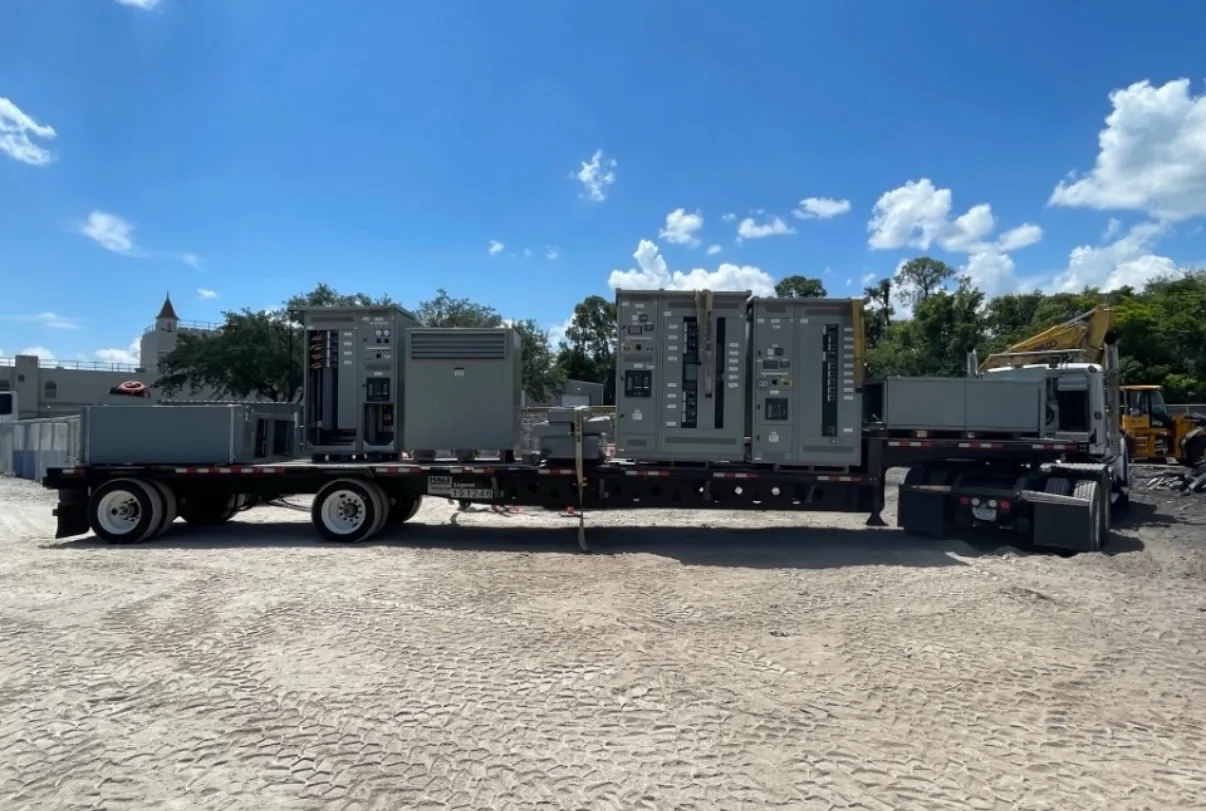
5 kV-Class Pad-Mounted Switchgear for Outdoor Distribution
Pad-mounted switchgear is an outdoor equipment assembly used to control and protect portions of an electrical distribution system. For a 5 kV-class application, the equipment must be selected for the actual system conditions and the project’s switching, protection, and connection requirements—not simply by matching a voltage label. The enclosure, internal devices, insulation system, cable interfaces, and specified ratings all need to suit the installation as a coordinated assembly.
We manufacture new custom power-distribution equipment in the United States using all-American components. We can ship nationwide, including to Nevada. The project documents and equipment documentation must establish the applicable configuration and ratings; a 5 kV-class description alone does not confirm that a particular design is available or suitable.
Separate System Voltage from Equipment Voltage Rating
Nominal system voltage describes the intended electrical system. Equipment maximum voltage is a separate rating that defines the highest system voltage for which the equipment is designed. The terms are related, but they are not interchangeable. A 5 kV-class designation should therefore be checked against the system’s nominal voltage and the manufacturer’s stated maximum voltage.
Insulation level is another distinct specification. It addresses the electrical stresses the insulation system is designed to withstand under defined conditions. It should not be inferred from the class designation or treated as a substitute for maximum voltage. Confirm the applicable insulation level, environmental assumptions, and required documentation with the equipment manufacturer and the project’s qualified electrical engineer.
Interrupting Duty and Protection Must Match the System
Switching and interrupting requirements depend on the system configuration and available fault current at the equipment location. The required interrupting duty is not established by the voltage class alone. Protection-device selection and coordination also depend on upstream and downstream equipment, grounding method, operating modes, and the protection scheme specified for the project.
For a quotation or design review, provide the one-line diagram and relevant system study information when available, along with the intended function of each switch or protective device. The responsible engineer must confirm that equipment ratings and protective-device characteristics are appropriate for the installation. Do not assume that a nominal system voltage, fuse choice, or device label establishes adequate fault-current performance.
Outdoor Enclosure, Foundation, and Site Conditions
The outdoor enclosure must fit the installation environment and the way authorized personnel need to access the equipment. Project requirements may address weather exposure, temperature range, corrosion concerns, drainage, ventilation, clearances, and the means of securing or restricting access. The required environmental protection should be specified for the actual site rather than assumed from the phrase “pad-mounted.”
The foundation and mounting interface are equally important. Confirm the equipment footprint, anchoring details, finished grade, conduit stub-up locations, and space needed for doors and cable work before the civil design is finalized. In Nevada, site review should account for the facility’s particular exposure to heat, dust, wind, and water management. These conditions vary by location; they do not establish a universal enclosure or foundation specification.
Cable Entry, Terminations, and Utility Interfaces
Cable entry must be coordinated with the enclosure layout and foundation. Identify whether cables enter from below or by another specified arrangement, where conduits terminate, and how phase arrangement and conductor routing affect the compartment design. Conductor material, size, insulation, number of cables per phase, and bending space are useful quotation inputs because they influence termination space and connection details.
Specify the cable termination requirements rather than relying on the voltage class to determine them. Interface details can depend on cable type, conductor dimensions, connection style, and the equipment’s design. Utility ownership or interconnection requirements may add specific interface, access, metering, switching, or documentation expectations. Those requirements must be obtained from the relevant utility or project authority; no utility approval should be presumed.
Project Inputs and Configuration Confirmation
For a useful configuration review, share the project location, nominal system voltage, one-line diagram, system study information, required functions, cable and termination data, site conditions, and any utility or owner standards. Include preferred equipment arrangement, access constraints, foundation dimensions, and applicable project specifications. These details help identify design questions early, but they do not replace qualified engineering review.
Before release for manufacture, confirm the final equipment schedule and documentation for maximum voltage, insulation level, interrupting duty, device ratings, cable interfaces, enclosure requirements, and installation details. Actual available configurations and ratings must be verified against the specific equipment documentation and project requirements. Ratings, listings, and suitability are not established by the 5 kV-class label alone.