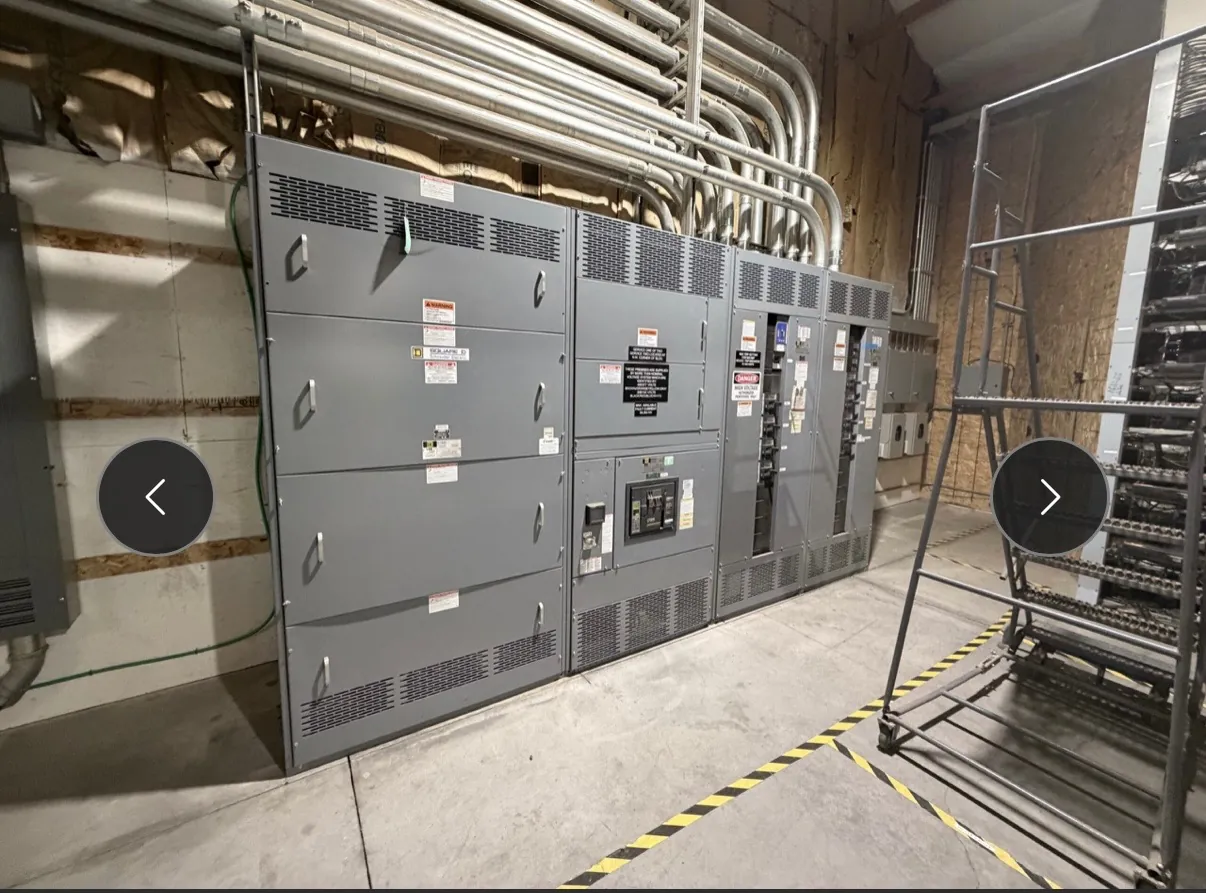
4000 A Low-Voltage Switchboards: Start With the Service Requirement
A 4000 A low-voltage switchboard is a configuration to evaluate against the electrical service and the facility’s actual operating needs, not a complete design specification by itself. Confirm whether 4000 A is the required continuous-current rating for the service section, a particular bus, or another part of the assembly. The specified rating must be considered alongside system voltage, number of phases and wires, grounding arrangement, source characteristics, load profile, and the intended installation environment. Those details shape the equipment and cannot be inferred from the amperage alone.
For a new custom assembly, the service entrance arrangement is an early decision. The engineer and equipment manufacturer need to establish how the incoming source connects, what service equipment is required, and how the main device relates to the distribution sections. A main breaker, other main-device arrangement, or a particular incoming connection should not be assumed from a 4000 A designation. Confirm the requested configuration with the one-line diagram, project specifications, and equipment documentation.
Service and Feeder Arrangements for a 4000 A Assembly
Feeder quantity and function determine much of a switchboard’s layout. Identify the loads or downstream panels served, required feeder-device types, and the ratings and connection details specified for each circuit. Consider which loads require dedicated feeders, how the distribution is divided among sections, and whether spare ways or future provisions are part of the project scope. Space for future circuits is not the same as an installed, rated feeder, so the quotation should distinguish between the two.
Coordination between the service section and outgoing feeders matters to both equipment selection and the project’s protective-device study. Device frame and trip details, interrupting ratings, and coordination requirements must be reviewed for the actual system and specified fault conditions. A preliminary equipment arrangement can help identify space and interface needs, but the responsible electrical engineer must determine protection requirements using project-specific system information.
Bus Sizing, Ambient Conditions, and Load Growth
Do not select bus solely by matching a 4000 A label to an expected load. Confirm the required continuous-current rating for each bus section and account for the specified ambient conditions and installation environment. Enclosure construction, ventilation, section arrangement, conductor terminations, and other design details may affect the suitability of a proposed configuration. The manufacturer’s documentation must identify the applicable ratings and conditions; the project engineer should verify that they match the intended installation.
Load growth can influence both the present rating requirement and the choice of feeder arrangement. Provide the anticipated connected and demand loads, operating patterns, and known expansion plans for engineering review. A larger nominal rating does not automatically resolve constraints involving feeder capacity, protection, available space, or downstream equipment. The final design should reflect a documented load assessment rather than an assumed margin.
Available Fault Current and Assembly Short-Circuit Rating
Available fault current at the switchboard location is essential quotation and design information. It depends on the source and the electrical system between that source and the equipment; it cannot be established from the 4000 A continuous-current rating. Provide the project’s available fault-current information and the specified assembly short-circuit rating so the proposed equipment can be evaluated against the actual application. These are distinct rating considerations and should not be treated as interchangeable.
Confirm the complete assembly rating and the conditions or device combinations associated with it in the manufacturer’s documentation. The protective devices, incoming arrangement, and system configuration must correspond to the evaluated design. If the source, transformer, or upstream protection changes, the engineering review may need to be revisited. A qualified engineer should assess the system and required coordination; no equipment rating should be presumed adequate without that review.
Where UL 891 May Apply—and What to Verify
UL 891 may apply to low-voltage switchboards, subject to the specific product construction and applicable requirements. It should not be read as a blanket standard for every switchgear product or as evidence that a particular custom assembly is listed. Request project-specific listing documentation for the offered configuration, including the applicable product identification and rating information. Confirm that the documentation covers the assembly being quoted, rather than relying on a general statement about a product category.
Listing status, voltage, current ratings, short-circuit rating, and other project details require confirmation against the equipment documentation. The responsible project team should also review applicable codes, site conditions, and any utility or owner requirements. A standard reference alone does not confirm approval for a specific installation.
Information to Provide for a 4000 A Switchboard Quote
For an accurate review, submit the latest one-line diagram, system voltage and grounding details, source information, available fault current, required continuous-current rating, and specified assembly short-circuit rating. Include incoming-service requirements, feeder schedule, device preferences or specifications, ambient and enclosure conditions, layout constraints, and anticipated load growth. Identify applicable listing-documentation expectations and project milestones as well.
As a U.S. manufacturer of new custom power-distribution equipment, we build assemblies with all-American components and ship nationwide, including to Nevada. Final configuration, ratings, documentation, and schedule depend on the reviewed project requirements and the equipment actually specified. Our team can use the project documents to confirm the available 4000 A switchboard configuration; qualified engineering and site review remain necessary to establish suitability for the installation.